
A Landscape in Transition
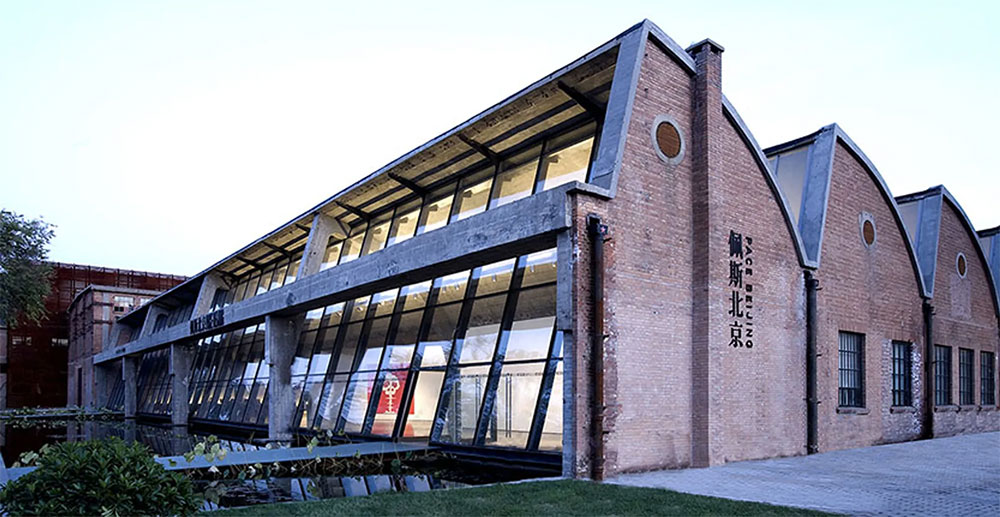
Beijing's private gallery scene has long carried the weight of being the birthplace of contemporary Chinese art, and while Shanghai has grown to rival and in some respects surpass it as a commercial art hub, the capital continues to assert its importance through institutional depth, experimental programming, and a collector base that is increasingly confident in the value of domestic art. The 798 Art District in the Chaoyang district remains the geographical core of this activity, though the 2024 merger of 798 with its neighbour 751 D·PARK — creating what is now the largest art and design district in the country at 520,000 square metres — has expanded the territory available to galleries. The broader Beijing Free Trade Zone Art District and the area around Caochangdi to the northeast have also become meaningful parts of the city's gallery geography.
The 2025 inaugural "Beijing Art Season," which ran from late May to early June and brought together Gallery Weekend Beijing (in its ninth edition), the Beijing Dangdai Art Fair, and the rebranded ART021 Beijing under a coordinated umbrella, offered a telling snapshot of where the scene stands. The mood among collectors and dealers was described by participants as cautiously optimistic: busier than the previous year but still shaped by a broader Chinese economic slowdown that has made buyers more selective, particularly at higher price points. Advice from Shanghai-based art advisor Janet Kong was widely reported: that works priced below around half a million yuan (approximately US$69,500) remain relatively straightforward decisions for Chinese collectors, while anything above one million yuan (approximately US$138,900) requires considerably more consideration. Despite this, galleries oriented towards the domestic market expressed measured confidence, and several notable sales and discoveries emerged from the season.
A clear structural trend running through the market is a turn inward. As Lisson Gallery Beijing director David Tung observed, geopolitical tensions, disrupted supply chains, and the residual effects of COVID-era travel restrictions have focused collector attention firmly on Chinese artists. International galleries working the Beijing market are finding that their strongest position is representing Chinese or East Asian artists to Chinese collectors, rather than attempting to move Western artists into the domestic market at scale. Galerie Urs Meile partner René Meile has noted that around 90% of the gallery's sales in 2024 were paintings, consistent with broader market data showing paintings account for nearly half of all high-net-worth art expenditure in China.
Beijing Commune
Founded in 2004 and operating from the 798 Art Factory, Beijing Commune is one of the more historically significant commercial galleries in mainland China. It initially built its programme around group exhibitions exploring currents in contemporary Chinese art before evolving to focus primarily on solo shows. The gallery has been associated with some of the most important figures in contemporary Chinese art, including Zhang Xiaogang, Song Dong, Yin Xiuzhen, Hong Hao, and Liu Jianhua, while also functioning as an incubator for younger artists such as Ge Yulu, Ma Qiusha, Wang Guangle, Zhao Yao, and Zhou Yilun. Beijing Commune is a reliable participant in Beijing Dangdai, where it has exhibited for seven consecutive years.
Tang Contemporary Art
Established in Bangkok in 1997, Tang Contemporary has expanded across Asia with two spaces in Beijing, both in the 798 Art District. The gallery occupies one of the larger commercial footprints in the area and positions itself as a bridge between Chinese contemporary art and broader Asian and international audiences. It represented multiple artists at the 2025 Beijing Art Season. In January 2026, Tang is hosting the group exhibition When Daylight Descends (27 December 2025–31 January 2026) alongside solo exhibitions by Yang Jiechang, titled Artists Continue To Try Hard (19 December 2025–31 January 2026), and by Zhou Song, titled Walking On Thin Ice, at their 798 2nd Space. ShiYing, a Tang director, described the 2025 Art Season as a "dynamic hub for artistic exchange," and the gallery's dual-space structure has allowed it to maintain a broad and overlapping exhibition schedule.
Galerie Urs Meile
Originating in Lucerne, Switzerland, Galerie Urs Meile was among the first international galleries to introduce contemporary Chinese art to collectors outside China. The Beijing space, located at D10, 798 East Street, was renovated in 2017 under Japanese architect Mitsunori Sano. The gallery works with both Chinese and international artists and has maintained a particularly strong presence in the Beijing market over many years. Its most recent Beijing exhibition, Nightly Encounter by Swiss painter Rebekka Steiger, ran from 1 November 2025 to 18 January 2026. René Meile has spoken openly about the market psychology in China, noting that while wealthier collectors have not lost significant financial capacity, the unfamiliar experience of economic deceleration has introduced hesitancy, particularly around higher-value works. Despite this, the gallery reported a strong 2024 overall. Paintings dominate sales, and the gallery has been an important venue for the kind of mid-career Chinese artist whose work commands the sustained institutional attention that underpins long-term value.
Tabula Rasa Gallery
Founded in 2015 in the 798 Art District, Tabula Rasa specialises in emerging and mid-career Chinese artists. It is notable as one of the few mainland Chinese galleries to have opened a space in London (in Bethnal Green, East London, in 2021), positioning itself as a vehicle for introducing Chinese and East Asian art to Western collectors. Its most recent Beijing exhibition, An Earthing by Cheri Smith, ran from 29 November 2025 to 10 January 2026. During Gallery Weekend Beijing 2025, the gallery showed Tant Yunshu Zhong's fifth solo exhibition with the gallery, Unbelievably Soft Process, which employed glass, coconut shells, rubber tubes, and marble in material-based installations exploring the tension between natural rhythms and their disruption. Zhong studied at East China Normal University in Shanghai and the University of the Arts London, and her work is held in the MACA Art Center's collection. Tabula Rasa works with artists including aaajiao, Eva Zhang, Xiao Hanqiu, and Zhang Meng.
Magician Space
Magician Space operates with a stated intention to address gaps in China's contemporary art practice, showing artists who are either emerging or who have been neglected by the commercial market. The gallery won the Art Futures prize at Art HK in 2011. At Gallery Weekend Beijing 2025, the gallery presented Bug by Guo Cheng (b. 1988, Beijing), which won the event's Best Exhibition award. The work took its title from the 1947 Harvard Mark II incident — when a moth lodged in a relay became the first recorded computer bug — and contrasted a sterile data centre with a surreal open field, exploring how emerging technologies shape society. From 2 December 2025 to 7 February 2026, the gallery is presenting Ao Jing's exhibition 三个入口 / One, Two, Three. From 17 December 2025 to 26 February 2026, the gallery also has Guo Hongwei's solo exhibition The Grammar Goes Where The Metaphor Goes.
INKstudio
INKstudio is a specialist gallery with spaces in Beijing and New York, founded in 2012 by Craig Yee. Its singular focus is Chinese experimental ink art, presented as a distinctive contribution to contemporary transnational art-making. The gallery's programme encompasses postwar and contemporary works across painting, calligraphy, sculpture, installation, performance, photography, and video, and it represents more than 14 artists including Bingyi, Dai Guangyu, Li Jin, Li Huasheng, Wang Dongling, Yang Jiechang, and Zheng Chongbin. INKstudio has placed works in major public collections including the Metropolitan Museum of Art, LACMA, and M+ in Hong Kong, and it appears regularly at Art Basel Hong Kong and the Armory Show. Craig Yee noted during the 2025 Gallery Weekend that second-generation collectors — globally educated young Chinese — now account for at least 40–50% of the gallery's sales, driven by immediate recognition of the value of Chinese experimental ink practice.
The Beijing space is located at Red No. 1-B1, Caochangdi.
White Space
White Space maintains two Beijing locations: one in Caochangdi and one in the Shunyi district, the latter being part of the Beijing Free Trade Zone Art District. The gallery has continued programming across both venues through the 2025–2026 period. In November and early January, White Space's Shunyi space hosted two simultaneous exhibitions: Agape by Georgian artist Vajiko Chachkhiani (8 November 2025–10 January 2026) and Chronic Pain And Rehabilitation Training by DAHZI (8 November 2025–10 January 2026). Work by Francisco Rodríguez, including Silent Room (2025, oil on linen, 90 x 70 cm), is available through the gallery.
ShanghART Beijing
ShanghART was founded in Shanghai in 1996 as the first independent gallery for contemporary Chinese art in China and became the first Chinese gallery to participate in Art Basel and FIAC in Paris. The Beijing space operates in Caochangdi and represents a roster of over 40 artists across painting, sculpture, video art, and performance. In late 2025 and into January 2026, the gallery presented Vera by Joyce Ho (22 November 2025–22 January 2026) at its Beijing location.
Lisson Gallery Beijing
Lisson Gallery, originally London-based and one of the longest-running contemporary art galleries in the world, maintains a Beijing presence in the Beijing Free Trade Zone Art District. David Tung, the gallery's Beijing director, was a prominent voice during the 2025 Art Season, speaking about the inward turn in collector behaviour and the gallery's response to a market in which domestic Chinese artists command the primary commercial attention. The gallery is also represented in Shanghai.
Whitestone Gallery Beijing
Whitestone Gallery, founded in Tokyo in 1967, operates a Beijing space and presented Karen Shiozawa's exhibition Once Upon a Time — Tales of Moon from 22 November 2025 to 4 January 2026.
whitestone-gallery.comwhitestone-gallery.com
HdM Gallery
Founded by Hadrien de Montferrand, HdM Gallery has its flagship space in Beijing and recently expanded its presence in the city. De Montferrand has been direct about the gallery's orientation: it sells works by Chinese artists to Chinese collectors and has observed increased interest in recent years, describing the domestic market as a reliable foundation even amid broader uncertainty. The gallery was visible at Gallery Weekend Beijing 2025, with Zhao Yinou's solo exhibition Ghost Raising among the week's noted presentations.
SPURS Gallery
SPURS participated in Gallery Weekend Beijing 2025 and presented Vietnamese artist Nguyễn Trinh Thi's multichannel immersive film installation 47 Days, Sound-Less (2024), which won the event's Infinity prize. The work positioned two projection screens diagonally across from each other, accompanied by a suspended mirror system. Co-founder Sherry Lai has spoken about the gallery's view that short-term disruption from the US–China trade environment will encourage Chinese collectors to concentrate more decisively on artists from China.
Galleria Continua
Galleria Continua, founded in San Gimignano, Italy in 1990, has a Beijing space that participates regularly in the city's programming calendar and art fairs. It is one of the more internationally networked commercial galleries operating in the 798 district.
Asia Art Center
Asia Art Center, founded in Taipei, has a Beijing presence and is a regular participant in the Beijing Dangdai Art Fair and Gallery Weekend Beijing. The gallery works across Chinese ink painting and contemporary art.
A note on market context for visiting professionals. The Beijing market in 2025 and into 2026 is functioning at a more measured pace than the years immediately following the pandemic reopening. Auction values across mainland China and Hong Kong fell substantially in 2024, and the gallery segment reflects the same broader caution. The most commercially active work is painting, primarily by Chinese artists, sold to a collector base that skews younger — second-generation, university-educated collectors in their 20s and 30s are a growing portion of the buying public at galleries like INKstudio and Galerie Urs Meile. The most notable auction result of the period for a Beijing-connected artist was Huang Yuxing's 2017 painting Majestic Mountains and Ripping River (a set of four works), which sold at China Guardian Auctions in Beijing in May 2025 for approximately US$5.1 million, well above its high estimate. At Sotheby's Hong Kong, Cheng Xinyi's 2019 painting Aperitif sold for HK$4.4 million (approximately US$562,000) in 2022, establishing a personal auction record that collectors have continued to reference as a benchmark for the artist. Beijing-born artist Jia Aili's 2016 painting Combustion realised approximately US$4.8 million at Christie's New York.
The consensus among active Beijing dealers is that the scene is navigating a meaningful moment. It is neither in retreat nor in a speculative expansion, but is consolidating around serious programmes, domestic collector relationships, and institutional credibility — conditions that may, over time, prove to be more durable foundations than the feverish volume of the boom years.