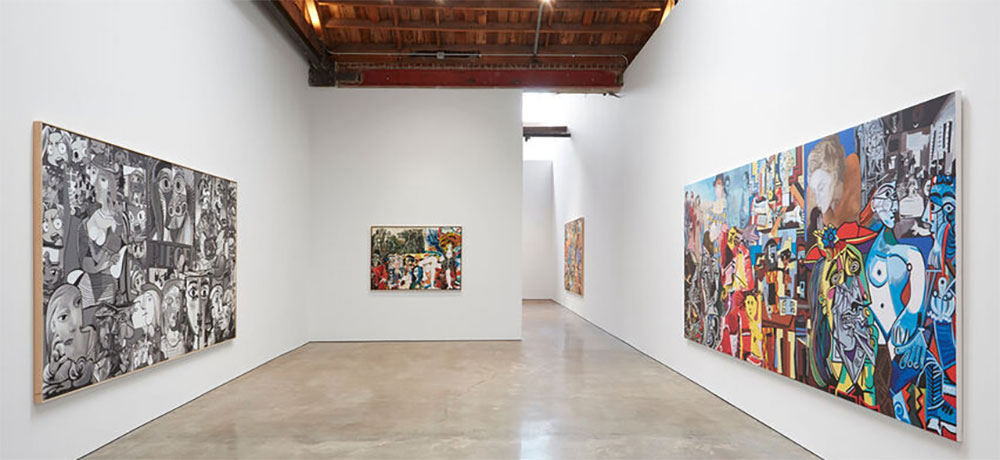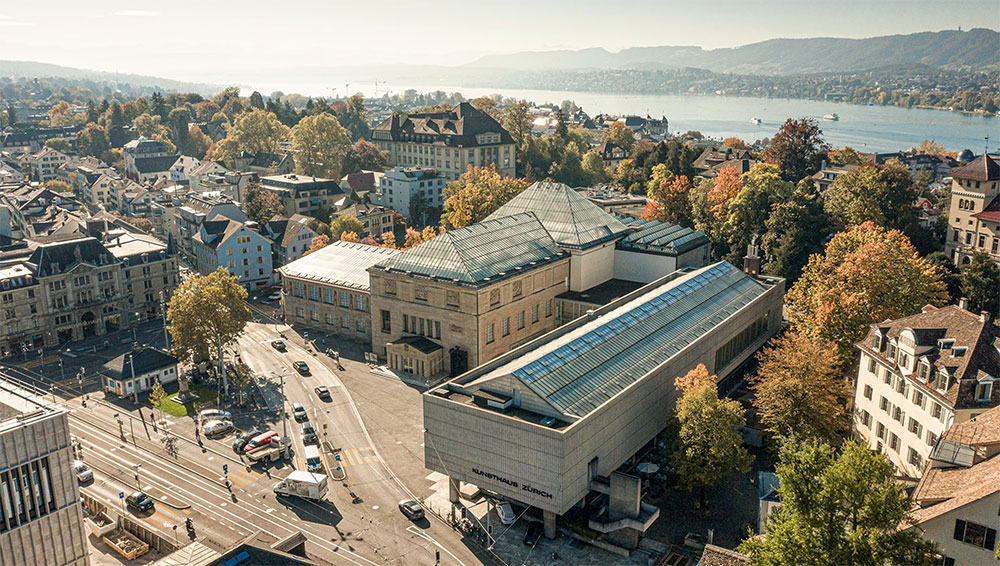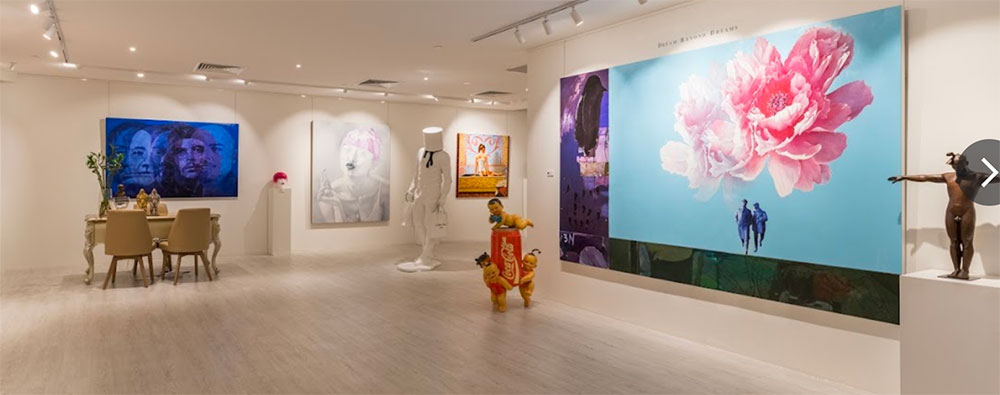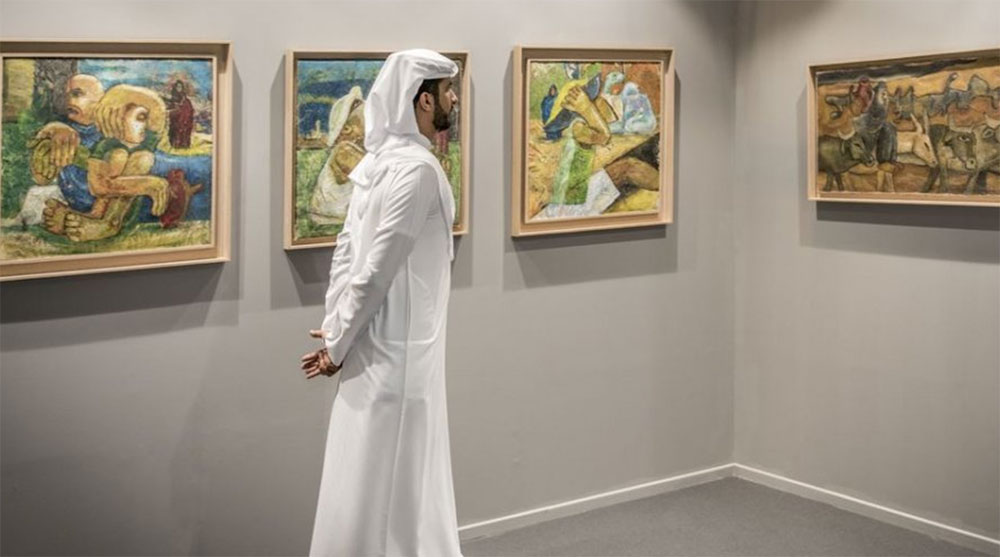

Tokyo's network of commercial galleries occupies a distinctive position in the global art market. The city has long been a centre of serious collecting and sustained institutional engagement with contemporary art, yet for much of the past three decades it remained underrepresented at international art fairs and resistant to the presence of major Western dealers. That picture has been changing steadily, accelerated by policy reforms that granted foreign galleries bonded status at Tokyo Gendai from its inaugural 2023 edition, reducing import tax friction that had historically discouraged overseas dealers from maintaining permanent spaces in Japan. The city now supports a layered ecology of galleries — longstanding Japanese operations with international profiles, newer homegrown spaces with clear critical ambitions, and a small but growing cluster of Western commercial galleries that have committed to permanent premises.
Geographically, the gallery map is concentrated in a handful of districts. Roppongi and its immediate surroundings contain the highest density of significant spaces, and the area benefited enormously from the development of Roppongi Hills and Tokyo Midtown, which brought museum-quality infrastructure into proximity with commercial galleries. The Piramide building alone houses Perrotin, Ota Fine Arts, Wako Works of Art, Yutaka Kikutake Gallery, and SCAI Piramide. Nearby, Complex665 (also known as Roppongi Art Complex), which opened in 2016, is home to Tomio Koyama Gallery, ShugoArts, and Taka Ishii Gallery. The Shibuya and Harajuku district hosts NANZUKA and MAKI, among others, while the Tennōzu Isle area — specifically the TERRADA Art Complex — has emerged as a secondary hub with KOSAKU KANECHIKA, ANOMALY, YUKIKOMIZUTANI, and secondary spaces for SCAI and Tomio Koyama. The newer Azabudai Hills development in Toranomon has drawn Pace Gallery as its anchor tenant. Running alongside these commercial spaces is a broader set of annual events — Art Fair Tokyo (held in March), Tokyo Gendai (held in July), and Art Week Tokyo (in November) — that structure the commercial calendar and bring international collectors into the city in reliable cycles.
What follows is a working overview of the main private galleries currently operating in Tokyo, with details of their programmes and exhibitions scheduled for 2026.
Pace Gallery Tokyo
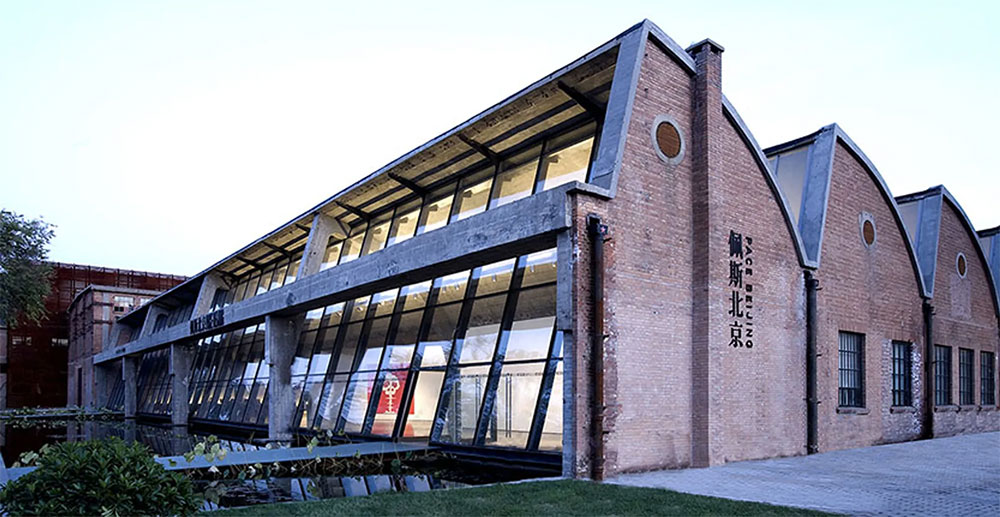
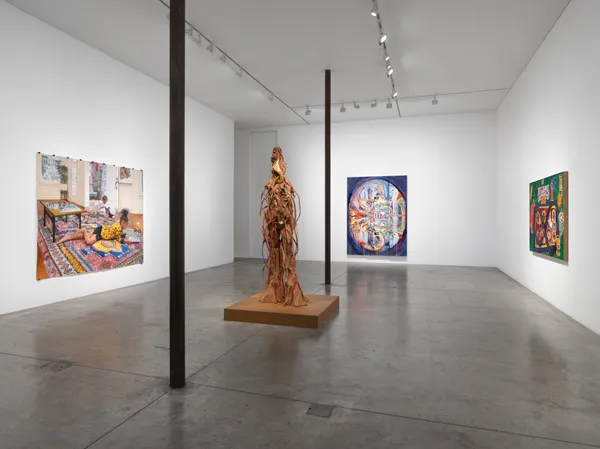
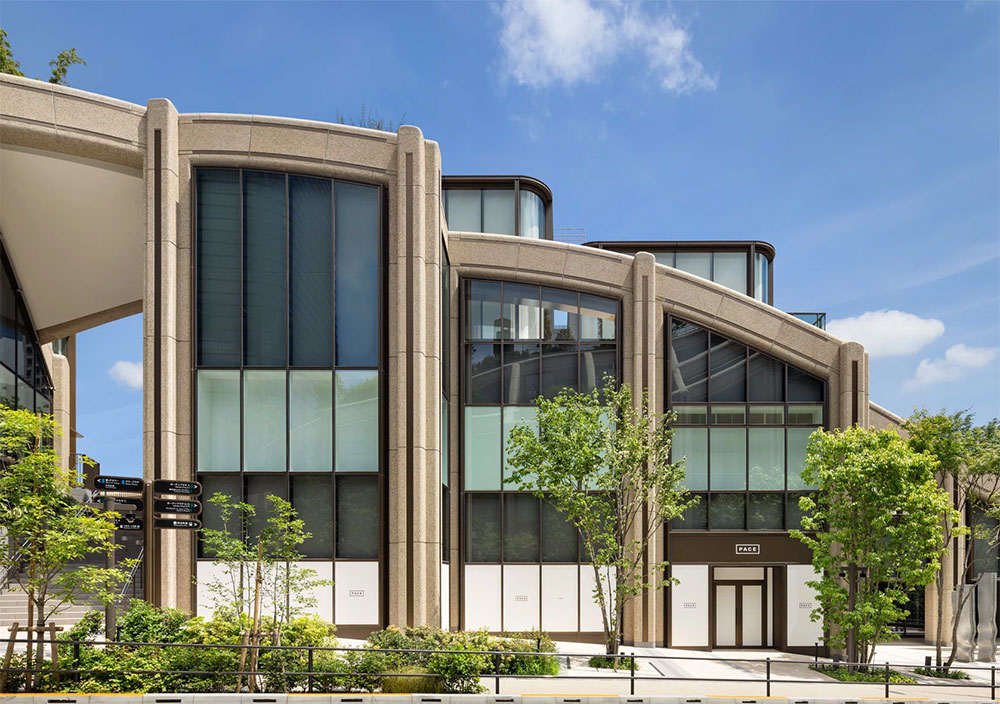
Pace opened its Tokyo gallery in July 2024, occupying a two-floor space designed by architect Sou Fujimoto in the Azabudai Hills development in Toranomon. It was the first major mega-gallery to establish a permanent presence in Japan, marking a significant signal of confidence in the city's market. The gallery represents major figures of twentieth and twenty-first century art and has moved quickly to programme ambitious solo and group exhibitions. In 2026, Pace Tokyo is presenting the work of Robert Nava in a solo exhibition titled Supercharger (19 February – 1 April 2026). Other recent programming has included presentations of Marina Perez Simão and Tomie Ohtake (both running from 4 November 2025 through 11 February 2026).
https://www.pacegallery.com/galleries/tokyo/
Perrotin Tokyo
Emmanuel Perrotin's Tokyo outpost is located in the Piramide building in Minato City, Roppongi, and is one of the more established Western commercial galleries in the city. Perrotin represents a number of artists with strong Japanese market recognition, including Takashi Murakami, Jean-Michel Othoniel, and Park Seo-Bo. The gallery operates a vigorous exhibition programme across its global network of spaces. In Tokyo for 2026, available works include Lee Bae's Brushstroke-T3 (2025, charcoal ink on paper), Nikki Maloof's Pink Table (2025, oil on linen, 127 x 177.8 cm), and Aya Takano's invitation to tranquility, the world of the center (2025, oil on canvas, 130 x 220 x 3.5 cm) — all listed as available on request. The Tokyo space also hosted Lee Bae's The In-Between (5 November – 27 December 2025). In early 2026, Perrotin's programme in Tokyo runs parallel to shows across its network including the Takashi Murakami exhibition Hark Back to Ukiyo-e: Tracing Superflat to Japonisme's Genesis at its Los Angeles location.
https://www.perrotin.com/gallery/tokyo
SCAI The Bathhouse
One of Tokyo's most distinctive private gallery spaces, SCAI The Bathhouse operates out of a converted two-hundred-year-old public bathhouse in the Yanaka district, within walking distance of Ueno. Founded in 1993, it has built a reputation for supporting both the development of post-war Japanese art — including key figures of the Mono-ha movement — and the global careers of artists such as Kohei Nawa, Tatsuo Miyajima, Mariko Mori, and Tadanori Yokoo, as well as international artists including Anish Kapoor, Apichatpong Weerasethakul, and Jenny Holzer. The gallery subsequently opened two additional venues: SCAI Piramide in the Roppongi Piramide building, and SCAI Park within the TERRADA Art Complex at Tennōzu Isle, the latter functioning as both a project space and preservation depot. The gallery also runs Komagome Soko, an experimental space for emerging talent. Representative works currently available include pieces by Tatsuo Miyajima and Jeppe Hein. In 2025–26, the gallery facilitated a significant loan for the Alfredo Jaar exhibition You and Me and the Others at Tokyo Opera City Art Gallery (21 January – 29 March 2026). The gallery is also involved in the Tatsuo Miyajima show at the National Museum of Modern Art, Kyoto.
https://www.scaithebathhouse.com
KOSAKU KANECHIKA
Founded in 2017, KOSAKU KANECHIKA operates two spaces: a primary space within the TERRADA Art Complex at Tennōzu Isle, and a second location in Kyobashi. The gallery has built a focused programme around Japanese contemporary artists whose practices engage substantively with tradition — whether material, formal, or conceptual — while operating within a contemporary international context. The roster includes Noritaka Tatehana, sculptor Miwa Kyusetsu XIII, and a group of painters and mixed-media artists. Works currently available and listed through the gallery include Miwa Kyusetsu XIII's El Dorado (2025, Hagi stoneware with straw ash glaze and gold, 111.5 x 75 x 55 cm), El Capitan I (2024, Hagi stoneware with straw ash glaze, 52 x 49 x 46 cm), El Capitan (2025, Hagi stoneware with straw ash glaze, 13.6 x 15.5 x 14.5 cm), and Noritaka Tatehana's Portrait (Blue Period) (2025, oil on canvas, 162 x 130 cm) — all available on request through the gallery. In 2026, the Tennōzu space is staging drawings: 5 artists, a group exhibition featuring Ana Benaroya, Tenki Hiramatsu, Ataru Sato, Ryu Takeda, and TARWUK (21 February – 11 April 2026). In late 2025, the Kyobashi space hosted a solo exhibition by Noritaka Tatehana titled Obsession (11 October – 29 November 2025).
Whitestone Gallery
Whitestone is one of Japan's oldest commercial galleries, founded in 1967 in Ginza, where its flagship location remains. It played a significant early role in representing post-war Japanese modernists, including Gutai group founder Jirō Yoshihara and abstract painter Kazuo Shiraga. The gallery has since expanded to multiple spaces in Tokyo — including a gallery within Ginza — and has a broader presence across East Asia in Hong Kong, Taipei, Singapore, and other cities. Whitestone's programme balances historical post-war material with contemporary artists and has increasingly engaged international markets. In 2026 in Tokyo, the gallery is showing Liaisons Imaginaires, a two-person exhibition featuring Go Yayanagi and Fabien Verschaere (6 – 28 February 2026). Works currently available include Go Yayanagi's The Shape of the Earth B (1964, oil on canvas, 162 x 112 cm), Soonik Kwon's Interstice-Pile up & Rub (8-07) (2024, mixed media on canvas, 90.9 x 65.1 cm), Imhathai Suwatthanasilp's Blowing in the Wind No. 1 (2024, mixed technique with human hair, acrylic and graphite on linen, 45 x 60 cm), and Ai Otsuka's I (2025, panel, canvas, oil, 116 x 91 cm) — all on request through the gallery. Also in 2026, Whitestone's Singapore space is hosting Playscapes Of Dreams, a two-person show with Philip Colbert and Aruta Soup (24 January – 14 March 2026).
https://www.whitestone-gallery.com
MAKI Gallery
MAKI operates two locations in Tokyo — one at Tennōzu Isle (its primary space) and one in Omotesando — and takes a programme-led approach focused on post-war and contemporary artists with a strong emphasis on emerging figures and on specificity of medium and concept. The gallery has been active in supporting the international visibility of its artists. Currently, MAKI is showing Shichijūni Kō Unsō (Seventy-Two Microseasons: Cloud Aspects) by Miya Ando (24 January – 28 February 2026) at its Tennōzu space. Works by Miya Ando from the Clouds Season series — wata no hana shibe hiraku (Season 40 of 72, 2026, ink on aluminum composite, 24.1 x 24.1 x 5.1 cm) and shimo hajimete furu (Season 52 of 72, 2026, same medium and dimensions) — are available on request through the gallery. In late 2025, the gallery presented Background Materials by Mungo Thomson at the Tennōzu space (8 November – 20 December 2025).
Mizuma Art Gallery
Mizuma Art Gallery was founded in 1994 by Sueo Mizuma and has developed into one of the leading platforms for contemporary Japanese figurative and conceptual art in Tokyo. Its principal space is in the Kagura Building in Ichigayatamachi, Shinjuku (2F, 3-13 Ichigayatamachi, Shinjuku-ku, Tokyo 162-0843). The gallery has additional spaces in Singapore and previously in Beijing. Mizuma's roster has long centred on artists whose work engages with Japanese visual culture, historical narrative, and social themes, with represented artists including Makoto Aida, Miwa Yanagi, and Akira Yamaguchi. In 2026, Mizuma is presenting Mori Junichi's mirror in the backyard (28 January – 28 February 2026) at its Tokyo space. Represented artist Yumi Karasumaru is showing I preferiti di Marino. Capitolo II – Opus Mundi at the Opificio Golinelli in Bologna, Italy (6 February – 28 June 2026), and Masahiro Usami is included in the 29th Taro Okamoto Award for Contemporary Art exhibition at Taro Okamoto Museum of Art, Kawasaki (31 January – 29 March 2026).
NANZUKA
NANZUKA was founded by Shinji Nanzuka in 2005 in Shibuya under the name Nanzuka Underground. It relocated its primary space to Harajuku (3-30-10 Jingumae, Shibuya-ku) in 2021, with the exterior designed in collaboration with artist Tetsuya Nakamura and the gallery logo by Hajime Sorayama. The gallery has from the outset positioned itself outside conventional fine art boundaries, maintaining active collaborations with fashion, music, and design. Its artist roster leans toward Neo-Pop and counter-cultural aesthetics, with notable representations including Hajime Sorayama — known internationally for his sexualized robot imagery and for designing Sony's original Aibo electronic pet — Keiichi Tanaami, and Peter Saul. Sorayama's Untitled_Sexy Robot_Space Traveler (2022, fibre reinforced plastic, UV curable resin, plexiglass, silver chrome spray, LED light, stainless steel, steel, 122.0 x 250.0 cm) has been available through the gallery. NANZUKA also maintained the gallery AISHONANZUKA in Hong Kong as a joint venture with Aisho Miura Arts from 2013 to 2024. From March 2026, NANZUKA Underground is presenting a new exhibition at its Omotesando / Aoyama space (7 March – 4 April 2026).
Tomio Koyama Gallery
One of Japan's most established commercial galleries, Tomio Koyama Gallery opened in 1996 in Saga-cho, Koto-ku, and has moved and expanded considerably since. It now operates from two principal locations: a space in Complex665, Roppongi (2F, 6-5-24 Roppongi, Minato-ku, 106-0032), and a space in Kyobashi at the TODA Building (3F, 1-7-1 Kyobashi, Chuo-ku, 104-0031), which opened in late 2024. A third space at Tennōzu, which opened in 2022, provides additional programming capacity. The gallery was among the first Japanese commercial galleries to systematically introduce young Japanese artists to international audiences, and its programme has been credited with helping shape what might be called the foundation of Japanese contemporary art's international visibility. Represented artists include Kishio Suga, Mika Ninagawa, Hiroshi Sugito, and Richard Tuttle, as well as ceramic artists. The Roppongi space is showing a group exhibition (2 February – 28 February 2026) featuring works by Atsushi Fukui, Yoshiro Furuhashi, Keiji Ito, Hiro Kunikawa, Rika Minamitani, Yukiko Suto, and Sakura Wada.
https://www.tomiokoyamagallery.com/en/
ShugoArts
Founded in 2000 by Shugo Satani, ShugoArts is located within Complex665 in Roppongi (2F, 6-5-24 Roppongi, Minato-ku, Tokyo 106-0032), alongside Tomio Koyama Gallery and Taka Ishii Gallery. The gallery has an eclectic programme that cuts across Japanese and international contemporary art, with represented artists including Carsten Höller, Ritsue Mishima, Leiko Ikemura, Yasumasa Morimura, and Lee Kit. ShugoArts also maintains a studio space within the TERRADA Art Complex at Tennōzu. The gallery participates regularly in international fairs including Art Basel Hong Kong and Frieze.
Taka Ishii Gallery
Taka Ishii Gallery operates across three Tokyo spaces: a contemporary art space within Complex665, Roppongi; a photography and film space in the nearby Axis building; and participation in the TERRADA Art Complex. The gallery has built a strong reputation for its handling of contemporary art and photography, with a roster that combines Japanese artists — including Takashi Ishida — with significant international figures such as Jadé Fadojutimi, Luke Fowler, and Christopher Williams. It is regularly present at major international fairs including Frieze and Art Basel.
https://www.takaishiigallery.com
Mizuma Art Gallery (see above)
Yumiko Chiba Associates
Yumiko Chiba Associates (YCA) was established in 1998 out of an artist management practice, and the gallery retains some of that background in its engaged, artist-centred approach. Located in Shinjuku, it represents both established and younger artists including Jiro Takamatsu and Masafumi Maita. In 2026, the gallery is showing Mio Shirai's Swing Down Cosmic Chariot (10 February – 4 April 2026). In late 2025, it presented Yutaka Matsuzawa's My Own Death—Art Via Color, Art Via Language (4 October – 29 November 2025).
√K Contemporary
Located in the Kagurazaka area — an Edo-period neighbourhood that retains considerable historic character — √K Contemporary occupies a distinctive cultural position in Tokyo's gallery landscape. Kagurazaka itself has a long association with Japanese arts, geisha culture, and French expatriate community, giving the district an atmosphere unlike the more corporate gallery clusters in Roppongi or Shibuya. √K Contemporary focuses on contemporary work and participates in international fair circuits.
Fergus McCaffrey
Fergus McCaffrey is an American dealer with a long personal history in the Tokyo art world who established a Tokyo gallery to focus specifically on the Japanese market, including post-war Japanese art and international contemporary work. The gallery has a particular strength in building bridges between Japanese artists and Western museum and institutional collections, and has organised significant historical survey exhibitions. The Tokyo space works in conjunction with the gallery's New York location.
https://www.fergusmccaffrey.com
Wako Works of Art
Wako Works of Art is one of the established galleries in the Piramide building in Roppongi, operating since the 1990s and building a programme focused on post-war and contemporary art, with an emphasis on international artists of conceptual and minimalist tendencies. The gallery has represented artists including Niele Toroni and other figures associated with process-based and conceptual European practices.
Ota Fine Arts
Founded in 1994, Ota Fine Arts has been one of the principal galleries for introducing important contemporary art to Japan, and is perhaps best known internationally for its representation of Yayoi Kusama. The gallery is situated in the Piramide building in Roppongi alongside Perrotin and others, and has expanded its programme to include artists from across Asia, including Guo-Liang Tan and Chen Wei, with additional spaces in Shanghai and Singapore.
BLUM (Tokyo — closed 2025)
It is worth noting for the record that BLUM (formerly Blum & Poe), which opened its Harajuku / Omotesando space in 2014 and represented artists including Yoshitomo Nara, Lynda Benglis, and Kenjirō Okazaki, announced in July 2025 the closure of its Tokyo (and Los Angeles) locations. Founder Tim Blum, who had lived and worked in Tokyo earlier in his career — where he first encountered Yoshitomo Nara and Takashi Murakami — stepped back from the gallery at that time. The Tokyo closure represents a notable departure from the city's commercial landscape, though the gallery's New York space continues to operate.
Art Fair Context
The commercial calendar that supports these galleries has developed considerably in recent years. Art Fair Tokyo, which traces its origins to 1992 (then the Nippon International Contemporary Art Fair), takes place in March and remains the primary domestic fair. Tokyo Gendai, launched in July 2023, is the city's first major international fair modelled on the Art Basel or Frieze format, drawing international galleries and collectors. Tokyo Art Week, held in November over four days, functions as an open programme linking museums, galleries, and institutions across the city and has become an important infrastructure for sales activity and collector engagement. The event has in recent years incorporated a curated sales platform intended to give gallery presentations some of the contextual depth typically associated with museum display.
Collectively, these events and the galleries described above constitute a market that has become meaningfully more accessible to international participants than it was a decade ago, though it retains distinctive characteristics — including the particular role of dealer-collector relationships built over time, and a collector base that places high value on curatorial seriousness and institutional track record — that continue to shape how galleries operate and how works are acquired.