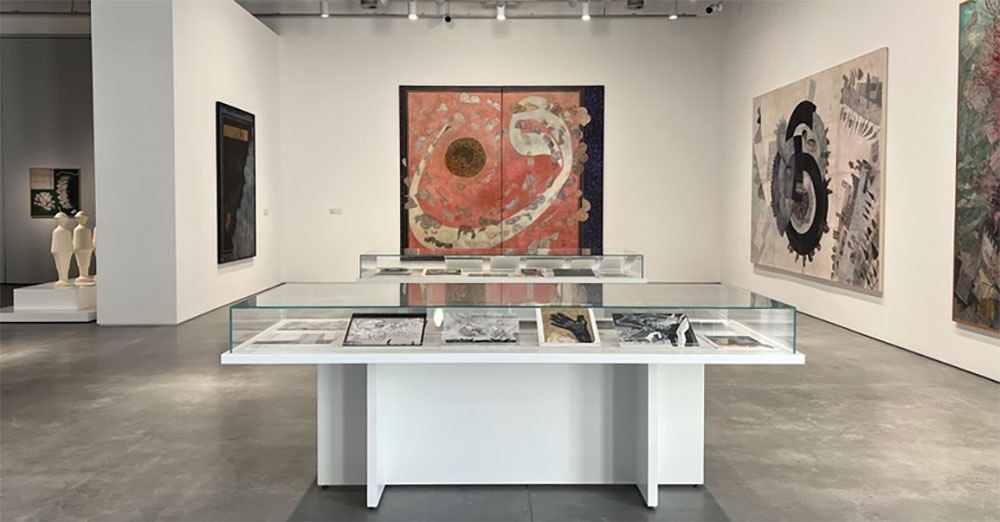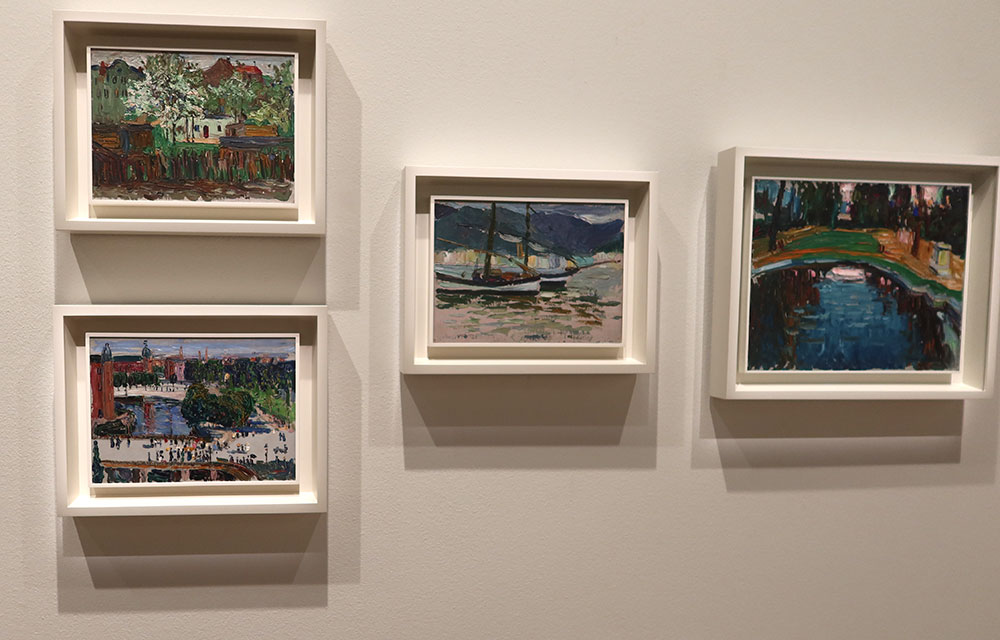

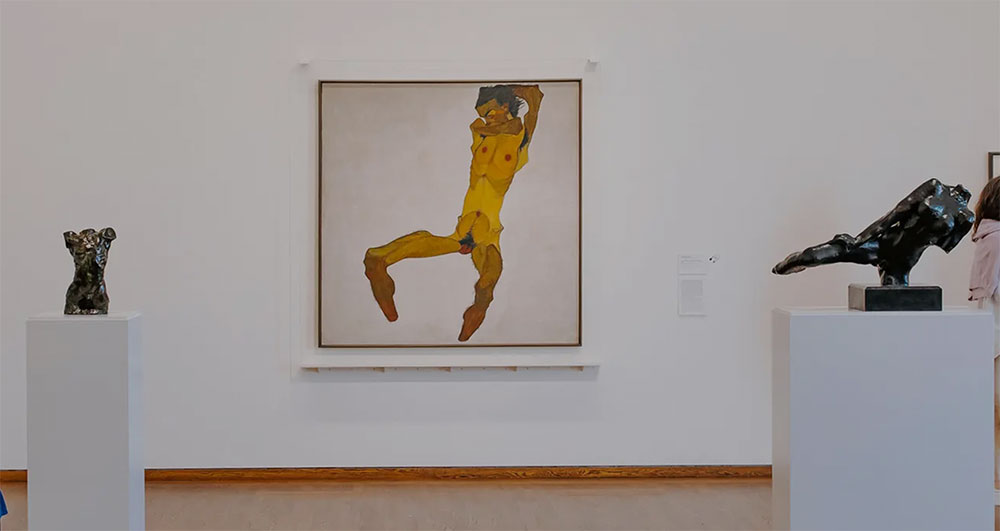
Vienna occupies an unusual position in the European gallery landscape. It is a city whose institutional weight — the Kunsthistorisches Museum, the Albertina, the Belvedere, mumok — can easily overshadow the commercial sector, yet the private gallery scene here has its own considerable depth and specificity. For professionals working in art institutions and commercial galleries elsewhere, Vienna's private dealers and gallerists represent a community that is both internationally connected and distinctly local in character, shaped by the city's long history as a centre of avant-garde activity, its Actionist legacy, and its proximity to the art markets of Central and Eastern Europe. What follows is a professional survey of the principal galleries operating in Vienna, with notes on current and forthcoming exhibitions in 2026 where available.
Galerie Krinzinger
Of all the private galleries in Vienna, Galerie Krinzinger carries perhaps the most historically consequential biography. Founded in 1971 by art historian Dr. Ursula Krinzinger, the gallery moved from Innsbruck to Vienna's first district in 1986 and has since been operating from Seilerstätte 16. It is now run jointly by Ursula Krinzinger and her son Thomas Krinzinger. The gallery's foundational interests lie in performance and body-related art — it has worked with Marina Abramović since 1975 and was the venue for the original 1975 performance of Thomas Lips (then titled Lips of Thomas) in Innsbruck — and in Viennese Actionism, representing the estates and works of Rudolf Schwarzkogler, Günter Brus, Hermann Nitsch, and Otto Muehl. Over more than five decades, the gallery has also expanded its international programme to include artists such as Jonathan Meese, Gavin Turk, Eva Schlegel, Mark Wallinger, and, through Ursula Krinzinger's research in Asia and the Middle East, artists including Kader Attia, Waqas Khan, Maha Malluh, and Sudarshan Shetty.
A second exhibition space, Krinzinger Schottenfeld at Schottenfeldgasse 45 in the seventh district, was established in 2002 and has developed an artist-in-residence programme with studios in Austria, Hungary, Croatia, and Sri Lanka. The gallery participates regularly in Art Basel, Frieze London, The Armory Show, Art Dubai, and Art Basel Hong Kong, among other major fairs.
In terms of 2026 programming, the gallery's main space recently concluded the exhibition Thomas Lips (21 November 2025 – 18 February 2026), which marked the fiftieth anniversary of Abramović's original performance through the presentation of previously unpublished vintage photographic negatives. The main space is currently showing vibrating images, the second solo exhibition at Galerie Krinzinger by Turkish-German artist Nevin Aladağ, which opened on 27 February 2026 and runs until 24 April 2026. The show combines sculpture, painting, textiles, video, and sound, with works from the series Vibrating Images and Music Room Darmstadt, the latter a body of work drawing on the European tradition of the music salon that Aladağ first developed in 2014. At Krinzinger Schottenfeld, the group exhibition AIR 2025 Vienna / Hungary / Croatia / Sri Lanka opened on 25 February 2026 and runs until 11 April 2026, featuring work by thirteen artists connected to the gallery's residency programme across its four locations.
Galerie nächst St. Stephan Rosemarie Schwarzwälder
In terms of institutional continuity, Galerie nächst St. Stephan Rosemarie Schwarzwälder is arguably the most historically embedded gallery in Vienna's private sector. The rooms at Grünangergasse 1, in the first district adjacent to the Stephansdom, have housed a gallery since 1923, when Otto Kallir founded the Neue Galerie there. Kallir — who would later found the Galerie St. Etienne in New York and introduce Klimt, Schiele, and Kokoschka to American audiences — was forced to flee in 1938. The space was subsequently taken over by the priest and art connoisseur Monsignor Otto Mauer, who reopened it as Galerie nächst St. Stephan in 1954 and made it a significant site of interdisciplinary discourse, championing Viennese Actionism, feminist art, and early Conceptual Art. Rosemarie Schwarzwälder became the acting director in 1978 and owner in 1987 (and 1989 in full), fundamentally shaping the gallery's international profile through her commitment to abstraction, Minimalism, and Conceptual Art.
The gallery's 1984 exhibition Zeichen, Fluten, Signale — neukonstruktiv und parallel (Signs, Floods, Signals: Neo-Constructivist and Parallel) was a defining moment in the Neo-Geo movement internationally, featuring artists including John Armleder, Helmut Federle, Imi Knoebel, Franz Graf, Brigitte Kowanz, Heimo Zobernig, and Gerwald Rockenschaub. Today the gallery represents artists including Polly Apfelbaum, Alice Attie, Herbert Brandl, Ernst Caramelle, Helmut Federle, Bernard Frize, Katharina Grosse, Sheila Hicks, Imi Knoebel, Lee Ufan, Sonia Leimer, Caitlin Lonegan, Manfred Pernice, Karin Sander, Jessica Stockholder, and Jongsuk Yoon, among others.
In addition to its main exhibition rooms on the second floor of the heritage-listed building at Grünangergasse 1, the gallery opened a new 65-square-metre space at the ground floor of the adjacent Kleine Bischofshof at Domgasse 6 in spring 2021. The LOGIN window gallery at Grünangergasse 1 has since 2005 offered street-level access to art outside gallery hours, presenting independent installations visible at all times of day.
Current exhibition programming in Vienna for 2026 includes Dust Buddies by Sonia Leimer at the Grünangergasse 1 space, running until 18 April 2026. The gallery is also participating in the Vienna Contemporary art fair (booth 7B13) and has works by gallery artists represented at the Guggenheim Bilbao in a group exhibition running until 3 May 2026.
Galerie Eva Presenhuber
Galerie Eva Presenhuber maintains a Vienna presence at Lichtenfelsgasse 5 in the first district, alongside its primary Zurich spaces. Founded and owned by Eva Presenhuber, the gallery has established a reputation for consistently working with a roster of international artists across painting, sculpture, and installation, including Ugo Rondinone, Sam Falls, Tobias Pils, Sofia Mitsola, Tschabalala Self, Liesl Raff, Josh Smith, Louisa Gagliardi, Carroll Dunham, Trisha Donnelly, and Franz West, among others.
The Vienna space functions as an active exhibition venue, with a programme that runs in parallel to the Zurich locations. In 2025, the Vienna gallery presented Tobias Pils's exhibition Blende zum Morgen / Fade to Morning (drawings) from November to December, and Chase Hall's solo exhibition Momma's Baby, Daddy's Maybe from May to July, among other shows.
For 2026, the Vienna space opened Psyche of Fae O by Greek painter Sofia Mitsola on 16 January 2026, running until 10 April 2026. Mitsola's work — figurative, densely coloured, and drawing on myth and folklore — has attracted considerable institutional attention; she has a concurrent show at the 1690 Art Collection Space in Shanghai. Separately, gallery artist Tobias Pils has a major exhibition Shh at mumok, Vienna, running from 27 September 2025 until 12 April 2026, and gallery artist Sandra Mujinga is showing Skin to Skin at the Belvedere 21, Vienna, from 29 January until 31 May 2026. Tschabalala Self and Sue Williams are both included in the KAWS: Art & Comics exhibition at the Albertina Modern, Vienna, running from 3 April until 27 September 2026.
Galerie Szaal
Among the galleries occupying a more traditional position within the Viennese market, Galerie Szaal, located at Schottenring 10 in the first district, is one of the longest-established private galleries in Austria, dealing primarily in high-calibre Austrian painting and sculpture. The gallery describes its programme as spanning from emerging insider positions to internationally recognised figures, and it counts among its clients major Austrian museum institutions including the Wien Museum, the Niederösterreichisches Landesmuseum, the Belvedere's upper gallery, and the Leopold Museum. The gallery also maintains close relationships with private collectors.
Galerie Szaal participates in major Austrian art fairs including the WIKAM Kunstmesse, which took place at the Palais Ferstel in the first district from 28 February to 8 March 2026, and the ART AUSTRIA fair at the Palais Auersperg, scheduled for 7 to 10 May 2026. The gallery opens Tuesday to Friday from 11am to 6pm.
Galerie Kandlhofer
A younger presence in the Vienna gallery ecosystem, Galerie Kandlhofer is located at Brucknerstrasse 4 in the fourth district and has established itself as a space for emerging and mid-career contemporary artists. For 2026, the gallery is presenting Focus On: A House the Size of a Shell from 28 February to 2 April 2026. The exhibition brings together artists working with small-scale formats to explore how compressed spatial dimensions can contain expanded imaginative and narrative worlds. The gallery opens Tuesday to Friday from 11am to 6pm and Saturday from 11am to 4pm.
Beck & Eggeling International Fine Art
Beck & Eggeling International Fine Art, founded in 1994 by Dr. Ute Eggeling and Michael Beck, is primarily based in Düsseldorf (Bilker Strasse 5 and 4–6), with a Vienna address listed at Margaretenstrasse 5/19 in the fourth district. The gallery's programme spans Impressionism, Expressionism, classical Modernism, and post-war Modernism alongside international contemporary art. It produces a substantial publishing output through its in-house press, Beck & Eggeling Kunstverlag, with over 150 publications. The gallery participates in TEFAF (both Maastricht and New York), the Armory Show, ART COLOGNE, Art Düsseldorf, and Art Basel in Miami Beach, among others. Note: sources indicate that the physical Vienna space closed at the end of 2019, with the gallery concentrating its exhibition programme in Düsseldorf, though the Vienna address and contact details remain listed. Professionals should contact the gallery directly to confirm the current status of its Vienna operations.
Thaddaeus Ropac — Context for Vienna Professionals
Although Galerie Thaddaeus Ropac no longer maintains a space in Vienna itself, the gallery's founder is an Austrian gallerist of significant relevance to the city. Born in Klagenfurt and raised in Carinthia, Thaddaeus Ropac founded his first gallery in Lienz in 1981 and opened in Salzburg in 1983, where the gallery retains two spaces (Villa Kast and Salzburg Halle). The gallery went on to open in Paris Le Marais (1990), Paris Pantin, and London (Ely House), and more recently in Seoul. It is now one of the most internationally active contemporary galleries operating from an Austrian base, representing over 60 artists including Georg Baselitz, Anselm Kiefer, Antony Gormley, Robert Rauschenberg (estate), Alvaro Barrington, Gilbert & George, and Erwin Wurm. Ropac donated 17 works to the Österreichische Galerie Belvedere in Vienna in 2008 and remains a member of the advisory boards of the Museum of Contemporary Art Vienna and the MAK. His Salzburg programme is directly relevant to Austrian collectors and curators. Georg Baselitz works were reported among the leading sales at Art Basel Qatar 2026, reflecting continued strong market demand for the gallery's key artists.
The Broader Context: Fairs, Events, and the Collector Environment
Vienna's private gallery scene operates within a calendar anchored by several significant events. Vienna Contemporary, the international art fair focused on Central and Eastern European art, remains a key annual moment in the city's commercial art calendar, bringing international collectors and galleries into dialogue. Vienna Art Week, which in 2025 ran under the theme Learning Systems from 6 to 13 November, functions as a more collaborative platform that unites commercial galleries, public institutions, art universities, and independent spaces. Its 22nd edition is scheduled for 6 to 13 November 2026 — the announcement notes it as a year "full of tension" for the art world. The WIKAM Kunstmesse and ART AUSTRIA fairs are significant for galleries dealing in Austrian art and classical modernism.
The Brotfabrik building, a converted bread factory, has become an important site for photography-focused galleries including OstLicht, the Anzenberger Gallery, and Galerie Photon, reflecting a distinct cluster within the city's gallery geography.
For institutions and professionals visiting or researching the Vienna scene, the concentration of strong galleries in the first district — particularly around the area between the Stephansdom and the Staatsoper — remains the principal focus of the city's commercial contemporary art activity. The relationship between these galleries and Vienna's major public museums is notably close, with several galleries citing institutional collections among their clients and with gallery artists regularly appearing in museum programming throughout 2026.
This article was compiled in March 2026. Exhibition dates and gallery information are subject to change; readers are advised to confirm directly with each gallery before travelling.