
Between the Bosphorus and the Market:
Istanbul occupies an unusual position in the contemporary art world. A city of roughly seventeen million people, it sits at a geographic and cultural junction that its gallery sector has always tried to leverage—sometimes productively, sometimes awkwardly. The private gallery scene that has emerged over the past four decades is relatively young by European standards. The oldest commercial spaces date only to the mid-1980s, and the vast majority of galleries operating today were founded after 2000, many in direct response to the energising effect of the Istanbul Biennial, which has been running since 1987, and the art fair Contemporary Istanbul, launched in 2006.
The city is home to approximately fifty commercial galleries, though this figure fluctuates as more precarious operations come and go. Those without permanent brick-and-mortar spaces often sustain themselves through art fair participation and pop-up exhibitions rather than fixed programming. Economically, the sector continues to navigate persistent inflation in Turkey and a domestic collector base that, while growing, remains relatively small and concentrated. The international fair model—particularly Contemporary Istanbul—has become central to how galleries reach buyers, both Turkish and foreign, with much of the meaningful deal-making happening across the five-day fair period held each autumn.
What follows is a profile of the galleries most relevant to professionals working in this space, with details on their current programming, known sales, and upcoming exhibitions in 2026.
Established Galleries
Dirimart
Founded in 2002 by Hazer Özil, Dirimart is one of the most programmatically ambitious commercial galleries in Turkey. Its name derives from dirim, the Turkish word for 'life', and that sense of vitality has informed a programme built around conceptualism, political resistance, and critical dialogue—a positioning that has made the gallery somewhat unusual in a market that has historically leaned toward decorative and figurative work.
The gallery operates from two locations in Istanbul's Beyoğlu district—a large Dolapdere space, which became the city's largest commercial art space when it opened in May 2016 at over 5,800 square feet, and a second venue in the Pera neighbourhood. In the summer of 2025, Dirimart opened a third space in Mayfair, London, marking a significant step in its international expansion. The opening show featured Istanbul-based artist Ayşe Erkmen and was titled I still insist.
The gallery's roster includes both established international figures—among them Shirin Neshat, Sarah Morris, Ghada Amer, Tony Cragg, and Jorinde Voigt—and Turkish artists such as Ayşe Erkmen, İnci Eviner, Canan Tolon, and the celebrated film director Nuri Bilge Ceylan, whose photographic practice Dirimart represents. At the 20th edition of Contemporary Istanbul in September 2025, Shirin Neshat's 2024 photograph inscribed with Persian calligraphy sold for $120,000 at the gallery's booth. A black-and-white abstract work by Canan Tolon was offered at the fair for $130,000.
For 2026, Dirimart Dolapdere presented Emma Stern's inaugural solo exhibition with the gallery, Champagne Problems, running from 5 February to 1 March 2026. The show presented Stern's oil-on-canvas works derived from 3D modelling software—a distinctive approach to contemporary figuration that interrogates the representation of the virtual female body. Dirimart also publishes artist catalogues and books on art theory through its imprint RES Publications, established in 2007.
Website: https://dirimart.com
Addresses: Hacıahmet Mah., Irmak Cad. 1–9, Dolapdere, Istanbul 34440 (Dolapdere); Evliya Çelebi, Meşrutiyet Cad. 99, Beyoğlu, Istanbul 34430 (Pera); 23 Princes Street, London W1B 2LY (Mayfair).
Zilberman Gallery
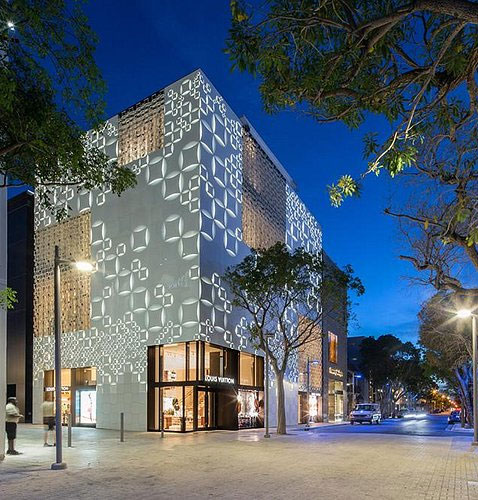
Founded in Istanbul in 2008, Zilberman has grown into one of the more internationally connected galleries to have emerged from the Turkish scene. It occupies two separate floors of the Mısır Apartment—one of the most recognised examples of art nouveau architecture on İstiklal Caddesi—and runs an annual programme of ten to twelve exhibitions. International expansion came first with a Berlin space in 2016 and then a Miami gallery in 2023, the latter situated in the Miami Design District with the stated aim of creating a bridge between European, Asian, and Latin American artists across both continents.
The gallery's programming is distinctive for its social dimension. Alongside exhibitions, it runs artist talks, lecture-performances, book launches, and round-table discussions, and maintains two artist-in-residency programmes, one in Istanbul and one in Berlin. Each year it concludes its exhibition season with Young Fresh Different, a group exhibition drawn from a national open call judged by an independent jury—an initiative that reflects a genuine investment in cultivating emerging Turkish talent rather than simply presenting it.
Among the artists represented are Azade Köker, Sim Chi Yin, Isaac Chong Wai, Carlos Aires, Sandra Del Pilar, Cengiz Tekin, Yaşam Şaşmazer, and Eşref Yıldırım. At Contemporary Istanbul 2023, Zilberman brought a large-scale work by Azade Köker priced at €110,000, and the gallery has consistently reported healthy sales of Turkish artists at previous fair editions, with works ranging from approximately €2,000 to €30,000.
Confirmed 2026 exhibitions at Zilberman Istanbul include Nezir Akkul (çepo): Snowblind, running from 14 February to 22 April 2026, presented concurrently with İz Öztat: There And Now, And After? at the Dialogues space, also from 14 February to 22 April 2026. In addition, Zilberman opened a second Istanbul location, Zilberman Selected, in Piyalepaşa in 2022.
Website: https://www.zilbermangallery.com
Address: İstiklal Cad. No.163, Mısır Apartmanı K.3 D.10 and K.2 D.5, Beyoğlu, Istanbul.
Pi Artworks
Pi Artworks was established in Istanbul in 1998 by Jade (Yeşim) Turanlı, making it one of the older surviving commercial galleries in the city. In 2013, it became the first Turkish commercial gallery to open a London space, initially in Fitzrovia and now operating from Piyalepaşa in Istanbul and a central London address. Turanlı sits on both the Art International selection committee and the Tate Middle East Acquisitions Committee, positioning the gallery at a point of genuine institutional connection.
The gallery's programme has historically been committed to placing Turkish artists within an international frame while also introducing international artists to the Istanbul market. Its roster includes Jyll Bradley, Nezaket Ekici (who trained under Marina Abramović), Susan Hefuna, Michael Rakowitz, Selma Parlour, Liam Howe, and Turkish painter Özer Toraman—whose sun-soaked figurative works were a notable presence at Contemporary Istanbul 2024. A previous edition of the fair saw Pi Artworks sell a Gülay Semercioğlu wire painting for $50,000 and four works by Kemal Seyhan for between $5,000 and $20,000, with further works placed in the $2,000–$5,000 range.
Current and upcoming Istanbul programming in 2026 includes: I Once Was A Wonderer, Too, which ran from 27 December 2025 to 28 February 2026, presenting works by an artist duo reflecting on relocation from London to the English countryside. This is followed immediately by Silent Dialogue, a solo exhibition by Özer Toraman running from 5 March to 2 May 2026, which includes an installation for the first time in Toraman's practice. Pi Artworks also maintains a notable relationship with local art education institutions, regularly presenting graduate exhibitions from Mimar Sinan University students.
Website: https://www.piartworks.com
Address: 32B Piyalepaşa Bulvarı, Piyalepaşa, Istanbul. Tel: +90 212 245 13 23.
Anna Laudel
Anna Laudel operates galleries in Istanbul, Düsseldorf, and Bodrum, and has developed a programming model that moves fluidly between Turkish and German-speaking European artists. Founded in 2012, the gallery has worked consistently with Turkish artists such as Ramazan Can, Ardan Özmenoğlu, and Belkıs Balpınar, and regularly presents international figures including German painters like Jochen Proehl and Lennart Brede. Its curatorial direction frequently reflects an interest in cross-cultural dialogue, and its Düsseldorf presence has helped establish it as a gateway gallery for Turkish art within the German market.
Recent programming has included Where You Are Understood, a group exhibition at the Istanbul space from June to August 2025, and in late 2025 the gallery presented two simultaneous shows: a Cabinet exhibition on Expressionism and New Objectivity curated by Marcus Graf, alongside Jochen Proehl's Excavated Visions: Layers of Earth and Memory, both running from 28 November 2025 to 11 January 2026.
Confirmed 2026 exhibitions at the Istanbul space include the show running from 6 March to 5 April 2026 titled …between leaving and breaking. In parallel, the Düsseldorf gallery opens Always Returning Home: Wild Ducks Flying Against The Current from 6 to 19 April 2026.
Website: https://annalaudel.gallery
Address: Istanbul, Düsseldorf, and Bodrum (multiple locations; contact gallery for specific addresses).
The Pill®
The Pill was founded in January 2016 by Suela J. Cennet in the historic Balat neighbourhood of Istanbul, near the Golden Horn. Cennet had previously worked with Galerie Templon in Paris and Brussels, and brought to Istanbul an approach shaped by French institutional practice. The gallery is housed in the ground floor of a former generator factory, a space that lends itself to architectural transformation alongside its programme of solo and curated group exhibitions.
The Pill's positioning is consciously trans-local—it describes itself as a 'mobile vessel for trans-local and trans-disciplinary contemporary art', and its roster reflects this ambition. Artists represented include Apolonia Sokol, Leylâ Gediz, Özlem Altın, Soufiane Ababri, Eva Nielsen, Marion Verboom, Lux Miranda, and Irem Günaydın, among others. The gallery's participation in international art fairs has attracted consistent critical recognition: it won the Opening Award for Best Stand at ARCO Madrid 2021 and the Best Booth Design Award at Contemporary Istanbul 2016. Its 2022 book New Art Scales, published by JBE Books, documented its first seven years of programming.
In 2026, The Pill is presenting two concurrent Istanbul exhibitions in early 2026: Nobody's Mother, a solo show by Apolonia Sokol (6 December 2025–24 February 2026), and Endless Incantations by Lux Miranda (8 January–21 February 2026). The gallery also maintains a Paris address in addition to its Istanbul base, reflecting Cennet's ongoing movement between the two cities.
Website: https://www.thepill.co
Address: Balat, Istanbul (Golden Horn historic peninsula). The gallery also operates from Paris.
Galeri 77
Galeri 77 occupies a distinct position in the Istanbul gallery scene through its sustained focus on figurative painting and its particular commitment to artists from Turkey and Armenia. The gallery represents painters including Roman Babakhanian, whose landscapes and rock formations draw on Surrealist traditions; Mutlu Aksu, whose works satirise domestic rituals and social expectations; Vahram Davtian, who works in an Old Masters idiom inflected with Surrealism; and Hakan Gürbüzer, whose psychologically charged compositions operate in a register of emotional and perceptual instability.
The gallery's Galeri 77 Shows project organises exhibitions outside its own physical space, extending its reach into institutional and alternative contexts. In 2026, the gallery participated in Art Show 2026, including a solo presentation by Vav Hakobyan. It has also participated in CI Bloom, the offshoot of Contemporary Istanbul dedicated to Turkey-based exhibitors.
Website: https://www.galeri77.com
Address: Istanbul (contact gallery for specific address).
Younger and Alternative Spaces
Pilevneli
Pilevneli is one of the more commercially visible galleries to have gained prominence in Istanbul in recent years, occupying a large, purpose-built space and participating in major international fairs. At Contemporary Istanbul 2023, the gallery presented two AI-generated video works by Turkish-American artist Refik Anadol, each priced at €100,000, signalling an appetite for ambitious, technology-adjacent work alongside more conventional media. The gallery has built a profile by presenting international artists to Istanbul collectors while also representing Turkish artists internationally.
Website: https://www.pilevneli.com
Address: Istanbul (contact gallery for current location).
Sevil Dolmacı Gallery
Sevil Dolmacı Gallery is notable for its willingness to present high-value international work to the Istanbul market. At Contemporary Istanbul 2023, the gallery exhibited a Tony Cragg sculpture offered at €350,000, one of the highest-priced works at that edition of the fair. The gallery also presented a show by American painter Jason Stopa (Interior Monument) in Istanbul. The gallery's positioning suggests a clear interest in bridging the Turkish collector base with international secondary and primary market artists.
Website: https://www.sevildolmaci.com
Address: Istanbul (contact gallery for current location).
Market Context: Contemporary Istanbul and the Fair Ecosystem
Contemporary Istanbul, which celebrated its 20th edition in September 2025 at the historic Tersane shipyard complex on the Golden Horn, remains the central clearing house for the Turkish art market. The 2025 edition drew 53 or more galleries from over a dozen countries, and as with previous years, the majority of attendees were Turkish nationals. Levent Özmen, a director at Dirimart, has noted that a number of the gallery's loyal collectors plan their schedules around the fair.
Sales data from recent editions of the fair offer a window into the market's range. At the 2024 fair, Leila Heller Gallery—a New York and Dubai gallery with a long presence at Contemporary Istanbul—sold most of the works by ceramicist Melis Buyruk on display as well as two large-scale drawings by Alaattin Efe, and received museum commission requests for all of their booth artists. The fair has historically produced activity concentrated at lower price points: the majority of transactions take place in the €2,000–€30,000 range, with a smaller number of works sold in the six figures.
The Turkish economy's trajectory—marked by significant inflation in recent years but growth in GDP—has created a complex environment for galleries. While some observers have noted a decline in the sales value of individual artworks, the overall market has grown, partly through the rise of online sales platforms. Galleries including Zilberman and Dirimart have established presences on Artsy, and the digital channel has broadened geographical reach if not always deepened it. Transparency in the market remains limited: auction records, which are the most reliable public data points in most developed art markets, are increasingly difficult to access in Turkey, and the sector remains heavily reliant on private dealing.
Commercial galleries in Istanbul typically charge commissions of between 20 and 60 percent, a range considerably wider than the roughly 50 percent standard common in Western European markets. Major corporations and holding companies—including banks—have historically been significant collectors of contemporary Turkish art, and their institutional buying has been an important market driver, though this patronage has been subject to broader economic fluctuations.
Looking Ahead
The most significant structural development in Istanbul's gallery sector in recent years is the beginning of international expansion among its leading galleries. Dirimart's Mayfair opening in 2025 is the most notable instance, but Zilberman's Berlin and Miami presences and Pi Artworks' long-standing London operation reflect a broader pattern. This internationalisation is both a response to the constraints of the Turkish domestic market—its relatively small collector base, currency instability, and limited transparency—and an affirmation of confidence in the artists these galleries represent.
The Istanbul Biennial, which returned in 2025 after a three-year hiatus, continues to provide institutional context for contemporary art in the city. Its impact on gallery activity has historically been significant: the Biennial educates future collectors, brings international curators and critics to the city, and creates a critical discourse that galleries can build on in their programming. For professionals visiting Istanbul in 2026, the combination of a geographically and architecturally distinctive setting, a cluster of commercially serious galleries, and a domestic scene that is slowly but measurably maturing makes the city a worthwhile destination.