
Introduction: A Market in Motion
Milan has long occupied a particular position in the European art world—distinct from the institutional weight of Rome, the tourist-facing grandeur of Florence, and the biennial spectacle of Venice. It is, above all, a city of commerce and collectors, shaped by its identity as Italy's financial and design capital. For much of the twentieth century, the private gallery scene here was notable but modest in international terms, circling around a handful of longstanding dealers and the annual miart fair. What has changed markedly in the past two to three years is the pace of new arrivals and the degree of international attention the city now attracts.
Several converging forces are responsible. Italy's "new residents" tax regime, in place since 2017 structured around a flat annual levy of €300,000 on foreign income as if January 2026 may have drawn a t number of high-net-worth individuals, many of them from countries where the abolition of non-domiciled tax status has prompted a reassessment of residency. The inheritance tax rate in Italy, standing at between 4 and 8 percent compared to the United Kingdom's 40 percent for qualifying estates, has added further appeal, and where collectors go, galleries tend to follow.
Italy had a VAT rate of 22% on artworks the highest in the European Union compared to 5.5 % in France. But the rate was reduced in July 2025 to just 5% the lowest in the EU.The secondary market is agile, benefiting from less restrictive regulations than many neighbouring countries.
The Established Galleries
MASSIMODECARLO
Founded in 1987 by Massimo De Carlo with an inaugural show of Olivier Mosset, this gallery occupies a unique position in the Milanese scene as the gallery brought a genuinely international contemporary programme to the city. In the late 1980s, Milan had important galleries (e.g., Lia Rumma, Studio Guenzani, and others), but De Carlo was among the first in the city to consistently programme an internationally networked contemporary roster aligned with leading galleries in New York, Cologne, and London.
De Carlo's early championing of artists such as Maurizio Cattelan, Carsten Höller, Felix Gonzalez-Torres, Alighiero Boetti, and Cady Noland was instrumental in establishing those artists' international profiles and, in turn, in positioning Milan as a viable location for serious contemporary dealing. The gallery relocated in 2019 to the Casa Corbellini Wassermann, a significant example of Milanese rationalist architecture from 1934–36 designed by Piero Portaluppi, situated in the city centre. The building's interiors—rare marbles, period detail—lend a distinctive character to the exhibition spaces.
Today MASSIMODECARLO operates spaces in Milan, London, Hong Kong, Paris, and Beijing, and maintains a virtual gallery platform (Vspace). In 2026, its Milan programme includes *Something Borrowed, Something Plum* by Austyn Weiner (22 January–28 February 2026) and the forthcoming solo exhibition *Io ti saluto, luce, ma con nervi offesi* by Pietro Roccasalva (5 March–19 April 2026). The gallery represents a broad roster of over sixty artists working across painting, sculpture, installation, photography, performance, and video.
Cardi Gallery
One of the oldest continuously operating dealer galleries in Milan, Cardi was founded in 1972 by Renato Cardi, who built his collection through a focus on artists then considered peripheral—Lucio Fontana, Cy Twombly, and Piero Manzoni among them—before the market for Italian post-war and Spatialist work reached its current heights. The gallery is now led by Renato's son Nicolo Cardi and maintains its headquarters at Corso di Porta Nuova 38 in Milan, with a second space opened in Mayfair, London in 2015, occupying a six-storey Georgian townhouse at 22 Grafton Street.
The gallery specialises in Italian modern, post-war, and contemporary art, and is regularly active at international fairs including Art Basel. It also provides art advisory services and supports museum loans. For professionals seeking works related to Arte Povera, Spatialism, or broader post-war Italian movements, Cardi remains one of the most significant points of contact in the city.
Robilant+Voena
Established in London in 2004 by art dealers Edmondo di Robilant and Marco Voena—who had previously collaborated in the late 1990s on an exhibition of Emilian painting in New York—Robilant+Voena opened its Milan space in 2009 and has since added locations in Paris and New York. The gallery occupies a distinctive niche, working across Old Master paintings, twentieth-century Italian and European art, and a more recent programme of contemporary projects that builds, deliberately, on art historical inheritance.
Among the gallery's most significant sales are an Artemisia Gentileschi self-portrait sold to the National Gallery in London and a work by Baron Gérard acquired by the Frick Collection in New York. The gallery has sold to institutions including The National Gallery, London; the Metropolitan Museum of Art; the Frick Collection; the Gallerie dell'Accademia, Venice; the Pinacoteca di Brera, Milan; the J. Paul Getty Museum; the Musée d'Orsay, Paris; the National Gallery of Stockholm; and the Louvre Abu Dhabi, as well as significant European and American private collections.
In terms of 2026 programming at the Milan space, the gallery presented *North Pole and Other Precarious Landscapes* by Philippe Pastor (2 December 2025–27 February 2026) and followed this with *Sound of Gold* by Jordan Watson (2–27 February 2026).
Monica De Cardenas
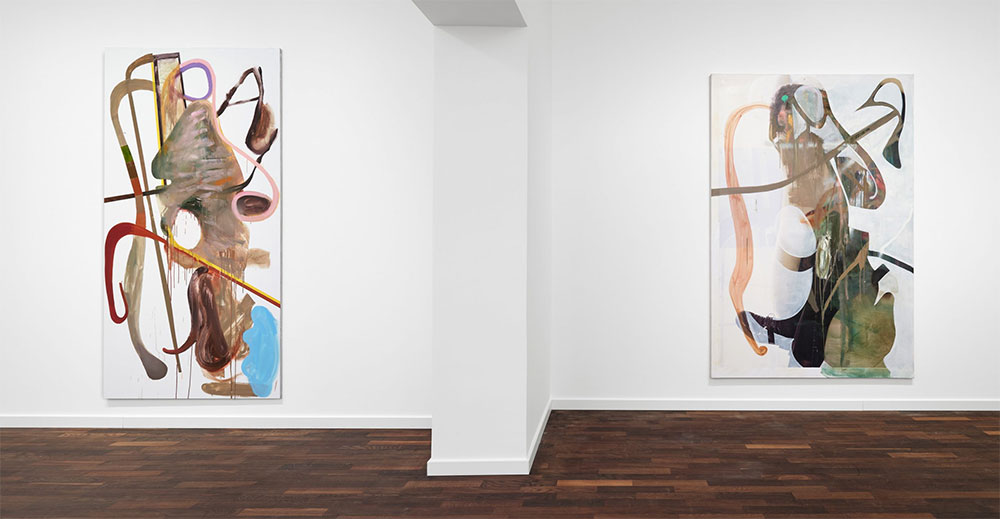
Monica De Cardenas opened her Milan gallery in 1992 in the Corso Como district—at the time considered peripheral, though the area has since been transformed by the arrival of Piazza Gae Aulenti, Stefano Boeri's Bosco Verticale, and the Feltrinelli Foundation designed by Herzog & De Meuron. The gallery occupies a ground-floor apartment between two tree-filled courtyards, with parquet floors and high ceilings that have become a recognisable environment for the gallery's programme of international contemporary art with a particular emphasis on photography and figurative painting.
De Cardenas built the gallery's early reputation through the Italian introduction of artists such as Thomas Struth (exhibited in 1993), Markus Raetz (1994), Chantal Joffe, Stephan Balkenhol, and Alex Katz. More recently the programme has incorporated younger Italian voices including Rä di Martino, Lupo Borgonovo, and Linda Fregni Nagler. A second gallery space operates in Zuoz, near St Moritz, in a restored fourteenth-century Engadin house. The gallery's current 2026 programme in Milan includes *tempo crudo* by Claudia Losi (15 January–21 March 2026).
https://www.monicadecardenas.com
kaufmann repetto
Founded through the collaboration of gallerists Francesca Kaufmann and Chiara Repetto, kaufmann repetto operates spaces in Milan and New York. The Milan gallery is situated in the Brera district and was designed by architect Frank Böhm, featuring an outdoor courtyard capable of accommodating large-scale works and installations—a practical advantage that distinguishes the space from many of its peers in the city. The gallery has developed a reputation for a programme attentive to video and site-specific work, and has shown a consistent interest in foregrounding the work of female artists. The gallery also participates actively in the international fair circuit.
https://www.kaufmannrepetto.com
Gió Marconi
Founded in 1990, Gió Marconi gallery operates from Milan and carries a programme that has consistently positioned itself ahead of conventional market taste—working early with artists such as Nathalie Djurberg, Allison Katz, and Franz Ackermann while also maintaining an engagement with historical material from the archives of Studio Marconi, the now-closed but historically significant predecessor space. Gió Marconi's programme holds an important place in the city's post-war and contemporary art history, and the gallery remains one of the most substantive destinations in Milan for challenging contemporary practice.
Dep Art Gallery
Founded in 2006, Dep Art Gallery operates from Milan with a focus on post-war and contemporary Italian and international art. The gallery represents artists working across a range of media and maintains an active secondary market presence alongside its primary programme. Works by artists including Giuseppe Uncini and Gerold Miller feature in the gallery's current inventory, with Uncini's *Senza titolo* (1996), a watercolour and pencil work on Fabriano handmade paper, available to view on request. An exhibition featuring Imi Knoebel, *A song sleeps in all things*, is scheduled to open at the gallery in 2026.
Cadogan Gallery
An independent contemporary gallery with roots going back to 1980 in South Kensington, London, Cadogan opened its Milan space in 2023 under the leadership of Freddie Burness, who has directed the gallery since 2018. The Milan programme has focused on emerging to mid-career contemporary artists, with a particular interest in painting—including minimalist and abstract work. Artists represented include Andreas Diaz Andersson, Tycjan Knut, Juliette Paull, Ramón Enrich, and Perla Krauze.
In 2026, the gallery's Milan exhibitions include *Echoes and Hours / Hourglass* by Juliette Paull (14 January–20 February 2026) and *On Formality* by Tycjan Knut (12 February–7 March 2026). A work by Nuria Maria, *Summer Trees, red green* (2025), acrylic on linen, is listed as sold through the gallery. Ramón Enrich's *4 Graons* (2025), acrylic on canvas at 200 x 165 cm, and multiple works from Tycjan Knut's *On Formality* series (2025), acrylic on canvas in various dimensions, are available to request through the gallery.
https://www.cadogangallery.com
New Arrivals and Expanding Presences
Thaddaeus Ropac
The most significant new opening in Milan's recent gallery history is the arrival of Thaddaeus Ropac, whose seventh global location opened on 20 September 2025 in the Palazzo Belgioioso—a neoclassical building completed in 1781 by architect Giuseppe Piermarini and extensively restored in 1991, located near Teatro alla Scala and Via Monte Napoleone. The inauguration exhibition, *L'aurora viene*, presented works by Georg Baselitz and Lucio Fontana across 280 square metres of exhibition space on the building's first floor. An outdoor programme in the adjacent Piazza Belgioioso is intended to include sculptures and installations by gallery artists.
The gallery is led by Elena Bonanno di Linguaglossa as Executive Director, who brings nearly twenty-five years of experience in modern and contemporary art, with particular expertise in Italian and American art, previously serving as senior director at Lévy Gorvy Dayan in New York. Ropac has noted that the Milan opening reflects a longstanding desire to complete his European presence—he already operates in London, Paris, and Salzburg—and has indicated an intention to work with more Italian artists and artist foundations through the new space. The gallery's roster includes internationally recognised figures such as Antony Gormley, Anselm Kiefer, and Georg Baselitz, as well as the Rauschenberg estate, and it has a documented history of working with Italian institutions. The 2026 exhibition programme had not been fully announced at the time of writing.
Scaramouche
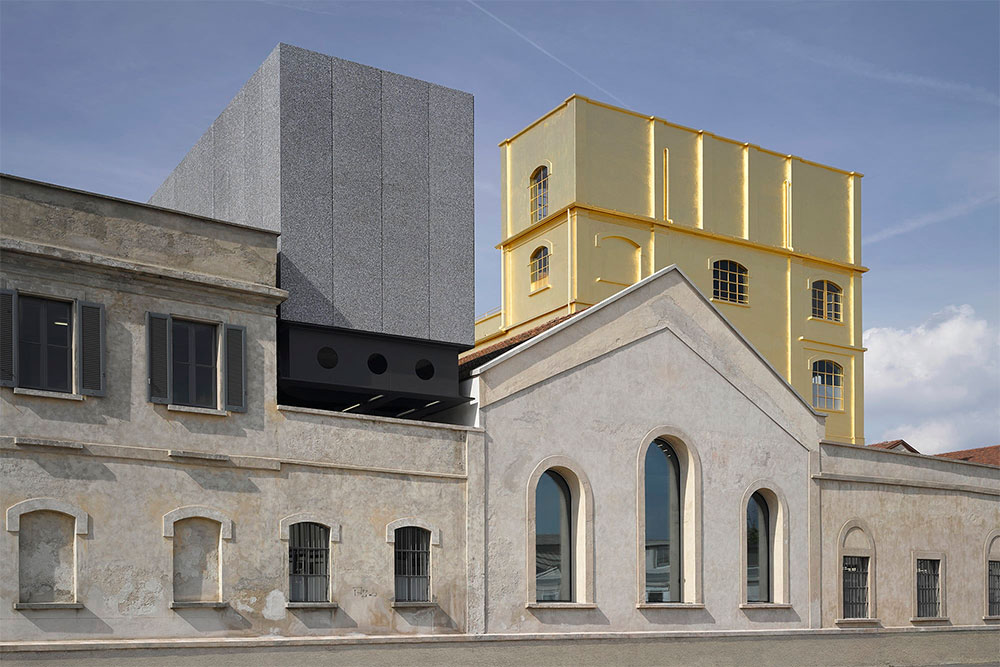
Scaramouche opened in the art-oriented district of Via Orobia—between ICA Milano and steps from Fondazione Prada—between late 2024 and early 2025, marking the return to Italy of Florentine gallerist Daniele Ugolini after years running an experimental programme from a Lower East Side space in New York. The new venture is launched in collaboration with collector Simone Ferretti. The gallery is positioned to engage with the critical and experimental strand of the Milan scene, in proximity to the institutional anchor of Fondazione Prada and the independent art centre ICA Milano.
https://www.scaramouchegallery.com
Lehmann Maupin
The New York-based gallery Lehmann Maupin, which has spaces in New York, London, Seoul, and Hong Kong, has established a seasonal presence in Milan, opening initially as a pop-up space to coincide with the Venice Biennale and miart in 2024 before consolidating its presence in the city. The gallery's programme spans a wide range of contemporary practice, including work by artists with significant institutional profiles internationally.
Other Active Galleries in the Scene
Several further galleries merit attention from visiting professionals. AreaB (https://www.areab.it) operates a programme with a focus on Italian contemporary practice, and currently shows Nicola Nannini's *Se una notte di inverno...* (29 January–14 March 2026). BUILDING (https://www.buildingmilano.it) maintains a programme that engages with installation and spatial practice, and is currently showing *Un mondo tutto all'aperto*, a two-person exhibition with Alice Cattaneo and Marco Andrea Magni (15 January–14 March 2026). Monica De Cardenas and Galleria Doris Ghetta (https://www.dorisghetta.com) are also active, the latter running *Breath of Fresh Air* (22 January–28 February 2026). ABC-Arte (https://www.abc-arte.com) has a forthcoming exhibition by Antonio Kuschnir, *Arcadia Incerta*, in its Milan programme for 2026. Studio Guastalla (https://www.studioguastalla.com) is preparing its participation in miart 2026.
Tornabuoni Arte maintains a presence in the city with a programme focused on Italian and European post-war and contemporary art. Lorenzelli Arte, one of the oldest galleries in Milan, has long been a specialist in Arte Povera and concrete art and continues to be active. Cortesi Gallery and Galleria Patricia Armocida are among the further mid-scale spaces that contribute to the texture of the scene.
The Fair and Fair-Adjacent Context
Milan's primary commercial art fair, miart, takes place annually each April in conjunction with Milan Art Week, and remains the most significant commercial event in the Italian art calendar. Its Established section has attracted increasing numbers of international galleries in recent editions, and the 2025 edition saw notable new entrants. The fair is organised at Fiera Milano and provides a structured moment around which much of the gallery scene orientates its programming and collector relations. The Milan Image Fair (MIA), dedicated to photography, also forms part of the city's fair calendar.
For institutions and professionals visiting in 2026, the broader cultural context is enriched by a number of significant non-commercial programmes. The Palazzo Reale is presenting *KIEFER: The Women Alchemists*, a new site-specific commission by Anselm Kiefer for the Sala delle Cariatidi (7 February–September 2026), supported in part by contributions from Gagosian and Galleria Lia Rumma, and forming part of the cultural programme for the Winter Olympic Games Milano Cortina 2026. Also at Palazzo Reale, an exhibition devoted to Robert Mapplethorpe is scheduled for 2026. The ambitious multi-venue project *Metafisica/Metafisiche*, curated by Vincenzo Trione and spanning Palazzo Reale, the Museo del Novecento, Gallerie d'Italia, and Palazzo Citterio, opened on 28 January 2026 and traces the influence of Metaphysical art from its origins through its twentieth- and twenty-first-century inheritors, presenting approximately 400 works with loans from more than 150 public and private collections.
Practical Context for Visiting Professionals
Milan's gallery geography is not as concentrated as that of some European art capitals. Significant spaces are distributed across several neighbourhoods: the Brera district, the area around Porta Nuova, the Corso Como corridor, the Via Orobia zone near Fondazione Prada, and the more residential and design-adjacent streets of the centre near Via Monte Napoleone. Galleries are generally open Tuesday to Saturday, with some observing restricted Saturday hours or appointment-only access; it is advisable to confirm in advance of any visit.
*Information correct to the best of available knowledge as of February 2026. Gallery programmes and exhibition dates should be confirmed directly with individual spaces.*