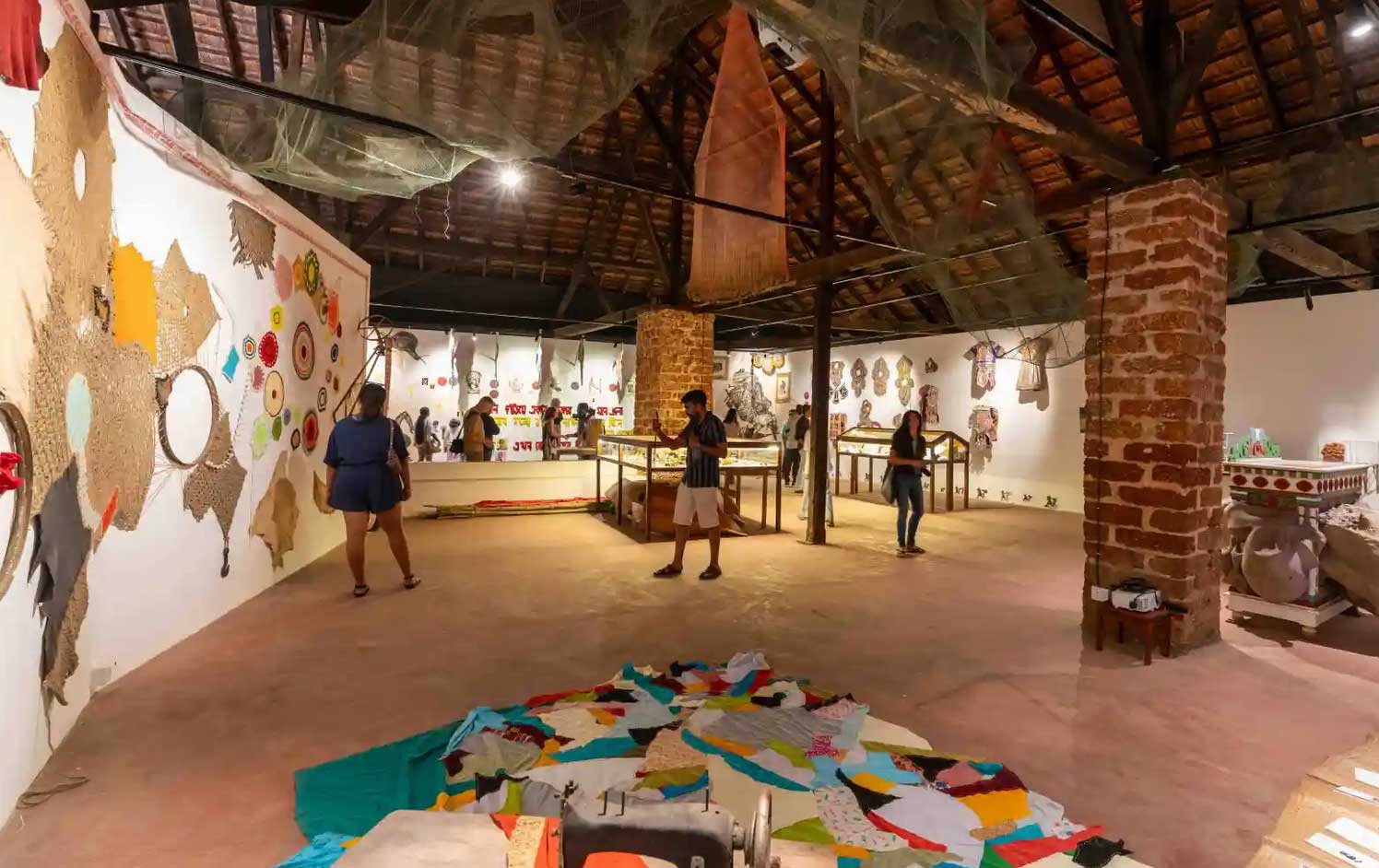

The year 2026 represents a particularly concentrated moment in the international biennale calendar. From Venice to Sydney, from the Dolomites to South Korea, a sequence of recurring exhibitions opens across multiple continents between March and November, each arriving with its own curatorial logic, institutional context, and geographic disposition.
Venice: A Curator's Exhibition, Realised Posthumously
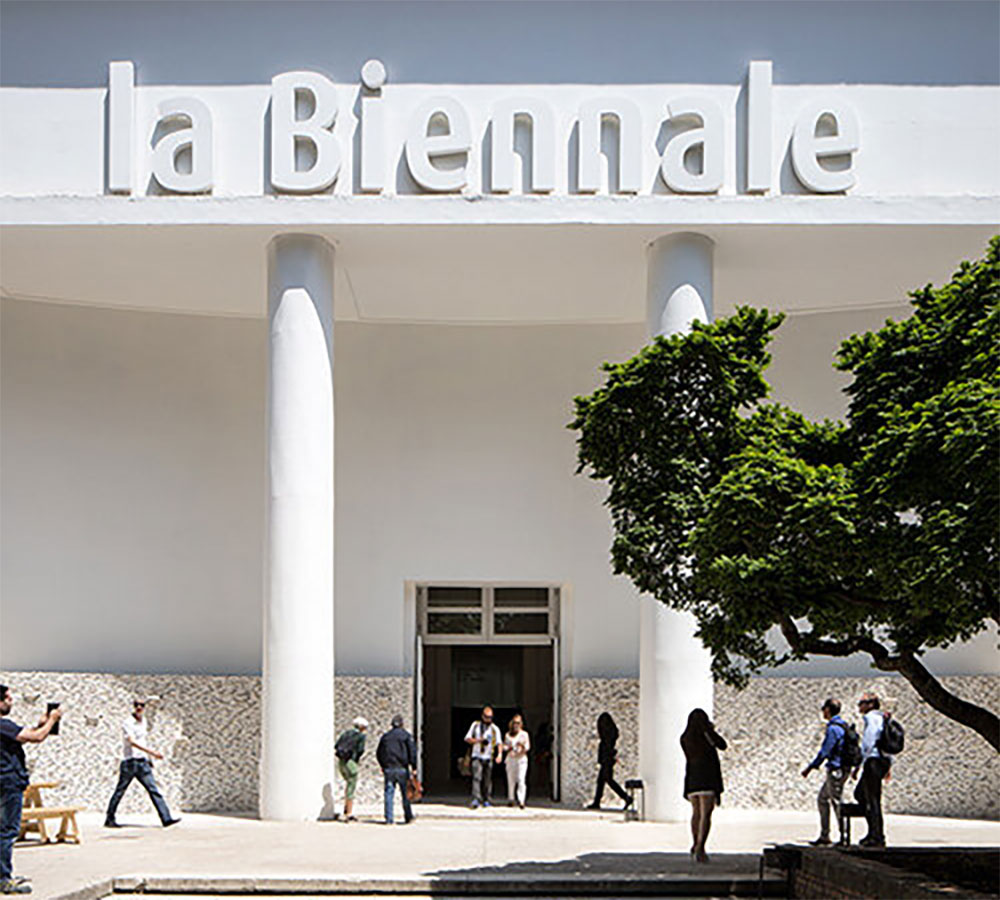
The event that will command the most sustained attention is undoubtedly the 61st International Art Exhibition of La Biennale di Venezia. Running from 9 May to 22 November 2026 across the Giardini, the Arsenale, and various locations throughout the city, the exhibition carries an unusual weight this year. Its curator, the Cameroonian-Swiss thinker and institution-builder Koyo Kouoh — who had been appointed Artistic Director of the Visual Arts Department in November 2024 and was the first African woman invited to lead the Venice Art Exhibition — died unexpectedly in May 2025, just days before the scheduled public unveiling of her concept. La Biennale di Venezia, with the full support of her family, decided to carry out the exhibition precisely as she conceived it.
The title Kouoh chose was In Minor Keys, a phrase drawn from music where the minor key carries both structural and emotional meaning. The curatorial text she submitted to the Biennale's president in April 2025 described an intention to invite visitors to "shift to a slower gear and tune in to the frequencies of the minor keys," proposing a reconnection with what she called art's natural habitat: the emotional, the sensory, the affective. The exhibition resists positioning itself as a commentary on geopolitical events while remaining entirely conscious of them. As the curatorial text stated, it proposes "a radical reconnection with art's natural habitat and role in society" rather than either commentary or escape.
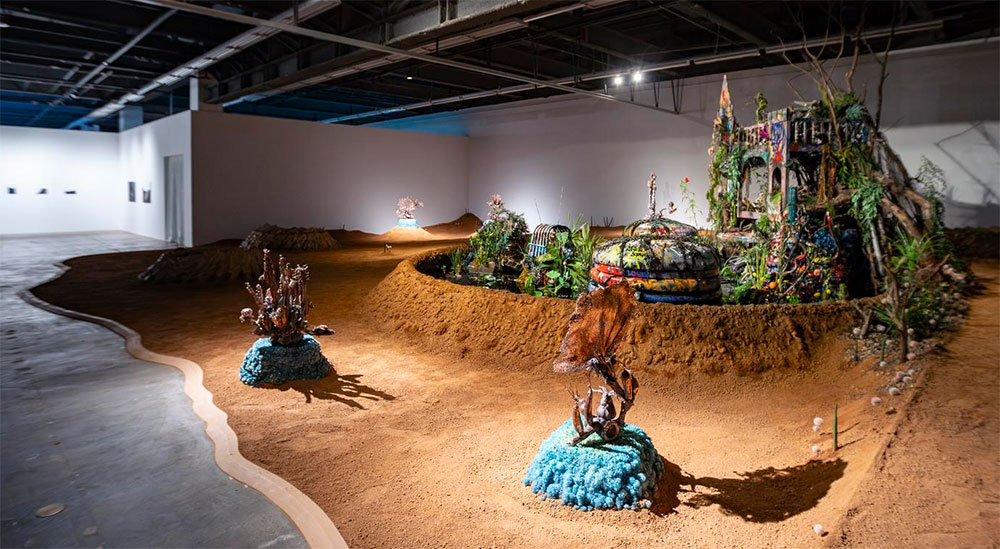
The exhibition unfolds through what Kouoh's team describes as undercurrents — Shrines, Processional Assemblies, Enchantment, Spiritual and Physical Rest, and Schools — conceived as overlapping zones rather than categorical divisions. The spatial design, entrusted to Cape Town-based Wolff Architects, uses sweeping indigo banners descending from the rafters at the Giardini and Arsenale to mark transitions between zones, with the threshold as its central architectural device. The visual identity, designed by Clarissa Herbst in collaboration with Alex Sonderegger, draws on the Japanese concept of komorebi — the dappled, shifting quality of light filtered through leaves.
The 111 invited participants include individual artists, collaborative duos, collectives, and artist-led organisations drawn from many geographies selected by Kouoh for their resonances and possible convergences. The artist selection reflects her longstanding engagement with practices emerging from Salvador, Dakar, San Juan, Beirut, Paris, and Nashville, among others — a relational geography built over a lifetime of curatorial relationships. The team she assembled to realise the exhibition — advisors Gabe Beckhurst Feijoo, Marie Hélène Pereira, and Rasha Salti, together with editor-in-chief Siddhartha Mitter and research assistant Rory Tsapayi — worked through remote and in-person seminars across several continents following her passing. The Golden Lions for Lifetime Achievement will not be awarded in this edition, as Kouoh did not have the opportunity to define them. National participations and collateral events were announced on 4 March 2026.
Pre-opening days are scheduled for 6, 7, and 8 May, with the inauguration and awards ceremony on 9 May. labiennale.org/en
Sydney: Rememory and the Twenty-Fifth Edition
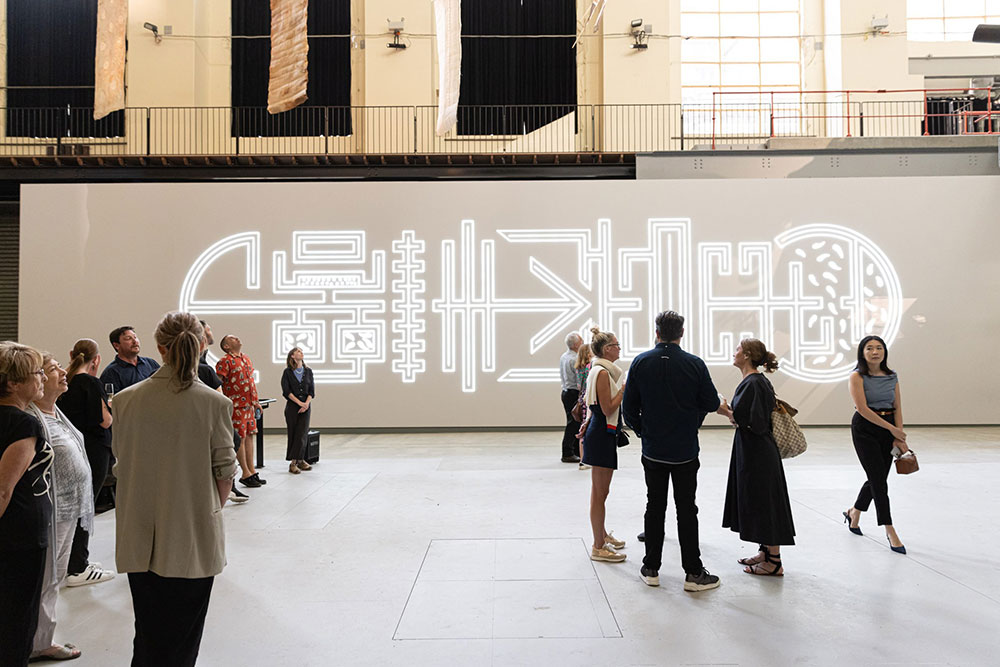
Opening considerably earlier in the year, the 25th Biennale of Sydney runs from 14 March to 14 June 2026, with free admission across all sites. The artistic director is Hoor Al Qasimi, president and director of the Sharjah Art Foundation, who has titled the edition Rememory a word drawn from an essay by Toni Morrison, employed here as a means of revisiting, reconstructing, and reclaiming histories that have been erased or suppressed.
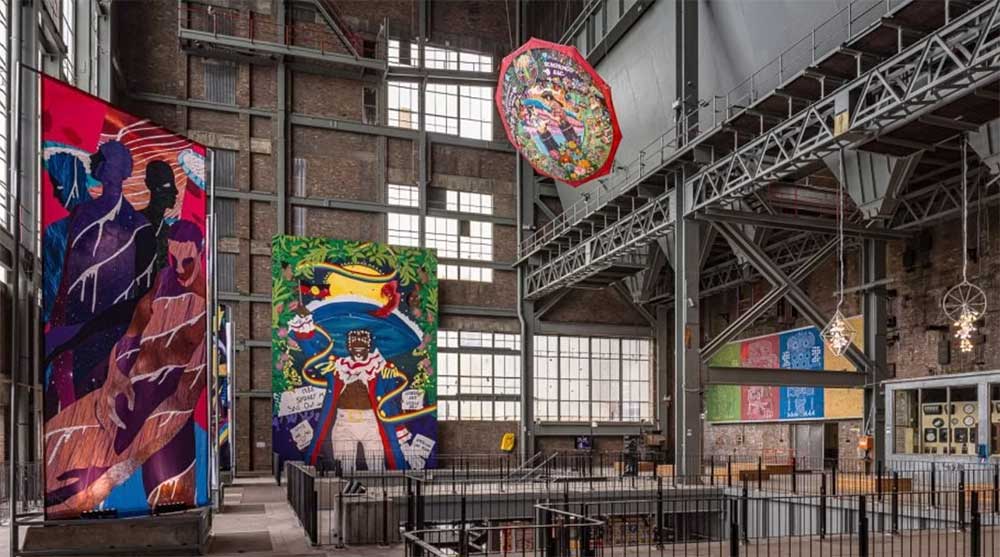
Al Qasimi brings to Sydney a commitment to working across local communities and to incorporating voices not typically positioned at the centre of large-scale international events. The exhibition activates five major sites, prominently including the White Bay Power Station — the heritage industrial site in Western Sydney whose transformation for the 2024 edition set a significant precedent for the city's expanded cultural geography. The 83 artists and collectives drawn from 37 countries include Sydney-born Dennis Golding, Berlin-based Kapwani Kiwanga, and Carmen Glynn-Braun, a First Nations artist from the Kaytetye, Anmatyerr, and Arrernte nations.
The appointment of Bruce Johnson McLean as Fondation Cartier pour l'art contemporain First Nations Curatorial Fellow for this edition continues a programme established in 2023 to commission and promote First Nations arts and culture as a structural component of the Biennale — not as a supplementary strand, but integrated into the overall curatorial vision.
The 25th edition's emphasis on memory, local specificity, and community-embedded practice offers substantial material for dialogue with their own collection and exhibition priorities. biennaleofsydney.art
Gwangju: Thirty Years and a New Curatorial Direction
The 16th Gwangju Biennale opens in September 2026 and runs through November, marking the event's thirtieth anniversary. Founded in 1995 in a city that had been the site of a pro-democracy uprising in 1980, the Gwangju Biennale carries a specific institutional history distinct from its counterparts: it emerged as a gesture of cultural processing in the aftermath of political violence, and its programming has consistently reflected the relationship between artistic practice and civic life.
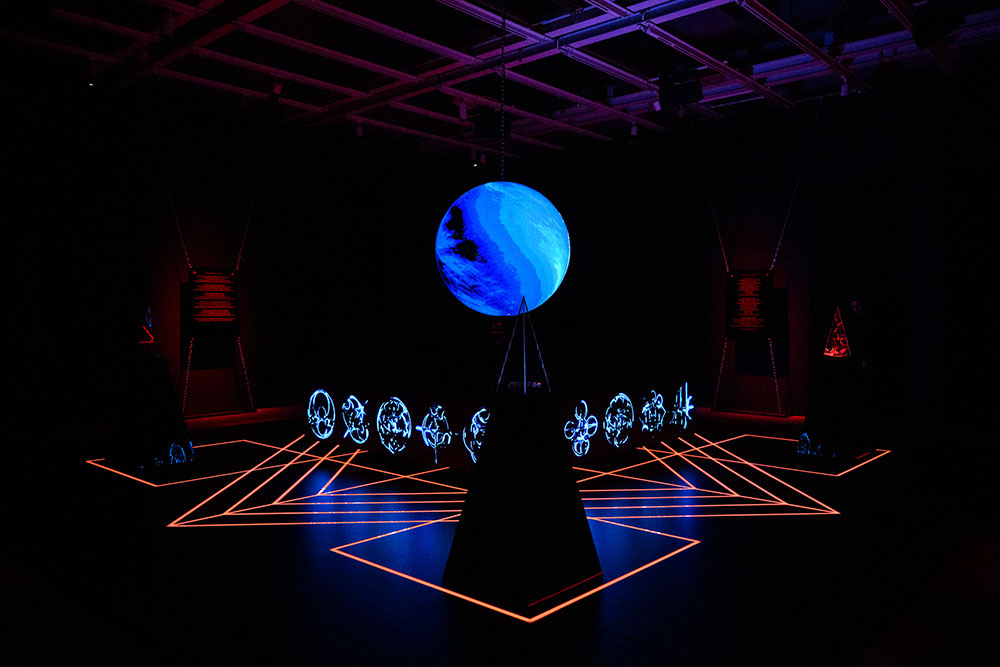
The artistic director for this edition is Ho Tzu Nyen, a Singaporean artist celebrated for his expansive explorations of myth, historiography, and media in Asia. He is not the first artist-curator in the biennial's history — previous editions have been organised by figures including Okwui Enwezor, Harald Szeemann, Nicolas Bourriaud, and Charles Esche — but his appointment continues the event's tradition of selecting directors whose own practice substantially informs their curatorial approach. Ho's stated focus on the transformative capacity of artistic practice and on collective solidarities in the face of intersecting crises responds directly to the anniversary context. His approach brings cross-media work spanning film, sound, installation, and archival research to a format that expands across the Biennale Exhibition Hall and multiple sites throughout the city.
Those interested in Southeast Asian and East Asian contemporary practice, the Gwangju Biennale offers an important window into how the art of this region is being framed both locally and internationally. gwangjubiennale.org/en/events
Other Editions Worth Noting
The international biennale calendar for 2026 extends well beyond these principal events. The 6th Kochi-Muziris Biennale in Kerala, India, representing one of Asia's most significant recurring exhibitions in terms of its engagement with coastal, diasporic, and postcolonial histories, was active in the early part of the year. The Thailand Biennale in Phuket and the Singapore Biennale 2025, both running into 2026, extend the Asia-Pacific dimension of the calendar considerably. In Europe, the Biennale Gherdëina in the Dolomites — a smaller, site-specific event embedded within the natural landscape of Val Gardena — opens on 31 May, offering a different register of engagement from the city-based events. The Sharjah Architecture Triennial and the inaugural Pan-African Architecture Biennale in Nairobi add further points of reference in the wider ecology of recurring international exhibitions with which art institutions may wish to maintain awareness.
What the Year Suggests
For tracking curatorial tendencies, 2026 presents a coherent, if unplanned, set of shared preoccupations across otherwise distinct events. The attention to memory and to histories of suppression — apparent in Sydney's Rememory and threaded through Kouoh's selection for Venice — runs alongside an interest in collective and community-based practice rather than individualised authorship. Gwangju's emphasis on democratic resilience connects its current edition to its founding context in ways that carry renewed relevance in the present political climate. And the posthumous character of Venice's central exhibition gives the year as a whole a particular quality of reflection on loss, inheritance, and the transmission of curatorial vision.