

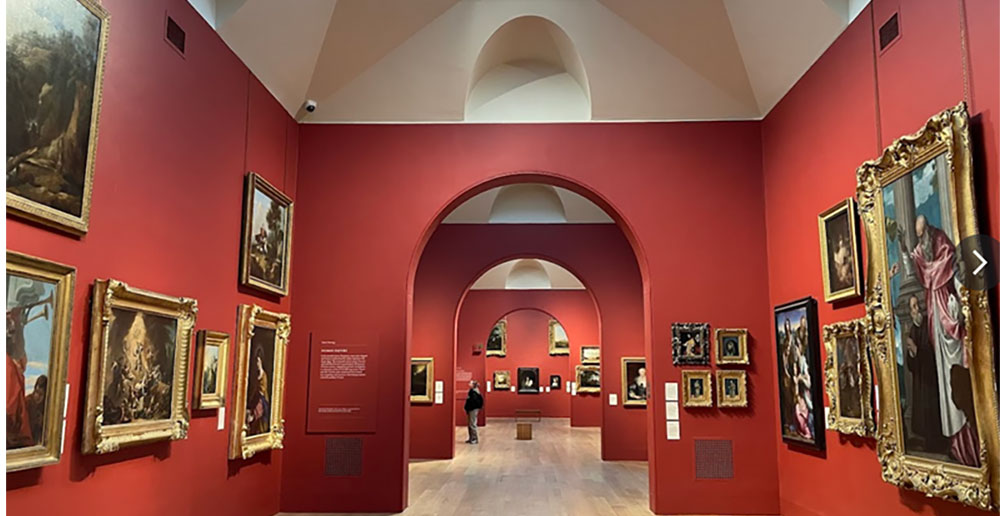
Origin, Collection and Architectural Legacy
Dulwich Picture Gallery holds a singular position in the history of public art institutions. Opened in 1817 in the south London suburb of Dulwich, it is the oldest purpose-built public art gallery in England, and arguably the first of its kind anywhere in the world. It merits attention not merely as a historical curiosity but as a working model whose decisions regarding collection care, architectural design, and public access continue to resonate across the field.
Origins: An Accidental Institution
The gallery's founding narrative is unusual in institutional terms. It did not emerge from a state initiative or a royal commission but from a pair of private art dealers — the French-born Noël Desenfans and his younger Swiss friend, the painter Sir Francis Bourgeois — who found themselves holding a collection they had originally assembled for someone else. In 1790, Desenfans was commissioned by Stanisław August Poniatowski, King of Poland, to form a national collection for his country. Over the following five years, the two partners travelled Europe acquiring works of considerable quality. Before the collection could reach Poland, however, the Polish-Lithuanian Commonwealth was partitioned and ceased to exist as an independent state. The King abdicated, and Desenfans was left holding several hundred paintings for which he had not been paid and could find no natural home.
Desenfans approached the British government and the Tsar of Russia without success. When he died in 1807, Bourgeois inherited the collection and continued building it. Following a riding accident, Bourgeois died in 1811, and in his will he bequeathed the paintings to Dulwich College — the charitable foundation established in the early seventeenth century by the Elizabethan actor Edward Alleyn — with the explicit stipulation that they be made available for the public's inspection. This condition, articulated in the will of a private individual, is among the earliest formal expressions of a now-standard institutional principle: that access to art is a public good.
The bequest joined a collection that Dulwich College already held. Edward Alleyn had bequeathed his own pictures to the institution on his death in 1626, including a number of royal portraits, twenty-six of which survive in the collection today. A further donation from the actor William Cartwright followed in 1686. These earlier holdings, largely British in character, sit alongside the Bourgeois-Desenfans core to form a collection of unusual breadth and depth, unified not by a single patron's taste but by the accumulated decisions of several distinct individuals across more than two centuries.
The Building: Sir John Soane and the Problem of the First Gallery
Because no purpose-built public picture gallery had existed in England before, Bourgeois' commission to his friend the architect Sir John Soane in 1811 required the resolution of problems without precedent. Soane was designing from first principles. Working within severe budgetary constraints — he declined to charge for his services and used low-cost London stock brick rather than the stone porticos fashionable among his contemporaries — he produced a building whose formal and functional solutions have influenced gallery architecture from that point to the present.
The most consequential of Soane's decisions was the treatment of light. Rather than relying on windows, which create uneven illumination and risk glare, he introduced a system of top-lit galleries with octagonal skylights designed to distribute natural light indirectly across the picture plane. The effect was to make the paintings consistently visible throughout the day and across different positions in the room. The architect Philip Johnson later observed that Soane had taught the profession how to display paintings — a judgement supported by the extent to which Soane's solution at Dulwich became the default model for gallery lighting in the twentieth century, from the Kimbell Art Museum in Texas to the Yale Center for British Art.
The building also incorporates a mausoleum, commissioned by Bourgeois to house the remains of Desenfans and his wife Margaret, as well as Bourgeois himself. Soane embedded the mausoleum structurally within the gallery, lit from above through amber-tinted glass, so that it functions simultaneously as a burial chamber and an architectural focal point. It remains, in the professional literature, one of the more unusual examples of programme integration in British institutional architecture. The gallery and mausoleum are jointly listed at Grade II* on the National Heritage List for England.
The building has been modified several times since Soane's death. Charles Barry Jr added a lobby in 1866; the attached almshouses were converted into additional gallery space in 1884; and further rooms were completed between 1910 and 1937 under Edwin Stanley Hall and Harry Stuart Goodhart-Rendel respectively. A V-1 rocket strike in July 1944 caused serious structural damage, destroying the mausoleum and parts of the gallery. The post-war reconstruction by Austin Vernon and Partners, completed in 1953, replicated the original fabric as closely as possible, working from surviving drawings and fragments, including amber glass carefully collected from the rubble. In 2000, a further extension designed by Rick Mather added education facilities and improved visitor amenities.
The Collection: Scope and Strengths
The permanent collection comprises approximately 600 works, spanning European painting from around 1500 to 1850. Its particular strengths are in the Dutch and Flemish schools, French Baroque and Rococo painting, Spanish Baroque works, and British portraiture. The Dutch and Flemish holdings alone number 228 paintings, including works by Rembrandt van Rijn, Peter Paul Rubens, Anthony van Dyck, Aelbert Cuyp, and David Teniers the Younger. Rembrandt's Girl at a Window is among the best-known paintings in the collection; Jacob de Gheyn III, also by Rembrandt, has the distinction of having been stolen and recovered four times. Van Dyck's Samson and Delilah and Gerrit Dou's Woman Playing a Clavichord are further highlights of the Northern European holdings.
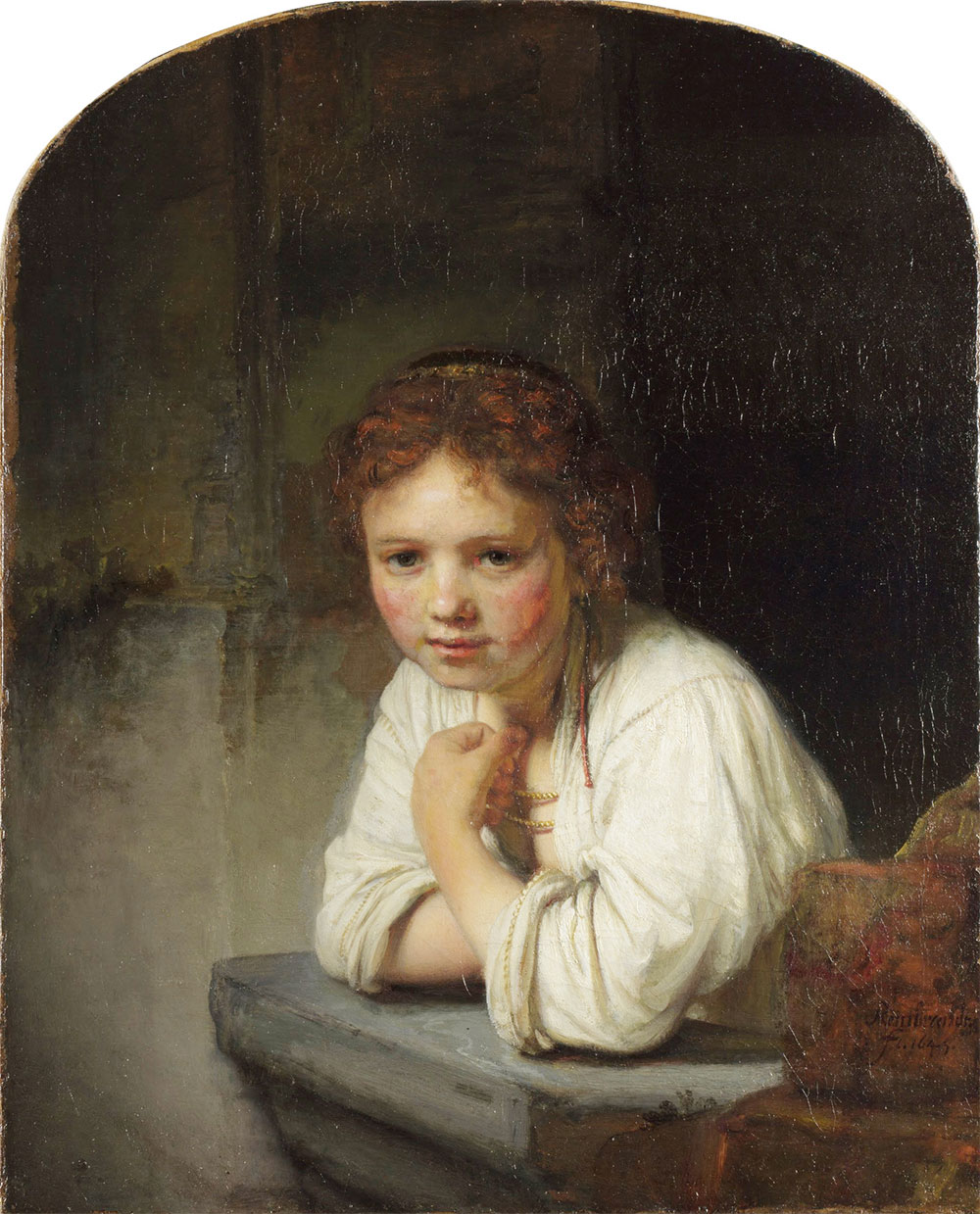
Among French painters, Nicolas Poussin and Claude Lorrain are well represented, and the collection holds a notable group of works by Jean-Antoine Watteau. The Rococo section benefits significantly from the acquisitions made during the original Polish commission, which gave Desenfans access to continental dealers and private collections during a period of considerable availability. The Spanish holdings include paintings attributed to Bartolomé Esteban Murillo and works from the circle of Diego Velázquez, while Italian representation spans Canaletto's views of English scenes and works from the Renaissance and Baroque periods.
British portraiture forms a distinct strand of the collection, traceable directly to the Alleyn and Cartwright bequests. Thomas Gainsborough is represented by several family portraits, including Mrs Elizabeth Moody with her Sons Samuel and Thomas, and the collection holds works by Sir Joshua Reynolds, Sir Peter Lely, and others. These British holdings give the gallery an unusually coherent sub-collection tracing the development of the portrait tradition in England from the Tudor period through the eighteenth and early nineteenth centuries.
Collection Care and Scholarly Access
The gallery's approach to collection management reflects its origins as a teaching resource. When it first admitted visitors in 1815 — two years before the official public opening, and then only to students of the Royal Academy of Arts — it drew an audience that included John Constable, Joseph Mallord William Turner, William Etty, and later Vincent van Gogh. It served, in the nineteenth century, as a practical resource for painters who wished to study original works. That function has shaped the gallery's ongoing relationship with researchers and conservation specialists.
Today the gallery maintains dossiers and conservation files for each work in the collection, alongside interpretation materials stretching back to 1814, visitor books from 1869 to 1940, and committee minutes from 1858. Scholarly catalogue work has been sustained across successive directorships; a comprehensive catalogue of the Dutch and Flemish holdings by Ellinoor Bergvelt and Michiel Jonker was published in 2016 and subsequently released in expanded online form through RKD Studies. The gallery makes its collection images available for licensed use through Bridgeman Images and, for non-commercial purposes, offers free downloads directly. Researchers are formally welcomed, and the gallery's curators work alongside conservators and technical scientists on ongoing preservation and attribution research.
Governance and Programme
The gallery operated as part of Alleyn's College of God's Gift for most of its history before becoming an independent registered charity in 1994 and then being formally reconstituted in 1995 following a reorganisation of the broader Alleyn's College charity. The transition to independent governance has permitted a more developed public programme, including a regular schedule of temporary exhibitions, community engagement work, and partnerships with schools. The gallery marked its bicentenary in 2017 with a programme that included a temporary pavilion competition for emerging architects, in partnership with the London Festival of Architecture, won by the practice IF_DO.
In 2021, following a fourteen-month closure during the pandemic, the gallery undertook a complete rehang of the permanent collection, the first such comprehensive reinterpretation in many years. The exercise offered an opportunity to reconsider the relationship between the gallery's distinct historical strands — the Alleyn and Cartwright pictures, the original Bourgeois-Desenfans core, and the accumulated later bequests — and to present them in a framework legible to contemporary audiences without distorting the collection's historical character.
A redevelopment programme announced in 2023, designed by the architectural practice Carmody Groarke and valued at approximately £4.9 million, includes a new sculpture garden and a building dedicated to school and family activities. In 2025, the transformation of the gallery's gardens was completed, extending the institution's engagement with its immediate landscape and creating additional contexts for public encounter with art beyond the gallery rooms.
A Model Worth Examining
For professionals in the gallery and museum sector, Dulwich Picture Gallery presents a case study in institutional formation that has few equivalents. It demonstrates how a collection assembled for one purpose can, through the decisions of its stewards at critical moments, become the foundation of a durable public institution. Its building offers one of the clearest early examples of architecture designed specifically around the needs of paintings and their viewers, with solutions that have proved more transferable than almost any other single model in the field. And its approach to collection care — sustained scholarly cataloguing, active conservation research, and a consistent commitment to public access — reflects a set of priorities that remain recognisable and relevant to any institution managing a collection of comparable age and complexity.
The gallery is located at Gallery Road, Dulwich, London dulwichpicturegallery.org.uk