
The exhibition calendar taking shape across New York City in 2026 reflects an unusual confluence of institutional ambition, scholarly urgency, and commercial confidence. Public museums are mounting exhibitions that have been years in preparation, while commercial galleries have scheduled programming that ranges from measured historical reassessment to the presentation of new work by artists. Taken together, the year offers a useful lens through which to observe where the field currently places its priorities — and which historical narratives it considers overdue for reconsideration.
The Public Museum Programme
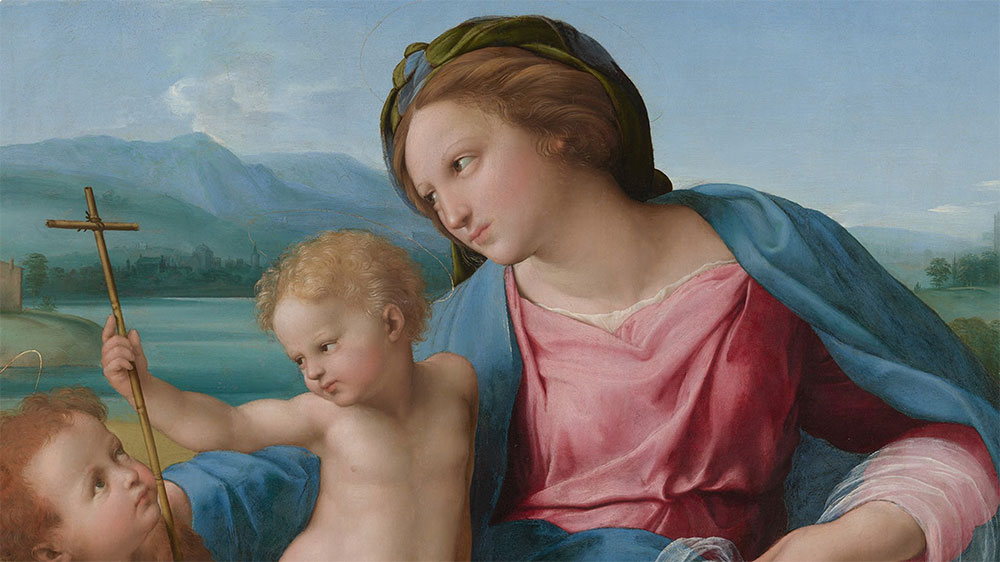
The Metropolitan Museum of Art opens what is arguably the most logistically complex loan exhibition of the season with Raphael: Sublime Poetry, running from March 29 through June 28. Described by the institution as the first comprehensive exhibition on Raphael ever staged in the United States, the presentation brings together more than 200 works drawn from international collections, including preparatory drawings that rarely travel from institutions such as the Louvre, the Galleria Borghese, and the Albertina. The exhibition traces Raphael's arc from his early formation in Urbino and Florence through his work in the papal court in Rome, consolidating decades of technical research alongside rarely lent paintings and tapestries. For American audiences, the scale of the assembled material is genuinely unusual; the Met has framed this not as a thematic inclusion within a broader Renaissance survey, but as a focused reckoning with an artist whose cultural mythology has long outpaced careful scholarly examination.
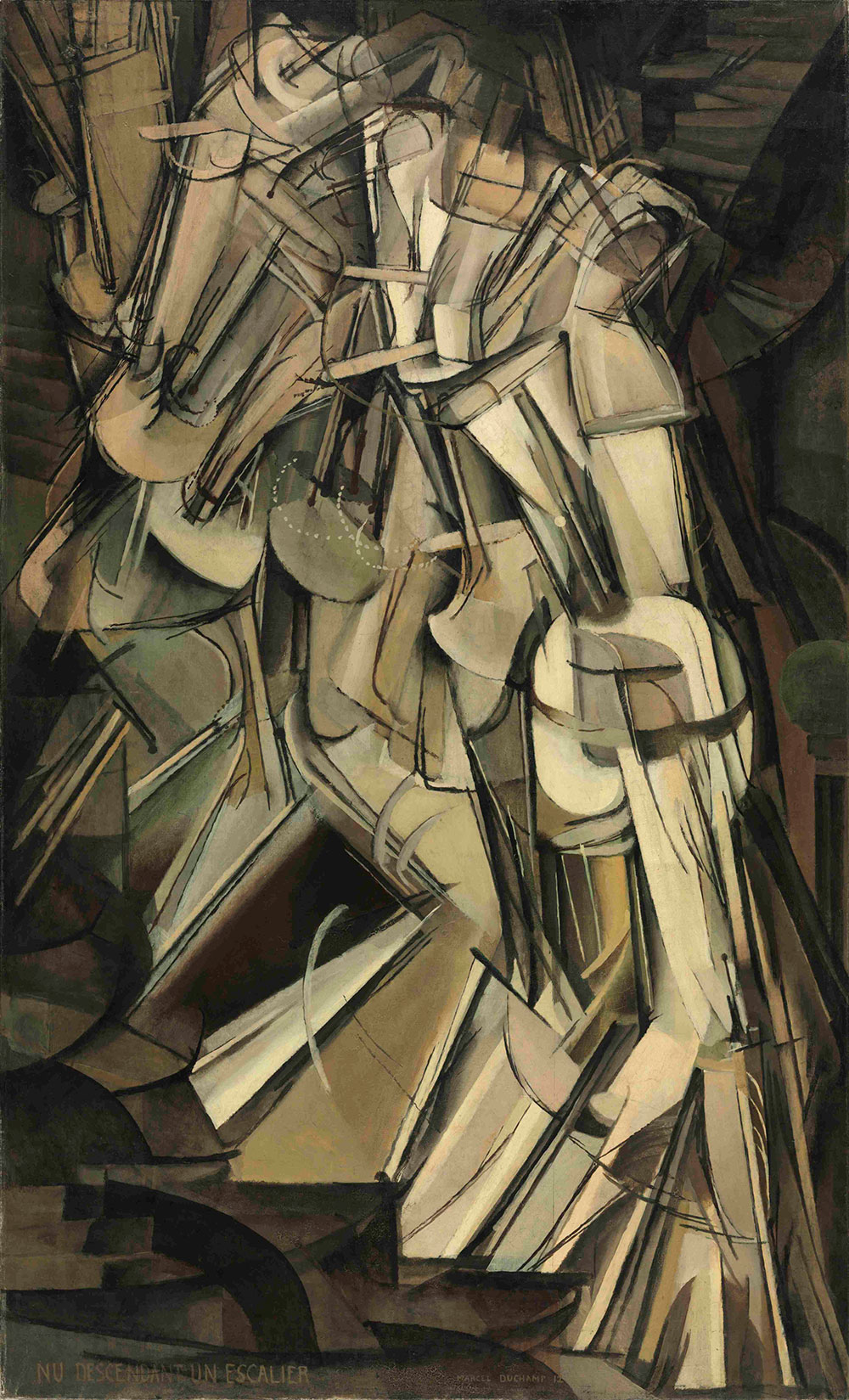
The Museum of Modern Art follows on April 12 with its retrospective of Marcel Duchamp, the first of its scope in the United States since 1973. Featuring some 300 works and running through August 22, the exhibition spans Duchamp's entire career — from early painting through the readymades, The Large Glass, and his later conceptual maneuvers — offering an opportunity to reassess the full body of work that has been cited as foundational by generations of subsequent artists. The distance of more than fifty years since the last major American retrospective gives the exercise considerable historical weight, and MoMA's curation is expected to engage seriously with the question of how Duchamp's interventions have continued to reorient both artistic practice and the institutional conditions that govern it.
The Whitney Museum of American Art opened the 82nd Whitney Biennial on March 8, with the exhibition running through August 23. Co-organized by curators Marcela Guerrero and Drew Sawyer, this edition features 56 artists, duos, and collectives and is oriented around questions of relationality — interspecies kinships, familial relations, geopolitical entanglements, and technological affinities. Rather than advancing a single critical thesis, the curators have described the approach as one that foregrounds mood and texture, seeking to capture the complexity of the present through accumulated atmospheric encounters rather than declarative argument. The Whitney Biennial remains the most closely watched survey of American contemporary art, and this edition's thematic preoccupations reflect a field working through significant cultural and political uncertainty.
At the Solomon R. Guggenheim Museum, Carol Bove opened on March 5 as the most comprehensive survey of the artist's practice to date. Spanning 25 years of work, the exhibition unfolds within Frank Lloyd Wright's rotunda, moving from Bove's early drawings through to the monumental steel "collage sculptures" for which she is now widely recognized, including new works made specifically for the Guggenheim's architectural conditions. The presentation also includes structural interventions that alter how the building itself is experienced, treating Wright's space as an active element of the exhibition rather than a neutral container. The Guggenheim has further announced a solo rotunda exhibition by Taryn Simon later in the year, as well as a presentation of Pop Art, completing a programme that addresses both contemporary art and twentieth-century historical territory.
MoMA PS1, in Long Island City, will open its sixth edition of Greater New York on April 16, running through August 17. This signature survey of artists living and working in New York City spans two floors and includes site-specific installations and new productions, with the majority of works not previously exhibited. The exhibition presents 53 artists and collectives, and alongside the Whitney Biennial, constitutes one of two large-scale surveys this season through which the field takes a reading of where contemporary practice in New York currently stands.
The New Museum's reopening on March 21 represents one of the most significant institutional developments of the year. The museum's 60,000-square-foot expansion, designed by OMA in collaboration with Shohei Shigematsu and Rem Koolhaas, more than doubles its footprint and positions it more credibly as Manhattan's primary institution devoted exclusively to contemporary art. The inaugural exhibition for the expanded building assembles more than 150 artists, writers, scientists, and filmmakers, and is structured around evolving ideas of the human — from early modernist visions through speculative responses to technological change.
Elsewhere among the public institutions, the Jewish Museum presents an exhibition of Paul Klee's final decade from March 20 through July 26, juxtaposing his last works with earlier career-defining pieces and returning direct attention to his period of late creativity under Nazi persecution and the shadow of terminal illness. The Drawing Center opens Ceija Stojka: Making Visible on February 20 — the first major U.S. retrospective of the Austrian Romani artist, whose expressionistic paintings document both the experience of the Holocaust and the traditions of Roma cultural life. Stojka, who died in 2013, has remained underrepresented in American institutional contexts, and the Drawing Center's presentation addresses a gap of considerable historical significance. Dia Chelsea closes the year with States of Listening, opening December 4, which restages the 1970s sound installations of French composer Éliane Radigue alongside newly programmed live performances — a fitting conclusion to a year in which several institutions have made a point of attending to artists who have operated outside canonical frameworks.
At the Studio Museum in Harlem, rotating presentations from the permanent collection continue through August 16, drawing on holdings that span work by Jean-Michel Basquiat, Emma Amos, Isaac Julien, Simone Leigh, and more than 800 artists from across the Black diaspora. The Bronx Museum of the Arts opened its seventh AIM Biennial, Forms of Connection, in January, showcasing 28 artists from the museum's Artist in Marketplace fellowship programme.
The Museum of the City of New York has installed Joe Macken's monumental cardboard architectural model of New York City — a work 21 years in the making and roughly 50 by 30 feet in dimension — near its permanent galleries on the evolution of the city. The work occupies an unusual position between documentary precision and subjective memory, and its scale alone ensures it a significant presence in the institution's programming.
Private Galleries
The commercial gallery programme this season is defined in part by David Zwirner's presentation of William Eggleston's The Last Dyes, which ran from January 15 through March 7 at the gallery's 19th Street location. The exhibition presents the final prints ever produced from Eggleston's archive using the dye-transfer process — a method now discontinued — that was central to establishing color photography as a medium for serious artistic inquiry in the 1970s. The prints' hyper-saturated tones retain the quality of careful revelation that distinguished Eggleston's early work, and their status as a definitive conclusion to this phase of his archive gives the presentation a documentary weight beyond the commercial occasion.
David Zwirner's spring programming continues with Isa Genzken's VACATION at the gallery's Walker Street space (opening March 13), and Elizabeth Peyton at 19th Street from March 19 through May 2. A solo exhibition of Lisa Yuskavage opens at 19th Street in May, adding to a season in which the gallery is balancing historical presentation with strong contemporary programming across its New York locations.
Frieze New York returns to the Shed for its fourteenth edition from May 3 through 17, with 67 participating galleries representing 26 countries. The exhibitor list includes Gagosian, Hauser & Wirth, Pace Gallery, Perrotin, Thaddaeus Ropac, White Cube, and David Zwirner alongside a significant cohort of New York galleries including 303 Gallery, Tanya Bonakdar Gallery, James Cohan, and Alexander Gray Associates. For institutions and galleries alike, Frieze functions less as a fair in the conventional sense than as an annual point of concentration for the sector — a few days during which the field takes its own temperature.
The Public Art Fund has a substantial 2026 programme that extends the season beyond institutional walls. Gabriel Orozco's commission — his first major public art exhibition in New York City — will occupy JCDecaux bus shelters in New York, Chicago, and Boston from July 8 through September 6, presenting ten new site-specific images exploring urban life. The presentation returns Orozco to photography for the first time in a commissioned series, a development of note for an artist whose photographic work from the 1990s and early 2000s remains among the most discussed of that period. In City Hall Park, Genesis Belanger's first public exhibition unfolds across three sculptural vignettes that engage questions of justice, artifice, and the marking of time — the third vignette responding specifically to the decommissioning of the one-cent coin by the US Mint in 2026. On the High Line's Plinth, Tuan Andrew Nguyen's The Light That Shines Through the Universe reimagines one of the Bamiyan Buddhas in 27 feet of sandstone, proposing a form of monument-making attentive to historical erasure and its aftermath.
Observations
The concentration of major historical surveys — Raphael, Duchamp, Carol Bove, Paul Klee — reflects a tendency among large institutions to ground ambitious programming in canonical or near-canonical figures whose drawing power can be reliably projected well in advance of opening. The more significant curatorial challenge, as always, lies in what these historical framings actually argue, and whether the scholarly apparatus brought to bear offers genuine revision or institutional confirmation.
The simultaneous emergence of the Whitney Biennial, Greater New York, the New Museum's inaugural programme, and several gallery surveys of living artists suggests a field genuinely engaged with the present moment, even if the terms of that engagement remain contested. The thematic emphasis on relationality, ecological entanglement, and collective experience across several major exhibitions this season points to concerns that have been building in curatorial discourse for some years, and 2026 may be the moment at which these preoccupations achieve their fullest institutional expression.
Information as of March 2026. Institutions and dates are subject to change