
The 2026 exhibition calendar is shaped by large-scale retrospectives of historically significant figures, a growing commitment to artists whose contributions had previously been underrepresented in major museum contexts.
The Old Masters Return
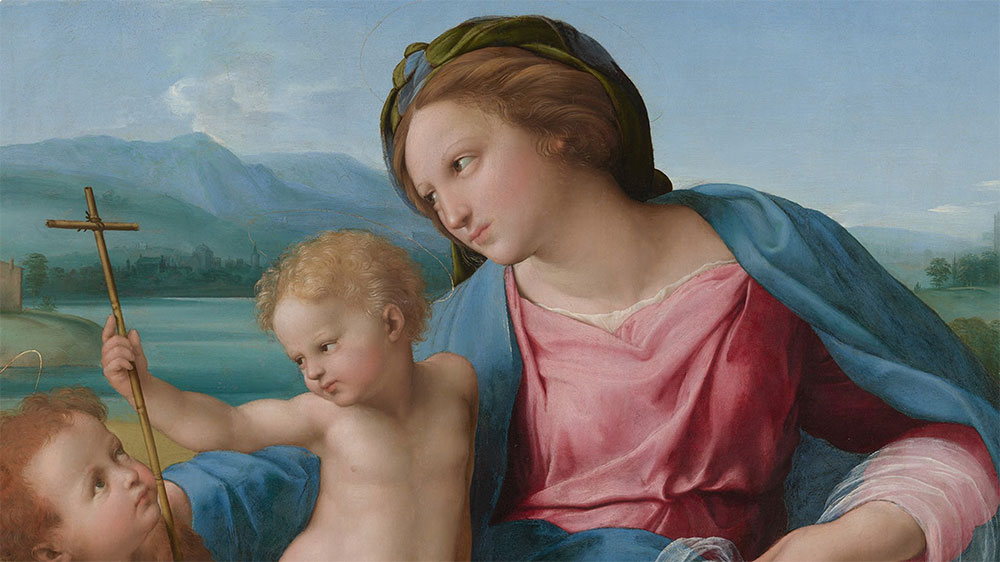
The Metropolitan Museum of Art's "Raphael: Sublime Poetry", running from March 29 through June 28, is the first comprehensive exhibition on Raphael ever mounted in the United States. With more than 200 works drawn from international collections — many of which have rarely, if ever, been exhibited together — the show traces the artist's trajectory from his origins in Urbino through his formative years in Florence, where he worked alongside Leonardo da Vinci and Michelangelo, to his final, prolific decade at the papal court in Rome. The chronological framework is augmented by thematic sections examining the scientific and intellectual currents that ran parallel to his art. The logistical achievement alone — securing loans of this calibre from institutions across Europe — signals the kind of cross-institutional cooperation that sets a benchmark for the field.
The Met's Raphael show will likely reshape visitor expectations and interest in the period for some time to come, and merits consideration in how complementary programming is framed in the months following its close.
Duchamp at MoMA: A Long-Overdue Reckoning
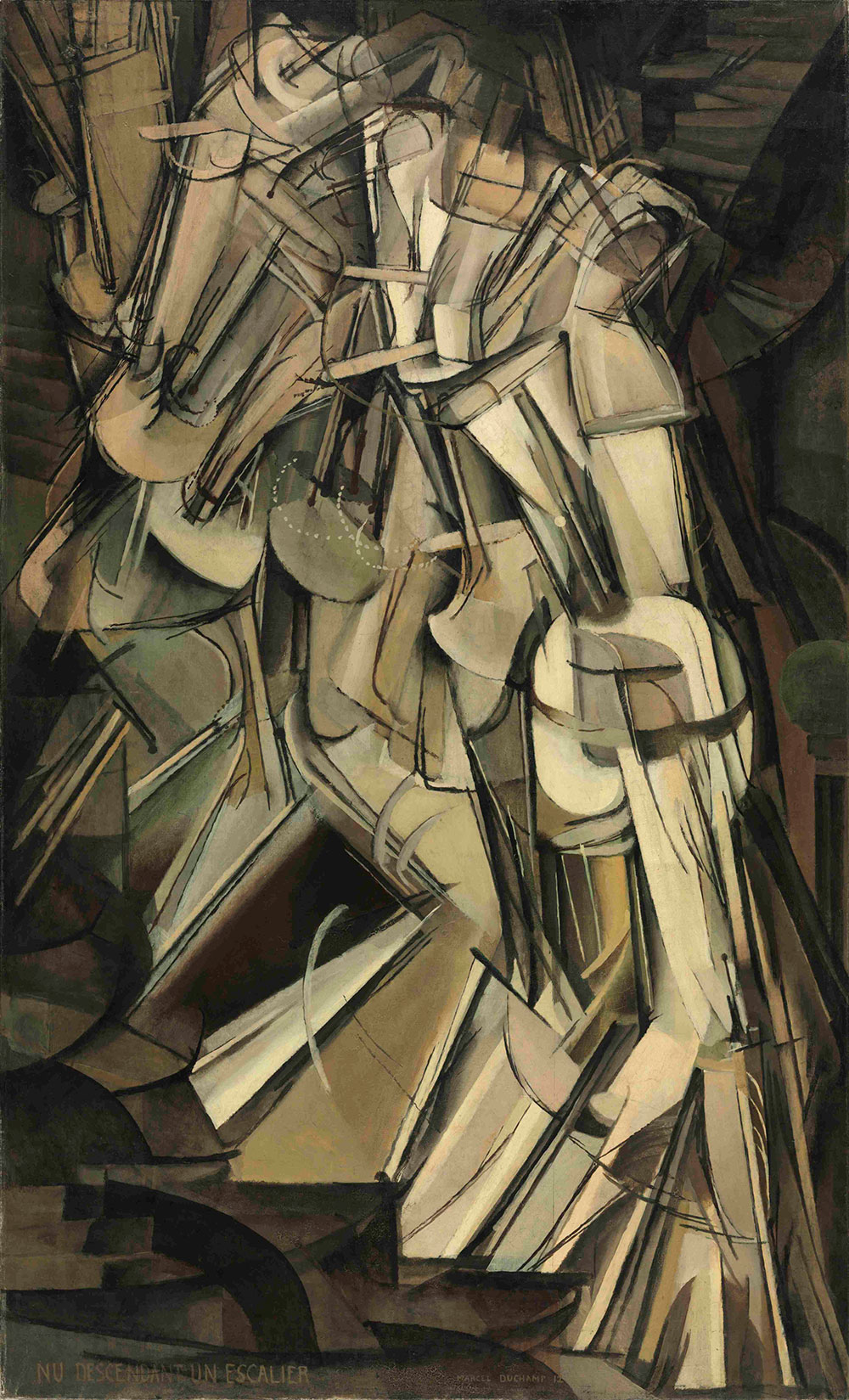
The Museum of Modern Art opens what is arguably the most anticipated scholarly event of the year in April: a Marcel Duchamp retrospective featuring nearly 300 works, including the Cubism-inflected Nude Descending a Staircase, No. 2 (1913), normally held at the Philadelphia Museum of Art, which co-organises the exhibition. The last North American retrospective of Duchamp's work was staged in 1973, meaning this presentation arrives more than fifty years after the previous effort to take full stock of an artist whose influence on contemporary practice remains foundational. The exhibition travels to Philadelphia later in the year (October 10, 2026 through January 31, 2027), and a version will subsequently be presented at the Centre Pompidou and Grand Palais in Paris in spring 2027.
London: Women Artists and the Tate's Ambitious Season
Tate Modern's 2026 programme focuses on women artists across multiple seasons. The year opens with "Tracey Emin: A Second Life" (February 26 – August 31), Emin's largest retrospective to date. Spanning more than 40 years, the exhibition brings together over 90 works across painting, sculpture, video, textile, neon, and installation. Conceived in close collaboration with the artist, the show moves through key episodes of her life — her early years in Margate, her emergence within the Young British Artists milieu of the 1990s, and her recent experience of cancer diagnosis, surgery, and recovery. Previously unexhibited material is included alongside well-known works such as My Bed (1998), and a new documentary about the artist premieres as part of the exhibition.
Later in the summer, Tate Modern presents "Frida: The Making of an Icon" (June 25, 2026 – January 4, 2027), an exhibition examining how Kahlo became a cultural phenomenon rather than simply a celebrated painter. The show brings together more than 130 works, supplemented by photographs, documents, and archival material from Kahlo's personal archive, and places her paintings in dialogue with works by contemporaries and by artists she directly influenced. The sheer scope of public appetite for Kahlo-related programming remains a consistent factor across most institutional markets, and this exhibition's extended run reflects confidence in sustained attendance.
July brings the opening of a Tate Modern survey of Cuban-American artist Ana Mendieta (July 9, 2026 – January 10, 2027), including works never previously exhibited in the United Kingdom. The Tate is billing this as a show that exposes less-seen aspects of Mendieta's practice — particularly her films, some of which have been newly remastered — suggesting an intention to move beyond the well-rehearsed photographic documentation of her performances and offer a more complete account of her methods.
Tate Britain contributes to a notable year with Hurvin Anderson's first major museum show (March 26 – August 23), gathering more than 60 paintings that span the artist's career, including his distinctive swimming pool canvases and his interior studies of Birmingham's Black barbershops. In autumn, Tate Britain presents "The 90s," curated by former British Vogue editor-in-chief Edward Enninful, examining the decade through the lens of photographers such as Juergen Teller and Nick Knight alongside the Young British Artists. The show runs October 1, 2026 through February 14, 2027. A further autumn programme, "Vanessa Bell & Duncan Grant," brings together 250 works by the Bloomsbury Group's central figures, and includes a restaging of Duncan Grant's studio, relocated for the exhibition from Charleston, the Sussex farmhouse where it has remained for decades.
Venice Bienniale
The 2026 Venice Biennale provides a significant frame for international programming. The main exhibition, titled "In Minor Keys," carries particular weight given that its original curator, Koyo Kouoh — a figure of considerable standing in the global African art scene — died unexpectedly in 2025 before seeing the project through. The exhibition will proceed under the stewardship of curators she had already appointed, and the circumstances give the show a dimension that will inevitably shape its critical reception.
In Venice, Marina Abramović presents what will be her first major solo exhibition at the Gallerie dell'Accademia, opening in May to coincide with the Biennale and her 80th birthday. The exhibition, "Transforming Energy," brings new and existing works into proximity with the museum's historic paintings. Abramović's positioning within institutional contexts continues to generate significant public interest, and this presentation in one of Venice's most historically weighted venues marks another institutional first for the artist.
North America: Breadth Across Periods and Practices
The National Gallery of Art in Washington presents "Mary Cassatt: An American in Paris," timed to coincide with the centenary of the artist's death. For institutions with strong Impressionism holdings or audience interest in transatlantic art history, Cassatt's continued reappraisal as a figure whose technical ambition and social observation exceeded her reputation offers a useful programmatic parallel.
At the Museum of Fine Arts Houston, "Metamorphoses" explores the enduring presence of Ovid's foundational epic in visual culture across centuries and movements, bringing together more than 80 works from artists including Caravaggio, René Magritte, and Louise Bourgeois. The pairing of Rodin's marble Pygmalion and Galatea with Jean-Léon Gérôme's treatment of the same subject represents the kind of cross-period juxtaposition that gives thematic exhibitions their argumentative force.
Crystal Bridges Museum of American Art opens "America 250: Common Threads" in March, timed to the nation's semiseptennial, examining how 250 years of American art-making have intersected with civic participation, national symbolism, and community memory. Summer brings "Keith Haring in 3D," the first exhibition to present Haring's work through dimensional and spatial experience rather than the flat-surface reading his imagery typically invites. The Guggenheim's 2026 programme features solo Rotunda exhibitions by Carol Bove and Taryn Simon, alongside a presentation of Pop Art from the collection.
The Whitney Biennial 2026, now in its 82nd edition, will gather works from 56 artists, duos, and collectives. It remains one of the most closely watched barometers of the direction of American art practice, and its 2026 iteration arrives at a moment of heightened social and political uncertainty that will inevitably inflect the work selected.
A Year of Institutional Ambition and Historical Reckoning
Across the major institutions, 2026's programming reflects a field negotiating between the proved commercial and critical value of canonical retrospectives and a genuine broadening of whose work receives sustained scholarly and institutional attention. The MoMA Duchamp and Met Raphael shows operate within the established logic of blockbuster programming; the Tate's focus on Emin, Mendieta, and Anderson operates with comparable institutional confidence but in service of a significantly expanded conception of which artists merit this scale of attention.
For gallery professionals, the year presents productive contexts for adjacent programming. The density of major survey exhibitions also signals continued institutional appetite for loan partnerships, collaborative catalogues, and public programming that situates gallery-scale work within the larger critical conversations these shows will generate.
This overview is current as of March 2026. Exhibition dates are subject to change; readers are advised to confirm directly with individual institutions.