

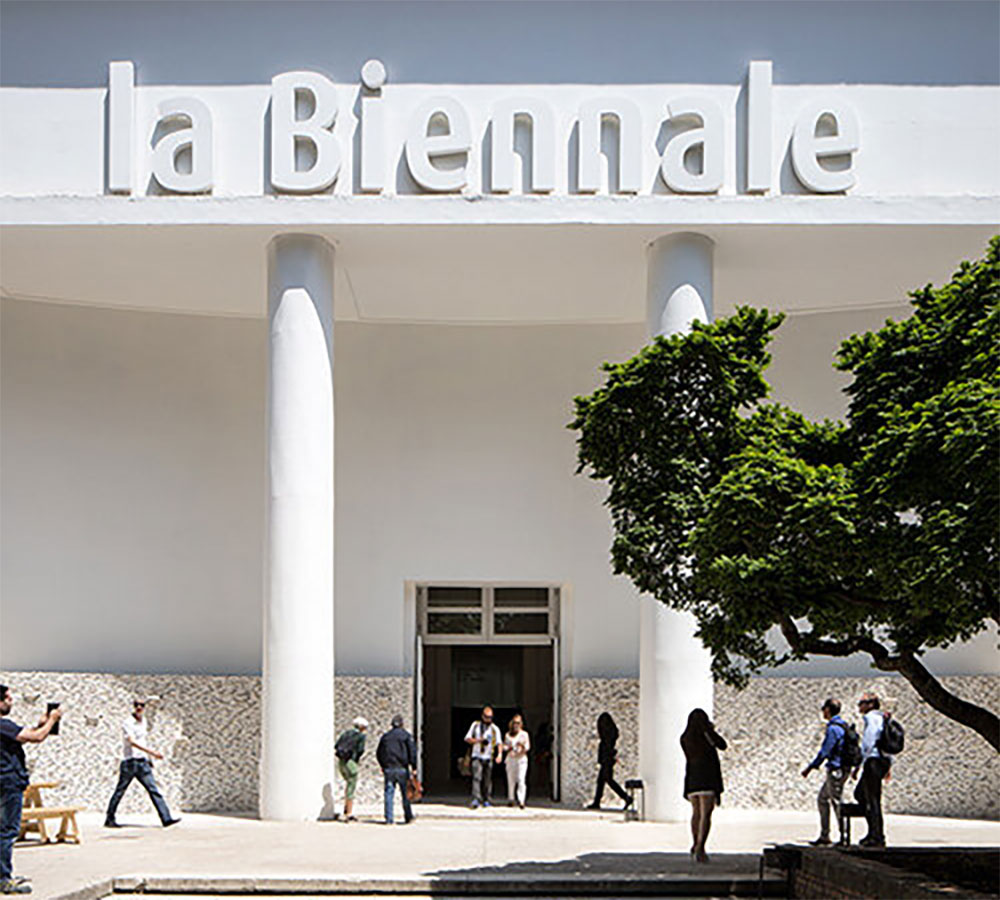
Nine days before the 61st International Art Exhibition was due to open its doors to the art world on 9 May 2026, the entire international jury of the Venice Biennale resigned. The jury was made up of its president, Brazilian curator Solange Farkas, alongside Zoe Butt, Elvira Dyangani Ose, Marta Kuzma, and Giovanna Zapperi. The Biennale issued a terse statement confirming the resignations without providing any explanation, leaving institutions, curators, and gallery directors across the sector to piece together the sequence of events that led to one of the most disruptive episodes in the exhibition's long history.
The origins of the crisis stretch back several weeks. In early March, the Biennale organisers announced they were allowing Russia to return to the exhibition for the first time since Moscow's 2022 invasion of Ukraine, a decision that immediately drew sharp criticism from the Italian government and provoked a formal response from the European Commission. The European Commission said it would terminate or suspend a €2 million grant if the Russian pavilion reopened this year.
The jury's own position was made public on 22 April, the day after its members were announced. The group posted a statement of intent on e-flux, stating that it would not consider for prizes countries currently charged with crimes against humanity by the International Criminal Court, a prohibition that would affect both Israel and Russia, both of which have national pavilions in the Giardini. The five jurors framed their position as one of ethical principle, invoking the defence of human rights as their guiding rationale.
The Israeli artist representing his country at the Biennale, sculptor Belu-Simion Fainaru, responded forcefully. He accused the jury of racial discrimination and threatened legal action. Italy's Culture Minister, meanwhile, telephoned Fainaru to express solidarity and confirmed the Italian government's commitment against every form of discrimination and antisemitism in Italian cultural institutions. Fainaru himself stated that he opposes discrimination, racism, and boycotts in all their forms, and that freedom of creation must remain at the core of any artistic platform.
The situation escalated further on the eve of the resignations. The Italian Culture Ministry dispatched officials to Venice to gather information about the reopening of the Russian Pavilion, a visit that coincided directly with the jury's collective decision to stand down. The Culture Ministry stated that the officials' visit was aimed at collecting documents to respond to an EU request for information and that the ministry had no role in the jury's resignation.
The practical consequences for the exhibition are significant. The jury had been due to select the winners of the Golden Lion for the best national pavilion and for the best participant in the main curated show on the official opening day, 9 May. Those prizes will not now be awarded through the usual process. In their place, the Biennale announced that visitors will select winners of two awards — Best Participant in the curated Exhibition "In Minor Keys" and Best National Participation among the 100 national pavilions — with the result announced on the closing day of 22 November.
The exhibition itself carries a particular weight of circumstance this year beyond the political turbulence. The curatorial programme "In Minor Keys" was developed by Koyo Kouoh, the Cameroonian-Swiss curator whose theme was intended as a statement against the overdeveloped Western world, celebrating spiritual and environmental themes — before her sudden death from cancer a year ago. That the exhibition opens under these conditions, with its jury gone and its prizes redistributed to a popular vote, is a circumstance no one involved in its preparation could have anticipated.
Biennale President Pietrangelo Buttafuoco has maintained that the institution rejects any form of exclusion or censorship of art, and that the Biennale continues to be a place of dialogue, openness, and artistic freedom. Prime Minister Giorgia Meloni, whose government appointed Buttafuoco, acknowledged the Biennale's autonomy while reiterating the government's disagreement with the decision to allow Russia to participate.
For art institutions and galleries watching these events, the episode raises questions that go beyond Venice. The Biennale has long functioned as a mirror for geopolitical tensions — the Russia pavilion has stood in the Giardini since 1914 — but the collapse of the jury represents something more specific: a breakdown between the institution's governance, its appointed adjudicators, and the political environment in which both must operate. Artists, like athletes at an international sporting event, are increasingly construed as proxies for their countries' policies, and the Venice Biennale, whatever its stated commitment to openness, is no longer insulated from that pressure.
The decision to hand prize-giving to visitors is not without precedent in spirit — audience engagement has long been a feature of contemporary curatorial thinking — but as a replacement for an expert jury in one of the world's most scrutinised contexts for contemporary art and artistry, it is an unusual resolution to an unusually fraught situation. How institutions interpret and respond to this shift, and what it signals about the future governance of major international exhibitions, will be worth watching closely as the Biennale season unfolds.