

A new environmental installation at Ca' Foscari University of Venice reclaims the overlooked contributions of women scientists who mapped the stars — and asks what it means to do that work now, when scientific research itself is under pressure.
61st Venice Biennale Arte • Ca' Foscari University • 7 May – 6 July 2026
On 6 May 2026, the ground floor of Ca' Foscari University of Venice — the oldest university in the city, situated in the Dorsoduro district — opens to an exhibition unlike anything housed within its walls before. Jennifer West's Stitched Cosmos, curated by the duo Francesco Urbano Ragazzi, transforms the institution into what the artist describes as a psychedelic device for contemplating the cosmos. It runs through 6 July, and for the duration of the 61st Biennale Arte, the university's atrium and watergate will carry the quiet, accumulated labour of women whose names science has largely forgotten.
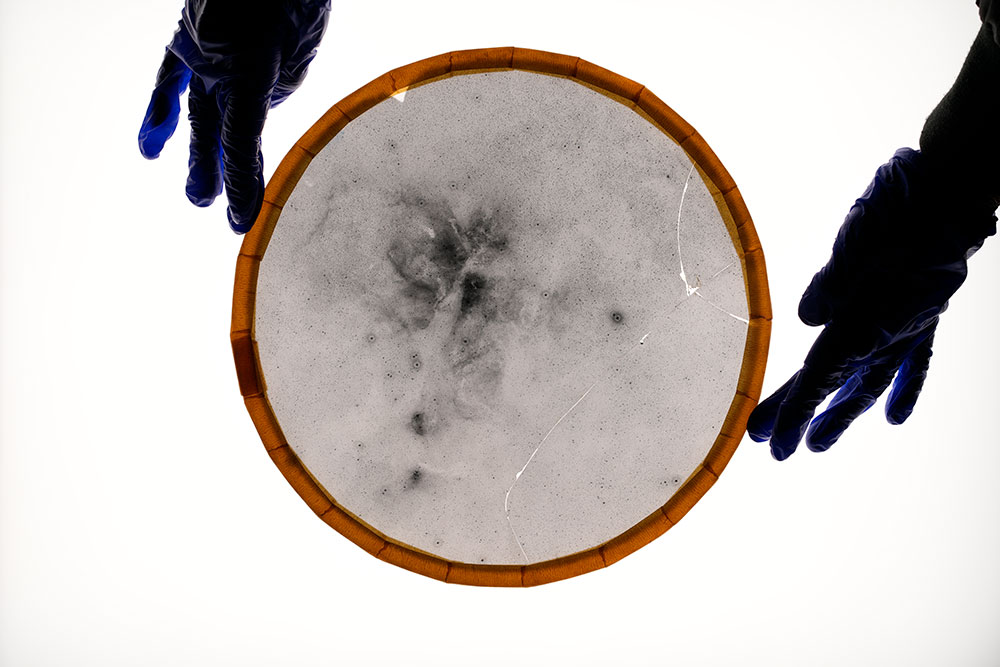
West, a Los Angeles-based artist and 2026 Guggenheim Fellow, was awarded a Smithsonian Artist Research Fellowship for 2025–2026 — and Stitched Cosmos marks the first public presentation of the work she undertook in that capacity. At the Harvard-Smithsonian Center for Astrophysics, she worked directly with the Astronomical Plate Collection: more than 500,000 glass plates, each one a photographic negative onto which light from distant galaxies was captured through telescope lenses. The technique was used systematically from the 1870s through to the 1990s, when algorithmic imaging took over. These plates occupy a precise threshold in the history of image-making — the moment before the analog dissolved into the digital — and that threshold has been a sustained concern throughout West's three decades of artistic work.
The Harvard Astronomical Computers
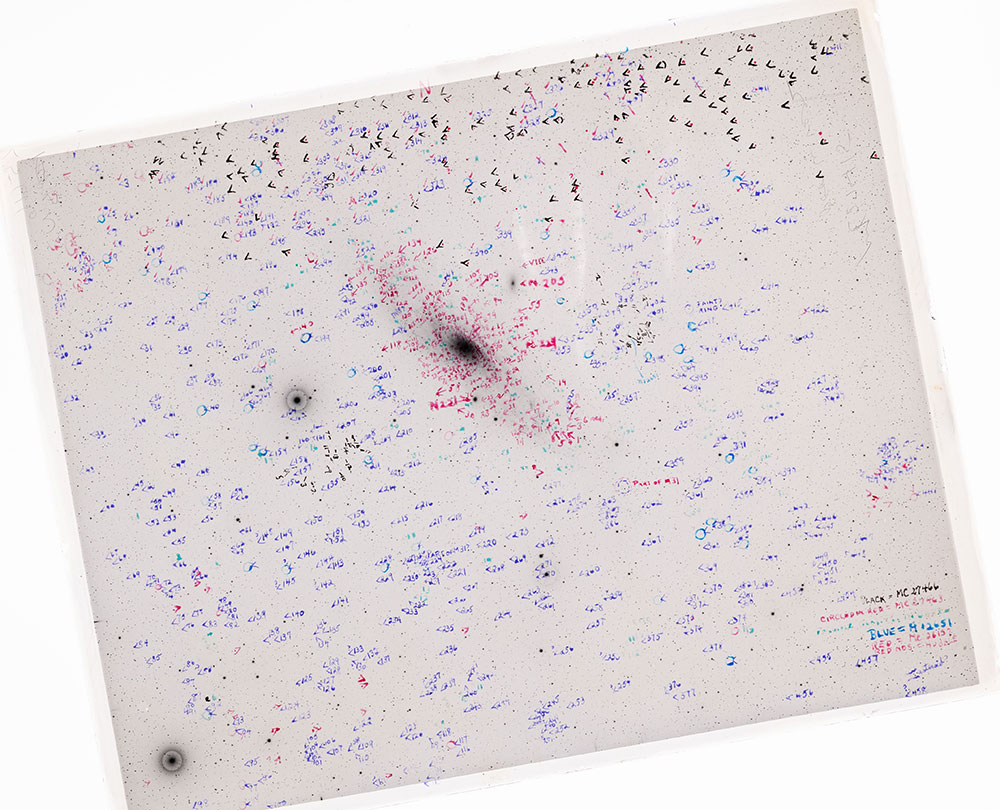
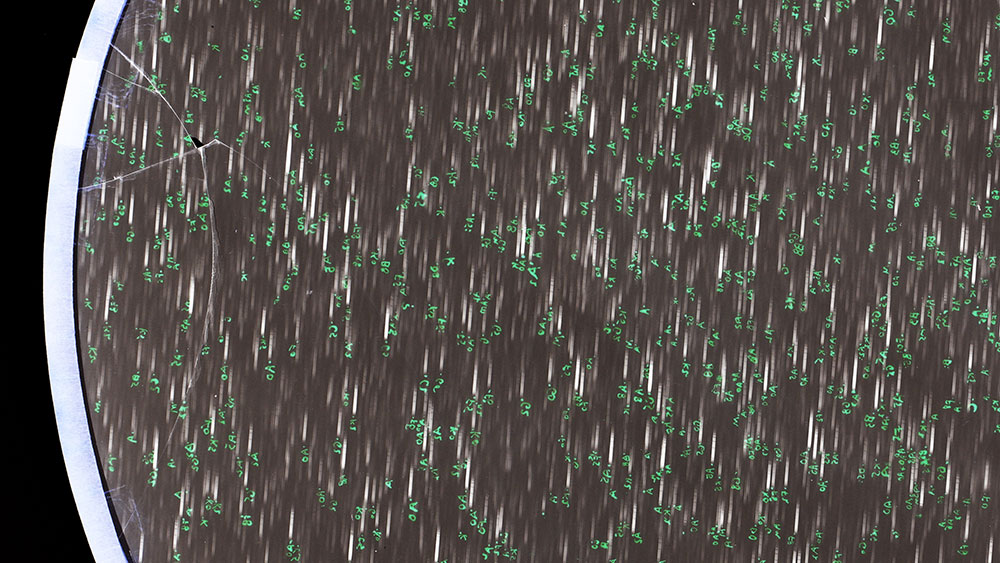
What drew West's attention, however, was not only the plates themselves but the marks on them. Each glass surface bears multicoloured annotations, still legible today, left by the Harvard Astronomical Computers — a cohort of women scientists who held that designation at a time when the word "computer" referred not to a machine but to a job title: the person who performs calculations. Hired in part because their labour cost less than that of male colleagues, these women nonetheless transformed astrophysics. From a position of limited institutional recognition, they developed a classification system for celestial objects that remains the basis of the field to this day.
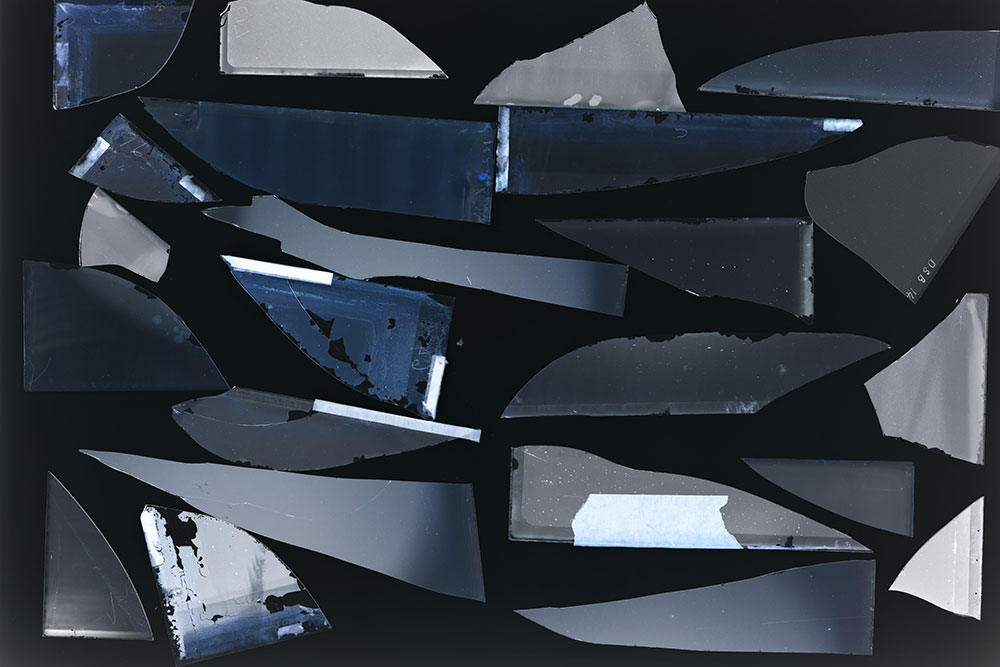
West's engagement with their work is neither sentimental nor corrective in a simple sense. By re-photographing and filming the fractured and damaged plates — those whose data has been lost — she treats their surfaces as primary material rather than documentary artefact. The act of reactivation is central: she disperses what remains into a kaleidoscopic field of proliferating fragments, giving renewed presence to images that had effectively ceased to exist.
The Exhibition Itself
Visitors entering the exhibition first encounter a series of luminous diptychs. Mounted on Hyphen modular sets — ordinarily used in product photography — these collages layer stars, galaxies, and nebulae into dense cosmological compositions that bring the Harvard Plate Stacks into conversation with imagery from today's most advanced satellite telescopes. The dialogue between eras is visual but also epistemological: two different regimes of observation, made to coincide.
Further into the space, screens arranged both horizontally and vertically carry animations scored by the Japanese ensemble Open Reel Ensemble, whose work with magnetic tape carries its own archaeology of recorded media. Holographic projections give three-dimensional presence to celestial forms that the plates captured in flat, photographic terms.
The building's watergate hosts the work that gives the exhibition its name. Suspended against the glass windows at the far end of the hall are large quilts made from film strips — lengths of 16mm, 35mm, and 70mm film, hand-inked with the colour-coding system the women computers used, stitched into star-shaped patterns that echo the American quilting tradition. At the centre sits an oversized quilt blocked spiral, evoking the spiral galaxies the computers catalogued and marking the architecture in the manner of the Barn Quilt. As natural light filters through the glass, the work refracts into fragments of luminosity. The refined atelier labour embedded in the quilts pays direct tribute to the meticulous work of the Harvard Astronomical Computers; the university's atrium becomes, in West's hands, something resembling a magic lantern.
The exhibition as a whole stages a sustained tension between opposites — analog and digital, drawing and photography, art and science, manual labour and theoretical abstraction — without resolving them. What emerges is less a reconciliation than a field of attraction, a vision of human knowledge in which disciplinary edges dissolve when brought to bear on the outer limits of the known universe.
Venice as a Site of Knowledge
Stitched Cosmos is the fourth work in an ongoing series curated by Francesco Urbano Ragazzi on the occasion of the Venice Biennale, a series that began in 2015 with Jonas Mekas's The Internet Saga at Palazzo Foscari Contarini — by then a fast-food restaurant. It continued with Hillary: The Hillary Clinton Emails by Kenneth Goldsmith at the Cinema Teatro Italia, now a supermarket (2019), and Adoration by Pauline Curnier Jardin at the Convent of the Convertite, currently home to the Giudecca women's prison (2022). Each iteration has selected a historically significant site where cultural memory intersects with the structures and uses of contemporary life, positioning Venice as a lens through which to examine touristification, gentrification, and the sustainability of cultural production.
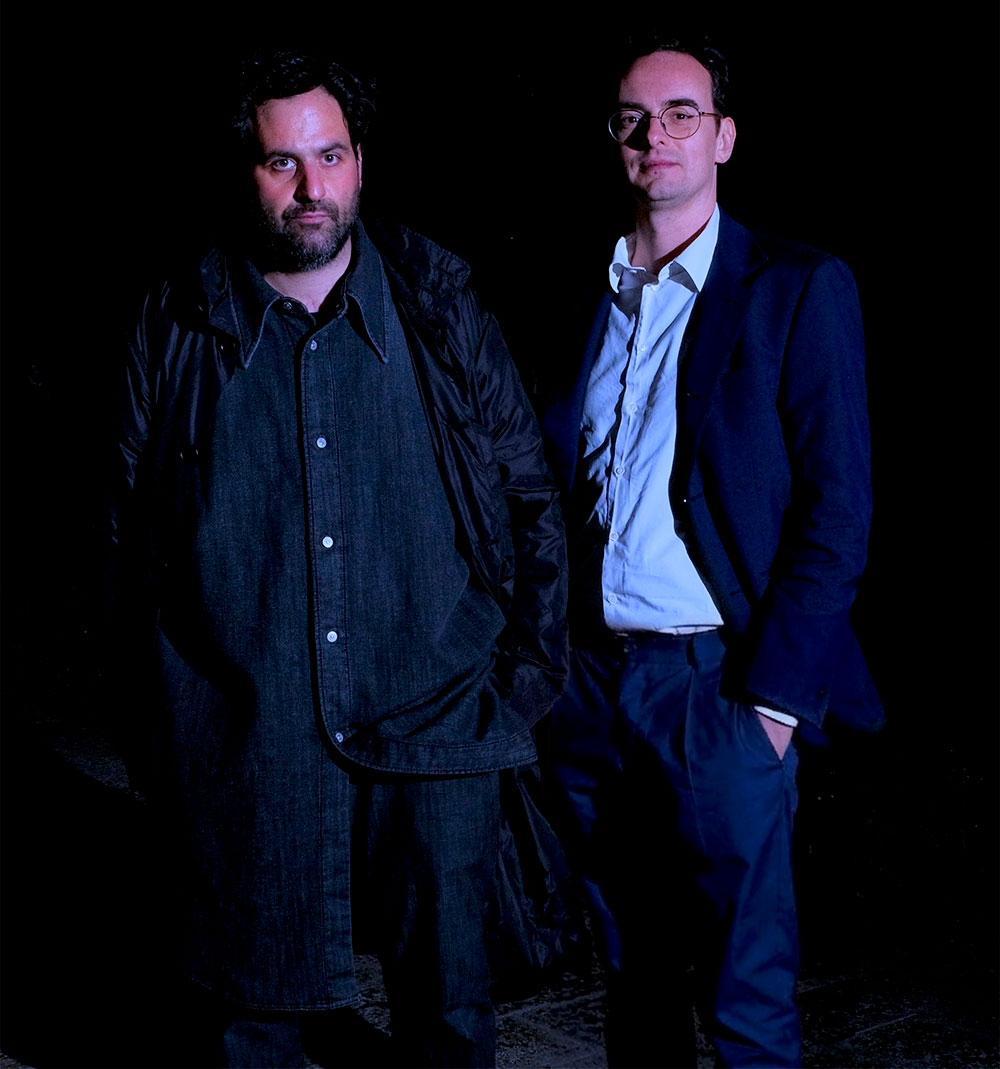
Francsco Urbano Ragazzi-by-Malfatti Nigra
This edition marks a shift in the series' logic. Where earlier chapters focused on spaces shaped by consumption and institutional control, Ca' Foscari University is a site of knowledge production. Francesco Urbano Ragazzi frames research institutions of this kind as catalysts for generational renewal — spaces where critical thought is cultivated and where cities might reimagine the terms of their own future. In placing West's work inside a functioning university rather than a decommissioned or repurposed space, the curators introduce a different register: not the ruins of culture but its living infrastructure, still in use, still contested.
The timing is deliberate. Stitched Cosmos arrives at a moment when scientific research is subject to defunding and political pressure in several countries. West's tribute to the Harvard Astronomical Computers — women who did foundational scientific work from a position of structural disadvantage — carries weight that extends well beyond art history. It is an argument, made through the materials of film, glass, and stitched textile, for the value of sustained inquiry.
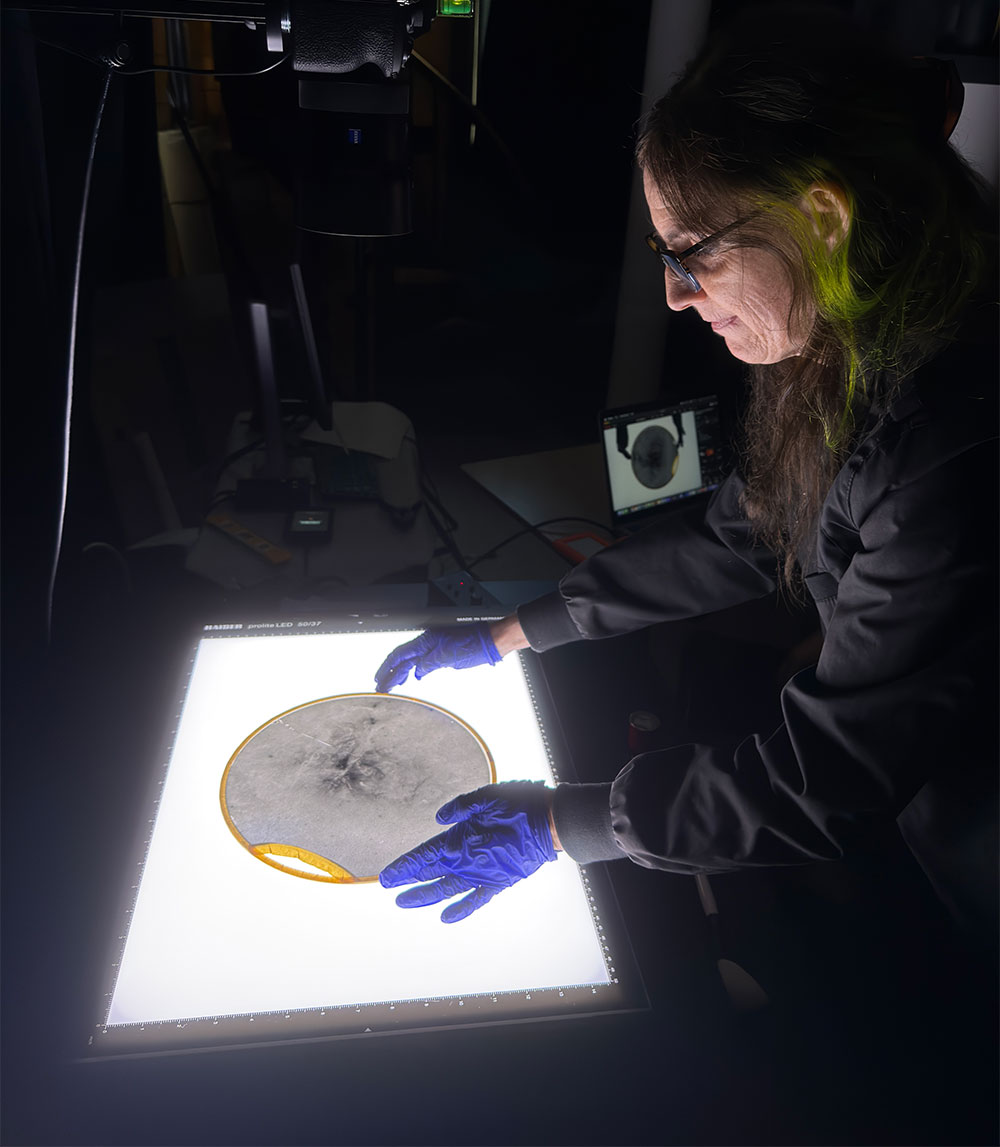
Jennifer West at Harvard SmithsonianC enter for Astrophysics
Visiting the Exhibition
Stitched Cosmos opens on 6 May 2026 and runs through 6 July at Università Ca' Foscari Venezia, Dorsoduro 3246, Venice. The exhibition is open Monday to Friday, 9:30am to 6:30pm, and Saturday, 9:30am to 12:30pm — integrating, by design, with the university's daily schedule rather than operating as a separate cultural event.
A roundtable dedicated to West's work will take place on 29 June 2026, organised by Roberta Dreon, Full Professor of Aesthetics at Ca' Foscari. The artist and curators will be joined by scholars from a range of disciplines, extending the conversation that the exhibition itself opens.
The exhibition is supported by Hyphen-Group and the Carl & Marilynn Thoma Foundation, with contributions from the Yuz Foundation, the Kira A. Princess of Prussia Foundation, and the Jenni Crain Foundation. Research funding was provided by the Smithsonian Artist Research Fellowship 2025–2026 and the University of Southern California's Advancing Scholarship in the Humanities and Social Sciences Research and Creative Project Grant 2025–2026. The media partner is Radius Books.
Jennifer West (b. 1966, Topanga, CA) is a Los Angeles-based artist whose work spans large-scale moving image installations and site-specific interventions. Her work is held in public collections including LACMA, the Hammer Museum, the Getty Museum, MOCA Los Angeles, and MONA (Museum of Old and New Art), among others.
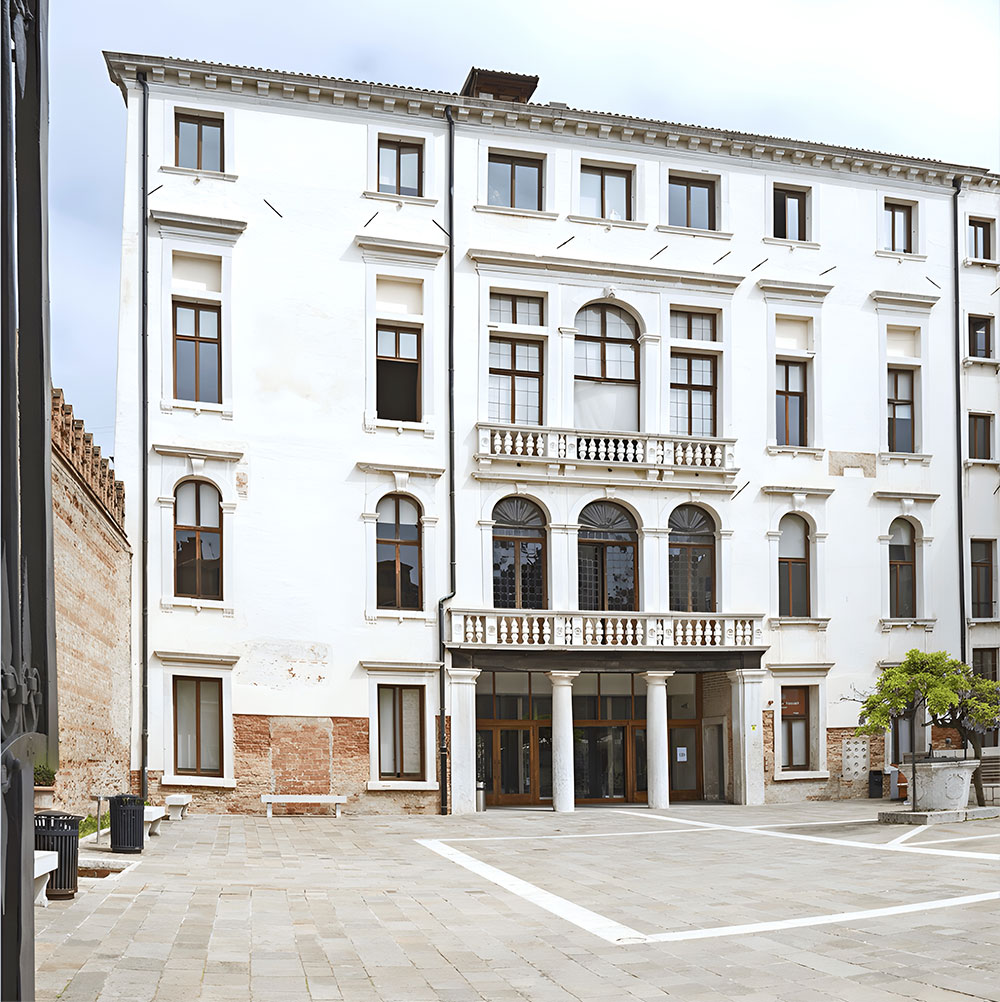
Ca' Foscari University of Venice