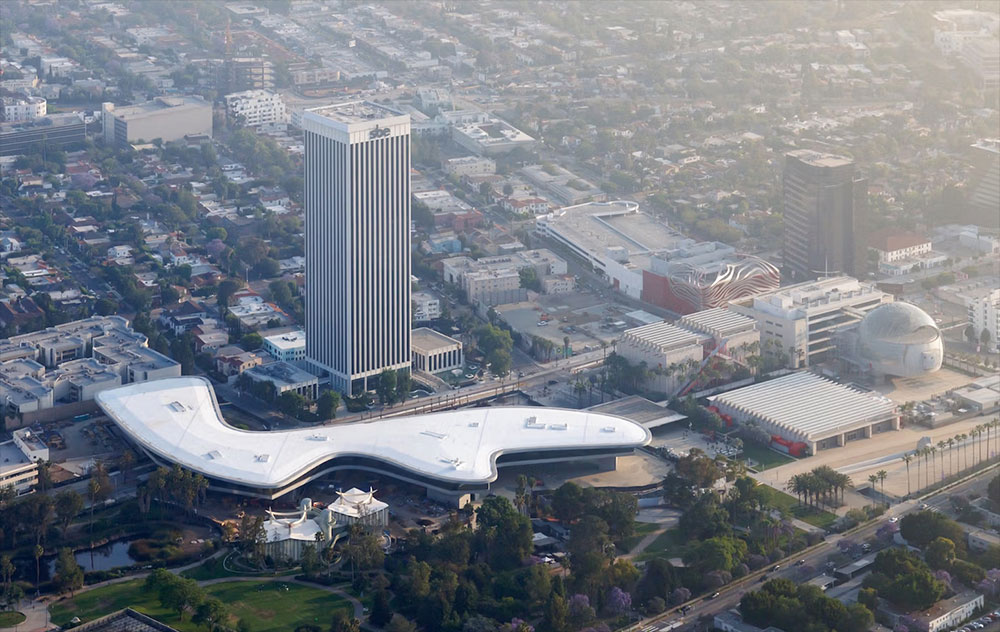

On Sunday, 19 April 2026, the Los Angeles County Museum of Art opeed the doors of its long-anticipated David Geffen Galleries — a purpose-built permanent collection building designed by Swiss architect Peter Zumthor that has been in development for the better part of two decades. The occasion marks a significant moment not only for LACMA but for the broader institutional landscape, as one of the western hemisphere's largest encyclopedic collections finally takes up residence in a building conceived specifically for it.
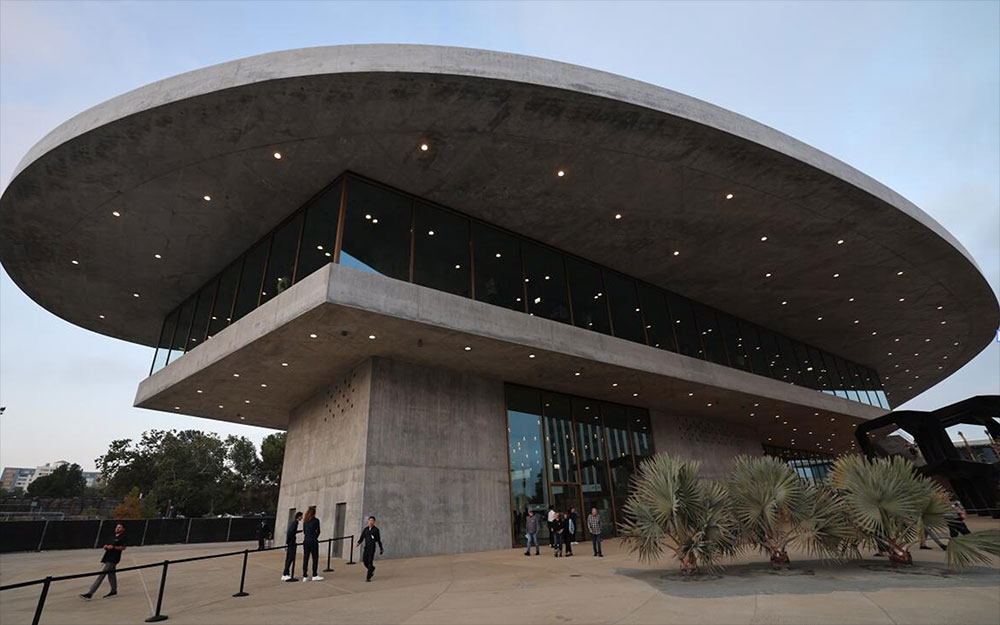
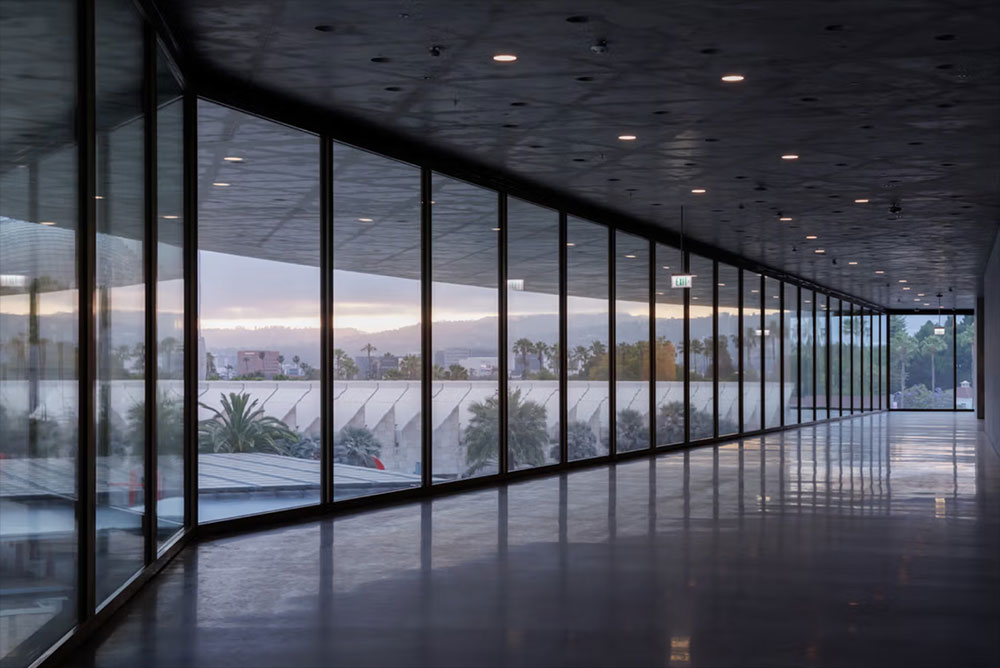
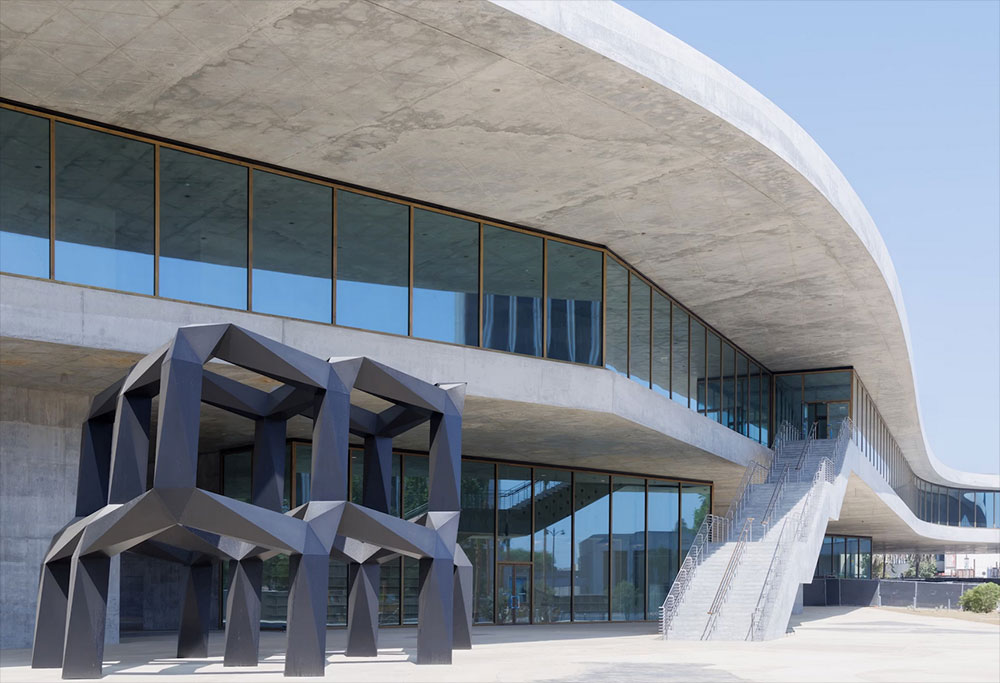
The structure itself warrants careful attention. Zumthor's organic, sculptural approach produced a 900-foot-long, horizontal glass-and-concrete building that curves freely as it stretches along Hancock Park and across Wilshire Boulevard. The decision to elevate the primary exhibition level nearly 30 feet above street level is not merely architectural theatre: it creates open plazas and new outdoor public space below while the horizontal configuration enables LACMA to present all artworks on a single level without giving precedence to any culture, tradition, or era.
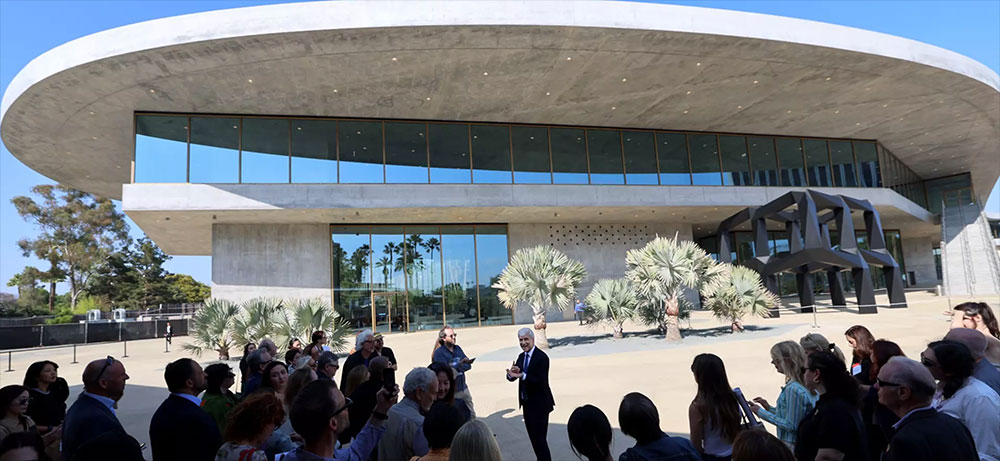
Lighting, long a contested matter in gallery design, has been treated with deliberate nuance. Rather than providing uniform illumination, Zumthor's design allows light and shadow to work in dialogue, with exhibition spaces varying from terrace galleries around the perimeter, where light streams through floor-to-ceiling glass panels, to sheltered interior galleries. The textile element introduced to modulate this light is itself notable: custom curtains made of sputter-plated chrome textiles by Tokyo-based textile designer Reiko Sudō carry a metallic sheen while remaining transparent, adding dimension to the architecture and offering protection for light-sensitive works. The intention is that subtle changes in natural light will make every visit feel different depending on the time of day, season, and weather.
The curatorial framework underpinning the inaugural installation departs markedly from the chronological and geographic taxonomies that have long dominated encyclopedic display. Forty-five curators working across areas of study collaborated on the installation, which fills 110,000 square feet of gallery space. Departing from traditional narratives, the installation uses the Pacific, Indian, and Atlantic Oceans and the Mediterranean Sea as an organising framework, exploring innovative ways to connect cultures and artistic traditions and tell multiple stories that renew a singular art historical narrative, creating connections across time and place.
This oceanic schema produces genuinely unexpected adjacencies. The Atlantic Ocean galleries bring together African and Black American textiles, modern Latin American paintings, sculpture and furniture, LACMA's deep holdings of 20th-century photography, art of the United States across media, and highlights from the decorative arts and design collection. The Pacific Ocean galleries, meanwhile, hold works from across Oceania, figurative ceramics from West Mexico to the Pacific Coast of Peru, objects reflecting Spanish America as a global mercantile centre, blue-and-white porcelain from East Asia, works exploring the historical and mythical aspects of the American West, and examples of design, printmaking, and engineering long associated with California.
The Indian Ocean and Mediterranean galleries extend this ambition further. The Indian Ocean section spans the full chronological range of the collection, with South and Southeast Asian sculptures considered in a variety of contexts including religious significance, historical importance, and stylistic development, alongside textiles from Indonesian batiks and Kashmir shawls to the grand Ardabil Carpet. The Mediterranean galleries, as one might expect from a collection of LACMA's depth, range from Islamic world paintings, drawings, sculpture, and decorative arts through Baroque masterpieces and an elaborate reception room from Damascus, Syria.
Commissioned Works
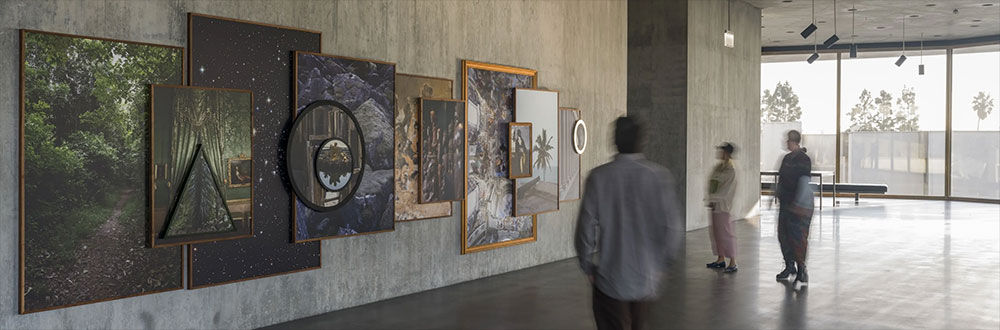
Commissioned works occupy a distinctive position throughout the building, and their selection reflects a conscious interest in engaging artists whose atelier spans disciplines and geographies. Todd Gray's Octavia's Gaze (2025), a three-dimensional assemblage of framed photographs, is among the first works encountered upon entering the galleries. Do Ho Suh has contributed Jagyeong Hall, Gyeongbok Palace (2026), a meticulous, ghost-like installation comprising an actual-size re-creation of a section of the primary Joseon royal palace in Seoul. In the Mediterranean galleries, two works commissioned from Lauren Halsey — a 10-foot-long reclining sphinx sculpture and a wall-filling relief — are installed alongside a newly acquired bust by Tavares Strachan, Fulani (A Map of the Crown) (2024), among works reflecting Egypt's ancient interplay with Greco-Roman culture and Nubia.
The public realm around the building has been treated with comparable seriousness. The entire 207,000-square-foot ground plane of the plaza is a commissioned artwork by Mariana Castillo Deball titled Feathered Changes, created in close collaboration with Zumthor, connecting the new building to the site's history as a marshy ecosystem and offering an expansive meditation on time, place, and geologic history. Pedro Reyes, Diana Thater, and Jeff Koons are among the other artists whose work anchors the outdoor spaces, while Alexander Calder's Three Quintains (Hello Girls) (1964), one of his few fountain works, has been reimagined within a new pool designed for it by Zumthor.
Financing
The financial architecture behind the project is itself instructive for institutions navigating large-scale capital campaigns. The Building LACMA campaign has raised more than $875 million toward the expansion and transformation of the museum, including nearly $724 million for the design and construction of the David Geffen Galleries, with Los Angeles County contributing $125 million through a public-private partnership.
For LACMA members and the broader community, the opening programme offers a structured series of access events. Member preview days run from Sunday, 19 April through Sunday, 3 May, with priority access during regular museum hours. A public Genesis Talks conversation between Peter Zumthor and LACMA CEO Michael Govan is scheduled for 22 April on the East West Bank Commons, focusing on the design principles behind the building. On 20 June, LACMA will host a free public Block Party from 10 am to 7 pm, followed by The Art Parade, a large-scale public procession on Museum Row, conceived originally by Jeffrey Deitch in New York and reimagined here for Los Angeles.
LACMA's collection of 155,000 objects spanning 6,000 years of world history will continue to grow within the galleries over time, so no two visits need be identical. Whether the oceanic framework for display endures as a model or evolves as the collection expands, the David Geffen Galleries represents an earnest institutional argument — made in concrete, glass, light, and art — about how a global collection might be held and interpreted in the twenty-first century. It is a proposition that those working in museums and galleries of all scales will find worth engaging with directly.
The David Geffen Galleries are located at 5905 Wilshire Boulevard, Los Angeles, California lacma.org