

The Royal Collection UK
History, Scope, Access and Visiting Information
Royal Collection Trust · rct.uk
The Royal Collection represents one of the most consequential holdings of art and material culture in existence. Spanning more than one million objects accumulated over five centuries of monarchical patronage, the collection is held in trust by King Charles III as Sovereign for his successors and the nation — not owned by him as a private individual. Its administration is overseen by the Royal Collection Trust, a registered charity established in 1993 in the aftermath of the Windsor Castle fire, with a mandate to conserve the works and to increase public access to them.
Understanding the collection's scale, governance structure, and access arrangements is useful not only for institutions seeking loans or collaborative opportunities, but also for professionals advising colleagues, students, and the broader public. This article provides a substantive overview of the collection and practical information regarding visiting and ticket purchase.
The Collection: Historical Formation and Scope
The Royal Collection as it exists today was largely formed after the Restoration of the Monarchy in 1660. The execution of Charles I in 1649 resulted in the dispersal and sale of a substantial portion of the Crown's holdings under the authority of Oliver Cromwell; much of that material was lost permanently to institutions and private buyers across Europe. The reconstitution of the collection thereafter proceeded through the deliberate acquisitions of successive monarchs and their consorts, with the most significant contributions made by Frederick, Prince of Wales; George III; George IV; Queen Victoria and Prince Albert; and Queen Mary, consort of George V.
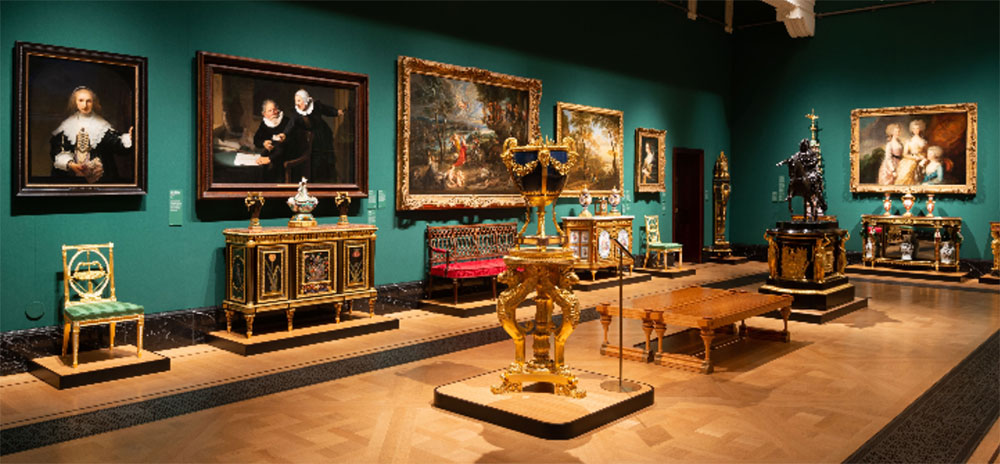
Today the collection comprises over one million objects, including approximately 7,000 paintings, more than 150,000 works on paper — among them around 30,000 watercolours and drawings — roughly 450,000 photographs, and some 700,000 further works encompassing tapestries, furniture, ceramics, textiles, carriages, weapons, armour, jewellery, clocks, musical instruments, tableware, manuscripts, books, and sculptures. It constitutes one of the last major European royal collections to have remained largely intact, and is distributed across thirteen occupied and historic royal residences throughout the United Kingdom.
The collection's holdings in Old Master paintings are among its most studied aspects. The Dutch and Flemish holdings are particularly substantial, numbering over 600 paintings by artists including Peter Paul Rubens, Anthony van Dyck, Rembrandt, Johannes Vermeer, Aelbert Cuyp, Jacob van Ruisdael, and Hendrick Avercamp. Van Dyck's long association with the Stuart court and his official appointment as Principal Painter to Charles I in 1632 resulted in a body of portraiture that defined the visual character of that era. The drawings collection at Windsor Castle holds works attributed to Leonardo da Vinci, Michelangelo, Raphael, and Titian, and is widely regarded as one of the finest such holdings in private or institutional hands. The Raphael Cartoons, while part of the collection, have been on long-term loan to the Victoria and Albert Museum since 1865.
The collection is overseen by approximately 500 staff and forms one of the five departments of the Royal Household. Importantly, income from admissions, retail, and commercial initiatives — rather than public funding — underwrites the conservation and access programmes of the Trust. In the 2023–24 year alone, 4,812 decorative arts items were conserved alongside 39 paintings, 425 works on paper, and 339 books, manuscripts, and archival documents.
Governance, Loans, and Institutional Engagement
The Royal Collection Trust operates as a company limited by guarantee and a registered charity. Its Board of Trustees includes senior officers of the Royal Household — among them the Lord Chamberlain, the Private Secretary to the Sovereign, and the Keeper of the Privy Purse — alongside trustees appointed for relevant professional expertise. The Trust does not receive public funding; its work is self-sustaining through the revenue it generates from visitors to the royal palaces and residences.
For institutions seeking access to the collection's holdings for exhibition or long-term loan, the Trust maintains an active lending programme. Approximately 15,500 items are held on long-term loan across more than 150 museums and galleries in the United Kingdom and abroad, including the British Museum, the National Gallery, the Victoria and Albert Museum, the Museum of London, the National Museum of Wales, and the National Gallery of Scotland. In the 2023–24 period, 164 short-term loans were made to 39 exhibitions nationally and internationally.
The Trust also maintains a Publishing programme producing exhibition catalogues, scholarly catalogues raisonnés, illustrated royal histories, and guidebooks. These are distributed internationally through partners including the University of Chicago Press. For researchers, over 290,000 object records are publicly searchable via the Trust's website at rct.uk, with fields including artist, subject, object type, historical period, residence, and catalogue number.
Where the Collection Can Be Seen
Works from the Royal Collection are accessible to the public across multiple sites. The three principal locations managed directly by the Royal Collection Trust are Windsor Castle, Buckingham Palace, and the Palace of Holyroodhouse in Edinburgh. The King's Gallery in London (adjacent to Buckingham Palace) and the King's Gallery at the Palace of Holyroodhouse provide dedicated exhibition spaces presenting changing displays of works from the collection. Former royal residences managed by other bodies — Hampton Court Palace, the Tower of London, Kensington Palace, Osborne House on the Isle of Wight, and the Royal Pavilion in Brighton — also house significant holdings in their original historic settings.
Visiting: Sites, Seasons, and Practical Information
Windsor Castle
Windsor Castle is open to visitors throughout the year, making it the most consistently accessible of the Trust's three principal sites. Founded by William the Conqueror in the eleventh century, it is the oldest and largest occupied castle in the world and has served as a residence for forty monarchs. Visitors have access to the State Apartments, which display paintings including works by Van Dyck and Rubens, as well as the drawings collection and other significant holdings. As a working royal residence, areas of the castle may be subject to occasional closure at short notice when the site is required for official engagements.
Tickets for Windsor Castle can be purchased online at rct.uk or by telephone on +44 (0)303 123 7304. Advance booking is strongly recommended for best value and to secure a preferred entry time. Groups of fifteen or more must pre-book. Coach parking is available in Windsor town centre, though coaches may not drop off or pick up directly outside the castle gates.
Buckingham Palace — Summer Opening
The State Rooms of Buckingham Palace open to visitors each summer. For 2026, the dates are 9 July to 27 September. The State Rooms serve as the setting for ceremonial occasions and official entertaining by the King, and house a significant selection of the collection's finest works, including paintings by Rembrandt and Rubens, sculpture by Canova, and important examples of English and French furniture. During the summer season, an additional ticketed option — the East Wing Highlights Tour — allows visitors to combine a guided tour of the East Wing with standard admission to the State Rooms; advance ticket prices for this combined experience begin at £93.00 for adults.
Outside the summer season, Buckingham Palace opens on selected dates for small-group Exclusive Guided Tours, which take place after the palace has closed to general visitors. These must be pre-booked. A 'Royal Day Out' combined ticket offers entry to all three Buckingham Palace venues — the State Rooms, the King's Gallery, and the Royal Mews — with a ten per cent discount on individual ticket prices; advance pricing for adults is £65.70, with concessionary rates available.
For 2026, the current main exhibition at the King's Gallery is Queen Elizabeth II: Her Life in Style, opening in April 2026, described as the largest exhibition of the late Queen's fashion yet mounted. Tickets for Buckingham Palace and the King's Gallery are available online at rct.uk or by calling +44 (0)303 123 7300.
Palace of Holyroodhouse, Edinburgh
The Palace of Holyroodhouse, situated at the foot of Edinburgh's Royal Mile, is open throughout the year and serves as the King's official Scottish residence. Visitors can explore the historic state apartments with their associations with Mary, Queen of Scots and other significant figures from Scottish history, as well as works of art from the Royal Collection displayed in their original setting. The Palace is typically closed on Tuesdays and Wednesdays for much of the year, though it opens seven days a week from late May through early September. Advance admission is priced at £22.00 for adults, £14.00 for young persons (18–24), and £11.00 for children (5–17) and disabled visitors. On-the-day prices are modestly higher.
The adjacent King's Gallery, Palace of Holyroodhouse, runs a separate programme of temporary exhibitions. A combined ticket for both the Palace and the Gallery is available with a ten per cent discount on standard individual prices. Group discounts apply for bookings of fifteen or more; coach parking is available free of charge adjacent to the Palace, accessible via Abbeyhill. The Palace can be reached by telephone on +44 (0)303 123 7306.
Ticketing, Passes, and Access Schemes
The 1-Year Pass
Any ticket purchased directly from the Royal Collection Trust can be converted into a 1-Year Pass, which grants complimentary re-admission to the site visited for twelve months from the date of the original visit. To activate the pass, the visitor signs and prints their name on the reverse of the ticket before leaving the site on their first visit. Pre-booked return visits can be arranged by calling the Ticket Sales and Information Office on +44 (0)303 123 7334, with a £2.00 transaction fee applying. Tickets purchased through third parties are not eligible for conversion to a 1-Year Pass.
Tickets for Those on Low Incomes
The Royal Collection Trust offers £1 tickets to those on Universal Credit and other named UK benefits, a scheme designed to ensure the collection is accessible regardless of financial circumstances. Details and eligibility criteria are available at rct.uk.
Access and Disability Provision
Concessionary rates are available for disabled visitors across all Trust sites, and a free access companion ticket can be booked online for each site. Visitors requiring step-free access at Buckingham Palace must pre-book through the Specialist Sales team at +44 (0)303 123 7324 or via
Group and Trade Bookings
Groups of fifteen or more are eligible for a discount across the Trust's sites and must pre-book in advance. The Specialist Sales team handles group enquiries, exclusive evening visits, private tours, and specialist access arrangements. Private and exclusive tours are available at Windsor Castle from £85 per person (minimum group of fifteen), and at the Palace of Holyroodhouse from £50–£55 per person (minimum group of twenty-five). These out-of-hours experiences are well suited to institutional groups seeking less crowded conditions for close study of the collection.
Exchange, Refund, and Booking Policies
All tickets purchased from the Royal Collection Trust are non-refundable. Exchanges are considered in certain circumstances and must be requested by telephone on +44 (0)303 123 7300; a £2.00 exchange fee applies. Exchanges cannot be processed online or by email, nor after the visit date and time has passed. Visitors holding tickets purchased through third parties should contact those parties directly for any amendments, as the Trust can only assist with bookings made directly through its own channels.
The central Ticket Sales and Information Office can be reached at the telephone numbers listed above, or in writing to Royal Collection Trust, London SW1A 1AA. Subscribing to the Trust's email updates is advisable for institutions and professionals who wish to receive advance notice of ticket releases, exclusive events, and new exhibition announcements.
rct.uk | +44 (0)303 123 7300
All ticket prices and opening dates are correct as of March 2026 and are subject to change. Always verify current details at rct.uk before travel.