

Oxford rewards the art historian and museum professional with a density of collections that is difficult to match outside London. Within a compact city centre, a visitor encounters the founding of the modern public museum, one of the world's most important holdings of Renaissance drawings, the crucible of the Pre-Raphaelite movement, and a significant contemporary exhibition programme — all within comfortable walking distance of one another. What follows is a practical account of where to go, what to expect, and why each institution matters.
The Ashmolean Museum
The natural starting point is the Ashmolean on Beaumont Street, which opened in 1683 as Britain's first public museum and the world's first university museum. Its institutional history alone is of interest to those working in the sector: the questions it first raised about how to organise and present a collection — by object type, by culture, by chronology — have never entirely been resolved, and the museum's current galleries reflect successive answers to those questions across three centuries.
The collection of around 300,000 objects spans half a million years of human activity, and the breadth is not merely nominal. The department of Western Art holds what is widely regarded as the world's greatest collection of Raphael drawings, material of central importance to any serious study of the High Renaissance. The drawings include the Heads and Hands of two Apostles, considered among the finest sheets Raphael ever produced, and the Head of a Muse, which became internationally prominent when it broke auction records at Christie's in 2009 before entering the collection. The Ashmolean's Raphaels have drawn loans from the Albertina, the Louvre and the Uffizi for past exhibitions, which speaks to how the collection is regarded by peer institutions.
The Pre-Raphaelite holdings are of comparable significance, and Oxford's connection to the movement gives them unusual depth. The core of the collection derives from Thomas Combe, superintendent of the Clarendon Press, who was an early and crucial patron of Millais and Holman Hunt. His widow Martha bequeathed the couple's collection to the Ashmolean, providing the nucleus around which subsequent acquisitions have gathered. The gallery includes paintings, drawings, watercolours, sculpture and decorative objects, among them Philip Webb's Prioress's Tale Wardrobe, decorated by Burne-Jones and given by him as a wedding present to William Morris — a piece that sits at the intersection of fine art, craft, and the social history of the movement. John Ruskin's teaching collection of drawings, left to the University by the critic who did more than anyone to establish the movement's theoretical foundations, is also held here.
Beyond these headline strengths, the Ashmolean holds the most important collection of Egyptian pre-Dynastic sculpture and ceramics outside Cairo, the only significant Minoan collection in Britain, the foremost collection of modern Chinese painting in the Western world, and one of the finest numismatic collections anywhere. The Heberden Coin Room is regularly used by researchers working across economics, political history, and the history of art, since coinage functions simultaneously as monetary instrument, political statement, and object of aesthetic intent. The Pissarro Family Archive is also held here, making the museum an important resource for scholarship on nineteenth-century French painting.
The current building dates largely from a 2006–2009 expansion designed by Rick Mather, which added considerable display space and improved the sequencing of collections. Admission is free.
Christ Church Picture Gallery
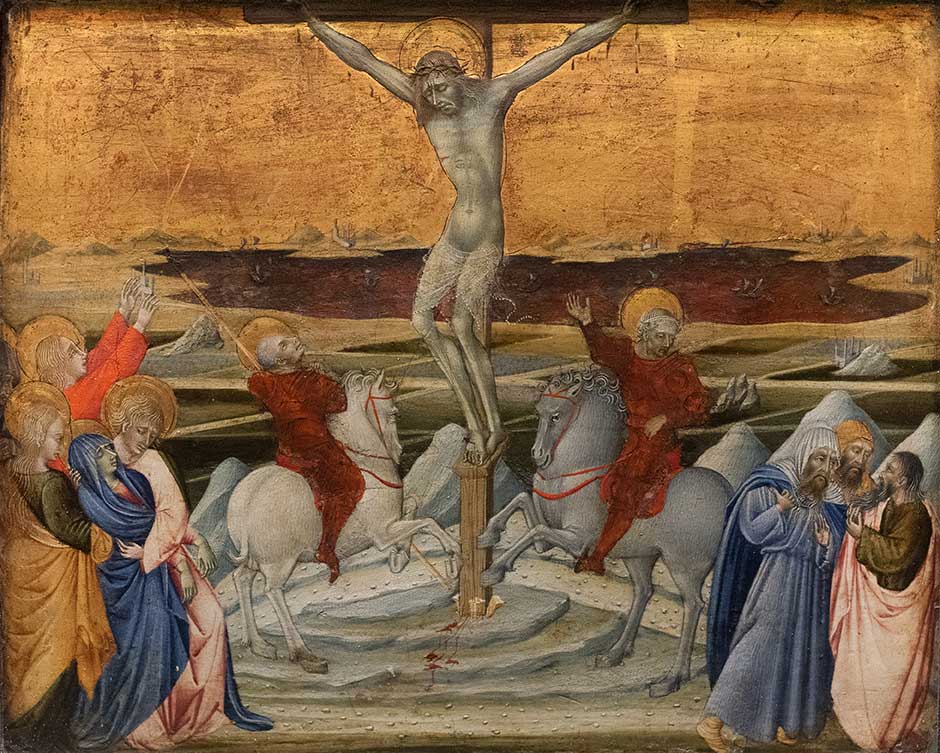
A short walk from the Ashmolean, through the college gates at Canterbury Gate, lies one of the least visited but most consequential collections in England. Christ Church Picture Gallery holds around 300 Old Master paintings and, of greater scholarly importance, nearly 2,000 drawings and some 3,000 prints. It is regarded as one of the most important private collections of Old Master drawings in the country.
The collection originated with the 1765 bequest of General John Guise, a former undergraduate who accumulated Italian paintings of the sixteenth and seventeenth centuries during a military career. His gift brought Tintoretto, Annibale Carracci, Paolo Veronese, Filippino Lippi and Salvator Rosa into Oxford. Later additions shifted the chronological centre of gravity further back: William Fox-Strangways, who had lived in Florence in the 1820s and 1830s, donated early Italian panel paintings that allow the visitor to trace the emergence of the professional artist from the late medieval period. Walter Savage Landor made further contributions from the same Florentine milieu.
The drawings collection is the reason to make the journey. Works by Leonardo, Michelangelo, Raphael, Dürer, Rubens and Van Dyck circulate through the galleries in rotating displays, since the light sensitivity of works on paper prevents permanent exhibition. The collection is strong in Baroque material as well, particularly the Carracci, and the Annibale Carracci Butcher's Shop — a monumental genre scene that puzzled contemporaries and continues to present interpretive challenges — is among the most historically significant paintings in the collection.
The gallery building itself, designed by Philip Powell and Hidalgo Moya and opened in 1968, is a considered piece of mid-century institutional architecture, and an example of how a college collection can be given an appropriate purpose-built home without disturbing the historic fabric of the college. Visiting requires entering through the college grounds.
CLOSED the gallery closed on 30 April 2026 for a multi year renovation.
Modern Art Oxford
On Pembroke Street, occupying a former brewery building designed by Harry Drinkwater in 1892, Modern Art Oxford operates as a dedicated exhibition space rather than a collecting institution. Founded in 1965 as the Museum of Modern Art Oxford — the name change to Modern Art Oxford came in 2002, reflecting the shift from a collecting to a programming model — it has maintained a serious international exhibition programme across six decades. Past presentations have included work by Yoko Ono, Carl Andre and Tracey Emin, and the institution has a track record of thoughtful thematic programming that places historical and contemporary work in productive dialogue.
For professionals, the institution is worth understanding both for its programme and for its history as a case study in how a regional contemporary space builds and sustains an international reputation without the anchor of a permanent collection. Much of its archive is now held at Oxford Brookes University, which has a collection of exhibition catalogues from galleries worldwide concentrated on post-1960 art. Modern Art Oxford is funded primarily by Arts Council England, and many of its events are free.
The Pitt Rivers Museum
Entered through the Oxford University Museum of Natural History on Parks Road, the Pitt Rivers presents an organisational argument that remains genuinely radical: objects from every culture and every period of human history are grouped not by origin but by type and function. A case of locks contains examples from ancient Egypt, nineteenth-century Europe and contemporary West Africa side by side. The effect is to make visible the comparative dimension of material culture in a way that no amount of text can replicate.
The founding gift of General Augustus Pitt Rivers in 1884 comprised more than 26,000 objects. The collection now exceeds half a million, supplemented by extensive photographic and audio archives of considerable historical value. For those working in the display and interpretation of objects — which is to say, for most museum professionals — the Pitt Rivers offers a sustained argument about one alternative to the dominant chronological and geographic models of display. Whether one finds that argument persuasive or problematic, engaging with it directly is more productive than reading about it.
The Bodleian Library and Weston Library
The Bodleian, founded by Sir Thomas Bodley and officially opened in 1602, is the largest academic library system in the United Kingdom and holds more than twelve million items. Duke Humfrey's Library, the oldest reading room, is one of the finest medieval interiors in England and worth seeing on those terms alone. The Divinity School beneath it, completed in 1488, is the earliest purpose-built teaching room of the University and is distinguished by its elaborate Perpendicular Gothic ceiling vaulting.
The Weston Library, the Bodleian's modern exhibition and public-facing building directly opposite, mounts free displays from the library's holdings that are frequently of direct interest to art historians: illuminated manuscripts, early printed books, drawing collections, and archival material relating to artistic practice. The Bodleian Art, Archaeology and Ancient World Library — formerly the Sackler Library, now housed on St John Street in a building designed by Robert Adam — holds around 300,000 volumes and is open to bona fide researchers who are not University members on application.
Keble College and the Oxford Union
Two sites outside the principal museums carry weight for art historians with interests in Victorian Britain. Holman Hunt's The Light of the World — painted between 1851 and 1853 under the influence of the Oxford Movement, depicting Christ at an overgrown door with no exterior handle — hangs in the side chapel at Keble College, to which it was donated by Martha Combe in 1873. This is the original and smallest of the three versions Hunt made; the largest hangs in St Paul's Cathedral. Keble College is also architecturally significant, designed by William Butterfield in 1870 in an assertive polychrome Gothic style that was controversial in its own day and remains visually striking.
The Oxford Union's Old Library, built in Gothic style in 1857 to designs by Benjamin Woodward, contains murals painted by a group of artists organised by Rossetti in the summer of that year. The participants included Morris, Burne-Jones, Arthur Hughes, Val Prinsep, John Hungerford Pollen and Spencer Stanhope, and the project is generally taken to mark the beginning of the second phase of Pre-Raphaelitism. The murals depict scenes from Arthurian legend and have suffered considerably from their original technical inadequacies — the paint was applied directly to brick without proper preparation, and deterioration began almost immediately. Morris later repainted the ceiling entirely. What survives is fragmentary but historically indispensable for any understanding of how the movement developed between the 1850s and the later decorative work of the Aesthetic period. Access requires a small admission charge.
Practical Notes
Oxford is compact enough to cover the central institutions on foot in two days, though the Ashmolean alone warrants a full day for anyone with specific research interests. The Pitt Rivers and the Natural History Museum are a ten-minute walk from the centre. All of the University museums are free. Christ Church Picture Gallery charges a modest admission, as does access to the college itself. The Bodleian offers paid tours of Duke Humfrey's Library and the Divinity School, which are worth booking in advance.