
The Alte Nationalgalerie, Berlin: Collection, Context, and a Year of Commemoration
Origins and Architecture
The impetus for the gallery came in 1861, when the Berlin banker Johann Heinrich Wilhelm Wagener bequeathed 262 paintings to the Prussian state. That gift included works by Caspar David Friedrich and Karl Friedrich Schinkel alongside Belgian history painters and the Düsseldorf school, forming the foundation for what became two of the Nationalgalerie's most significant suites of works from the early nineteenth century. The initial ambition was focused: to serve as a home for contemporary, primarily Prussian art in a city that then lacked any such dedicated space.
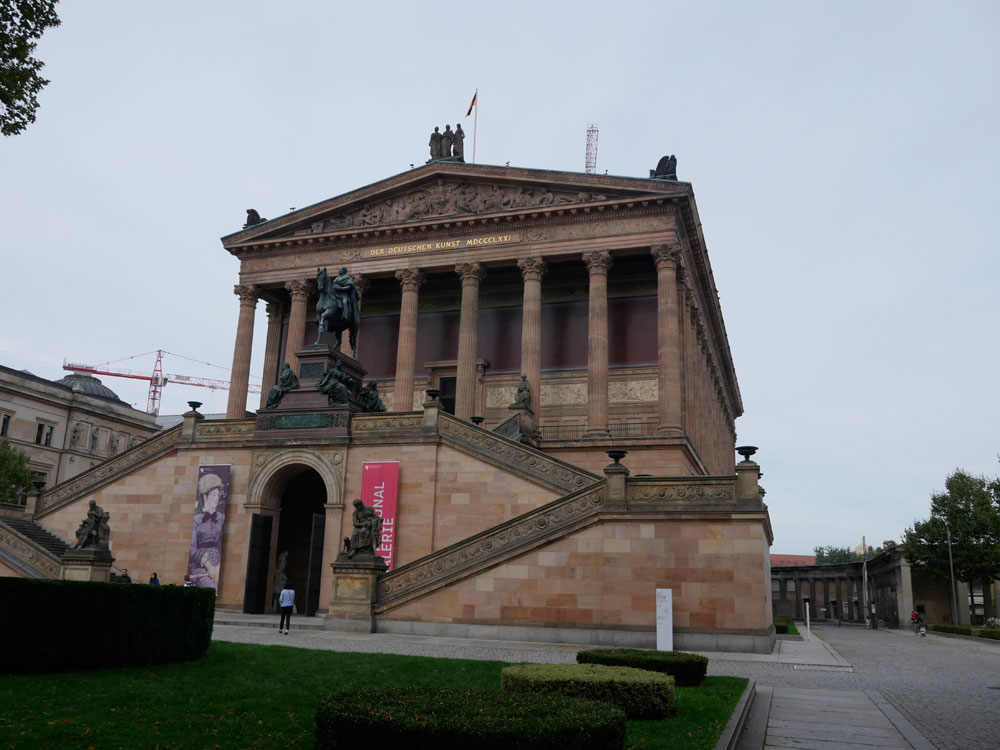
The building was designed by Friedrich August Stüler, working from a sketch by King Frederick William IV of Prussia. Stüler's design — a temple-like structure raised on a high plinth and incorporating an apse — combined late Neoclassicism with early Neo-Renaissance, expressing the stated ideal of unity between art, nation, and history. Following Stüler's death, the project passed to Johann Heinrich Strack. After ten years of construction, the Nationalgalerie ceremonially opened on 21 March 1876 for the birthday of Kaiser Wilhelm I, becoming the third museum on the island in the Spree. Because of the building's modern construction using brick and iron, it was widely believed to be fireproof.
A Collection Forged by Conflict and Reunification
The gallery's collecting history is inseparable from Germany's political history. Under museum director Hugo von Tschudi from 1896, the Nationalgalerie was the first museum to begin collecting Impressionist paintings, ahead of museums in Paris and other cities. That ambition drew controversy: when Walter Leistikow's large-format painting of the Grunewald lake entered the collection, Kaiser Wilhelm II explicitly expressed his displeasure during a visit to the collection, rejecting the decorative-stylised image with pointed words. The rejection fell into a nationally heated debate on purchases and influences of French art in Germany.
The building suffered direct hits on several occasions during the aerial bombardment of the Second World War, sustaining heavy damage particularly after 1944. The collection itself had gradually been evacuated with the war's onset, stored in anti-aircraft towers near the zoo, in Friedrichshain, and in salt and potash repositories in Merkers and Grasleben. After the war the building was quickly though provisionally restored, with parts reopened in 1949. During the division of Germany, the collections were split between institutions in East and West. Following German Reunification, the collections of the two Nationalgaleries were merged in 1992, their combined holdings comprising over 6,000 works, and a significant reorganisation was carried out in 1993.
Closed from 1998 to 2001, the National Gallery was ceremoniously reopened on 2 December 2001, 125 years after its inauguration, the first building on Museum Island to be reopened following restoration. The historical Alte Nationalgalerie is part of the UNESCO World Heritage Site Museumsinsel, inscribed in 1999 for its architectural significance and its testimony to the development of the museum as a cultural institution.
The Permanent Collection
The collection of the Alte Nationalgalerie is one of the most extensive period collections of art from between the French Revolution and World War I, encompassing Neoclassicism through to the Secession. The collection is further enhanced by the unique harmony between the collection and the architectural style of the building in which it is housed.
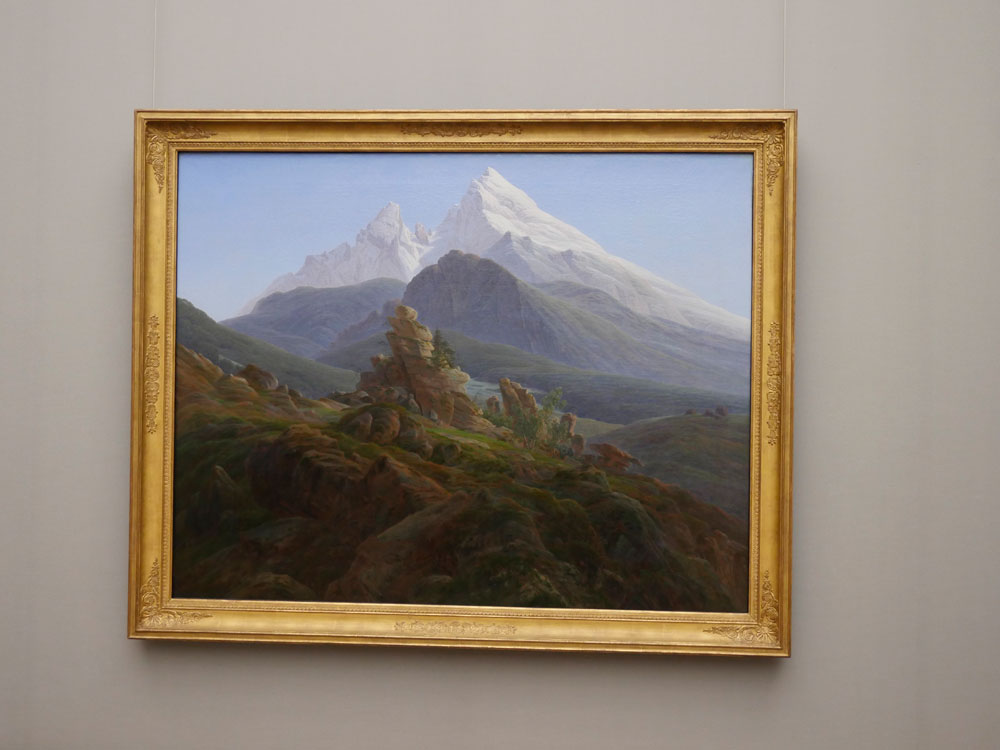
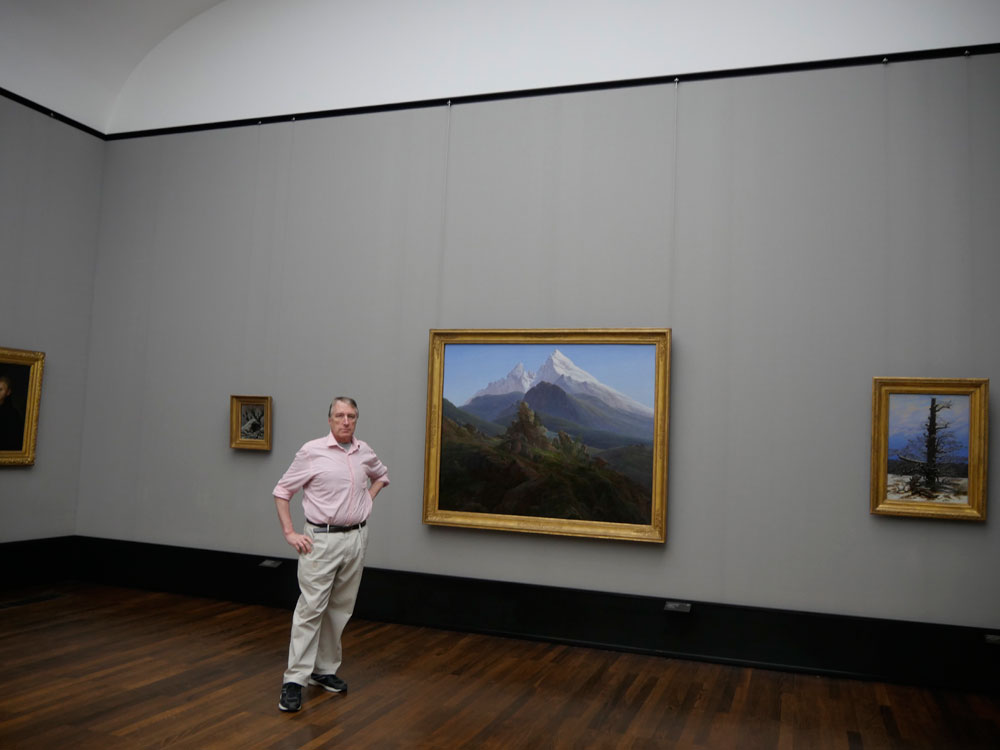
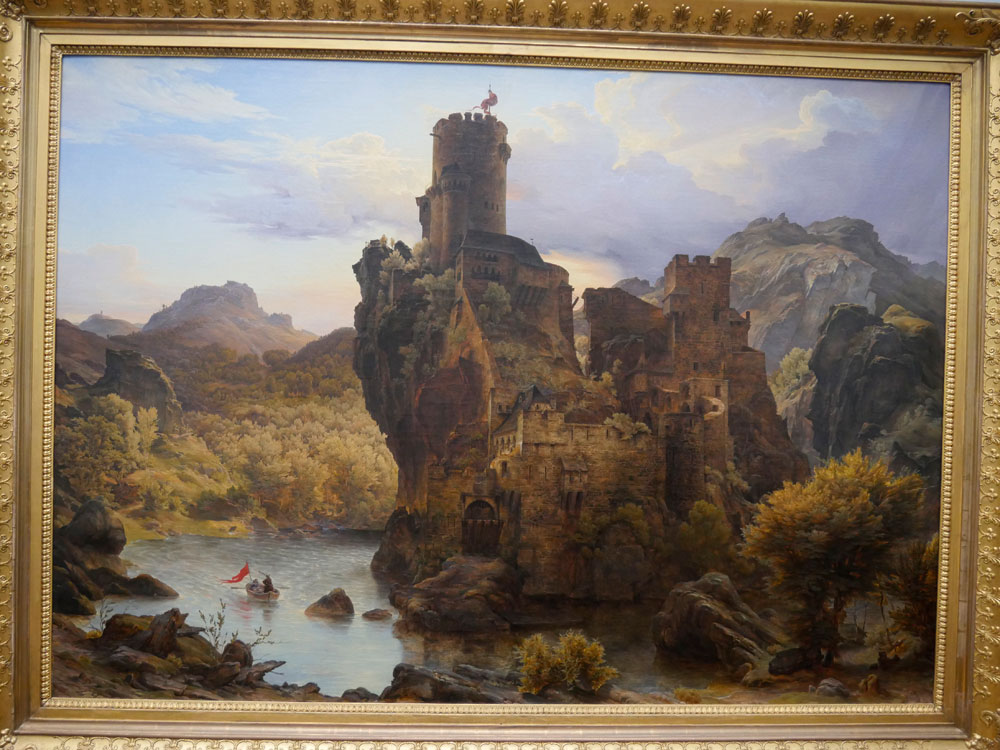
The chronological tour begins on the third floor, with the art of Goethe's era represented by Jakob Philipp Hackert's landscapes, portraits by Anton Graff and his contemporaries, and works by the Nazarenes — Peter Cornelius, Friedrich Overbeck, Wilhelm Schadow, and Philipp Veit — whose frescoes illustrating the Old Testament story of Joseph, commissioned for the Casa Bartholdy in Rome, can be viewed in a dedicated exhibition room. Two rooms on the top floor offer space for the jewels of Romanticism, with paintings by Caspar David Friedrich from all phases of his oeuvre alongside Karl Friedrich Schinkel's programmatic architectural visions and the vibrant, unconventional work of Carl Blechen. Biedermeier art is represented with Berlin views by Eduard Gaertner and Johann Erdmann Hummel, and with landscapes and portraits by Ferdinand Georg Waldmüller.
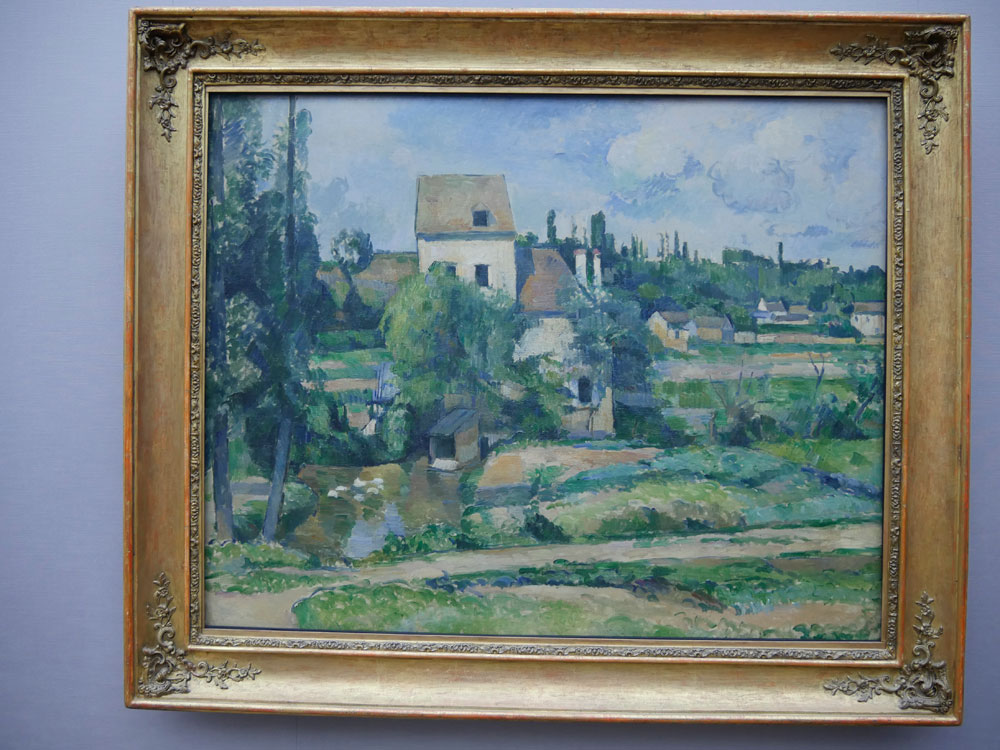
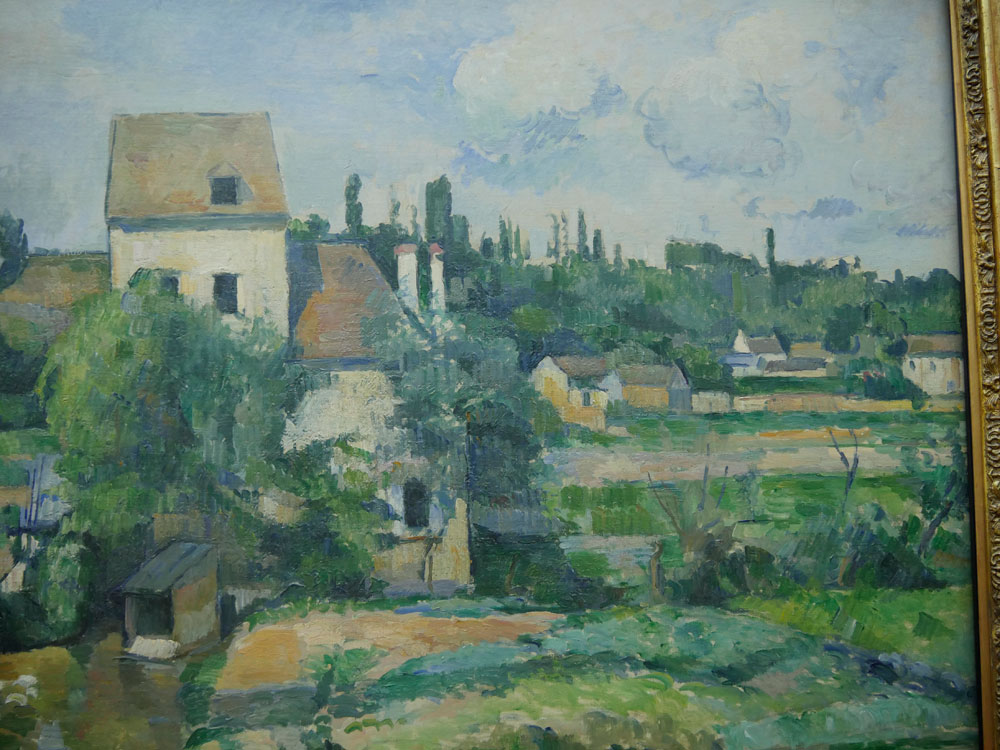
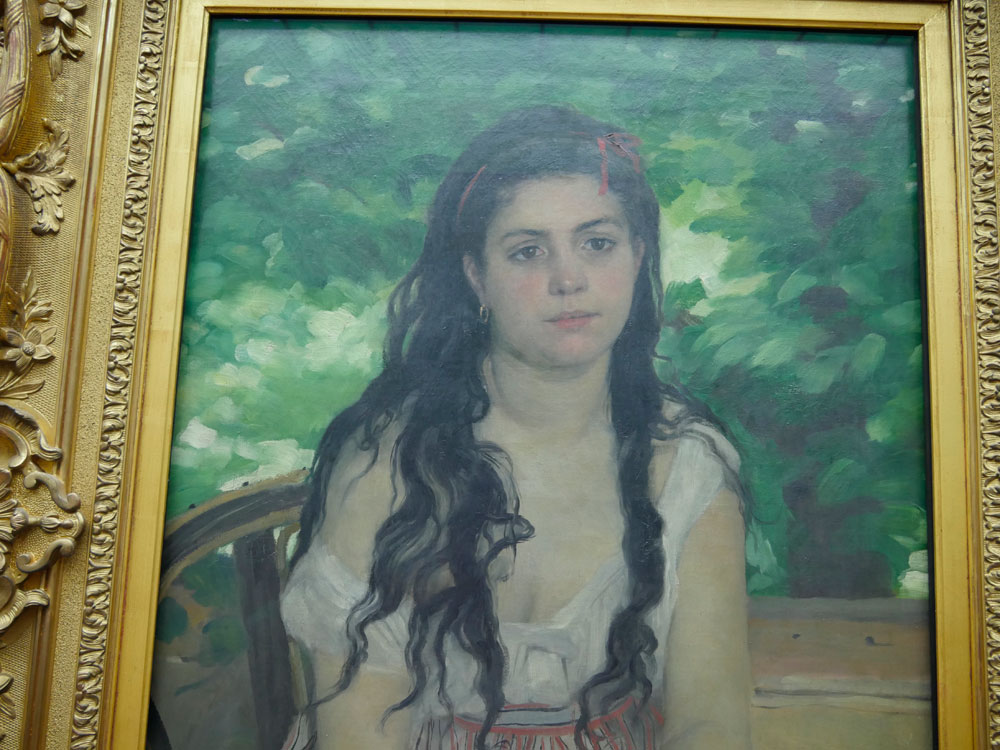
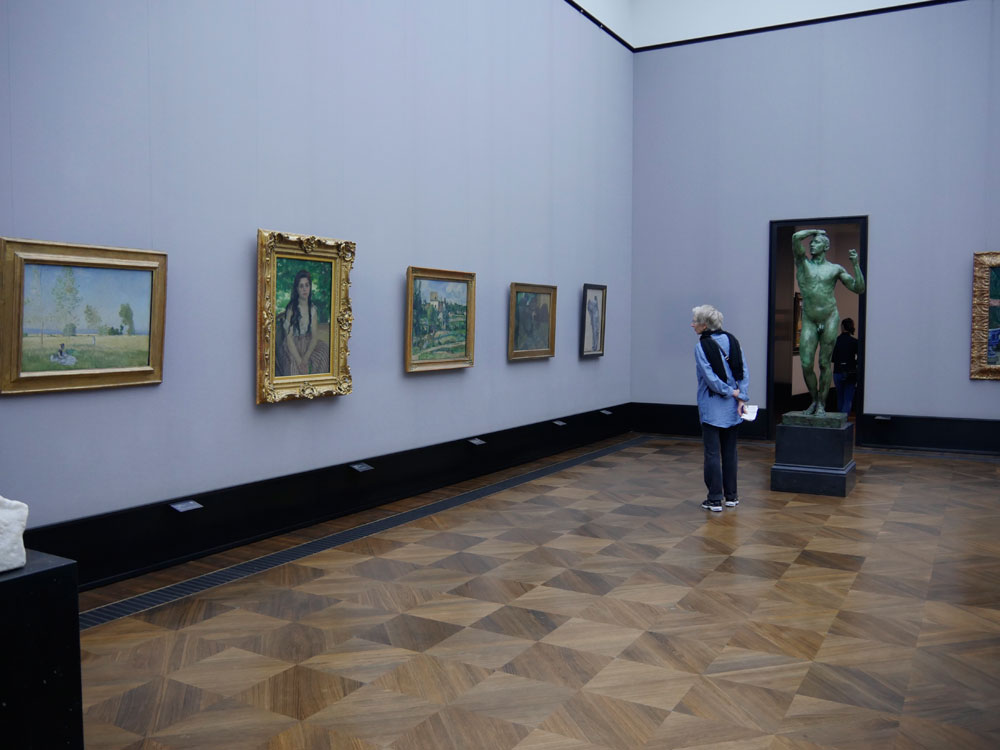
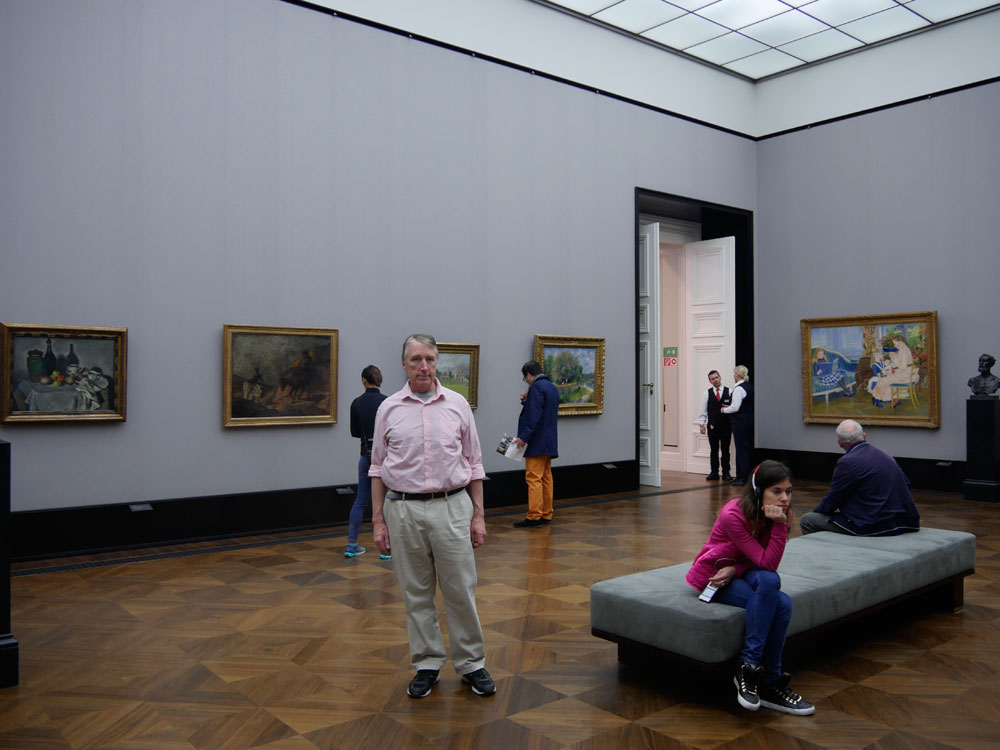
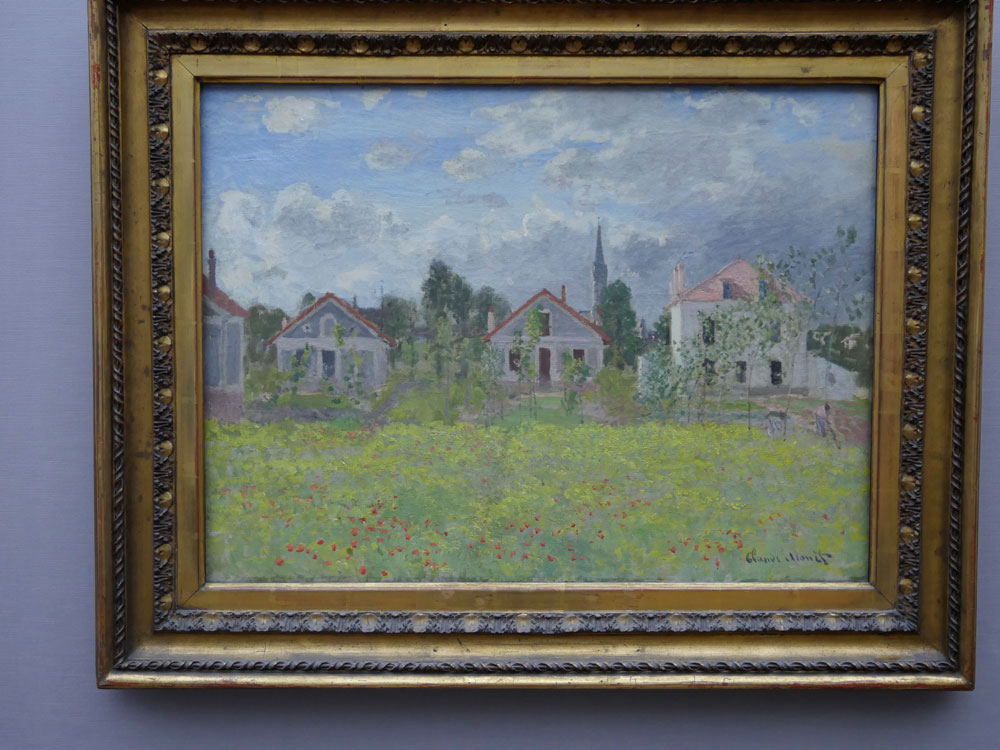
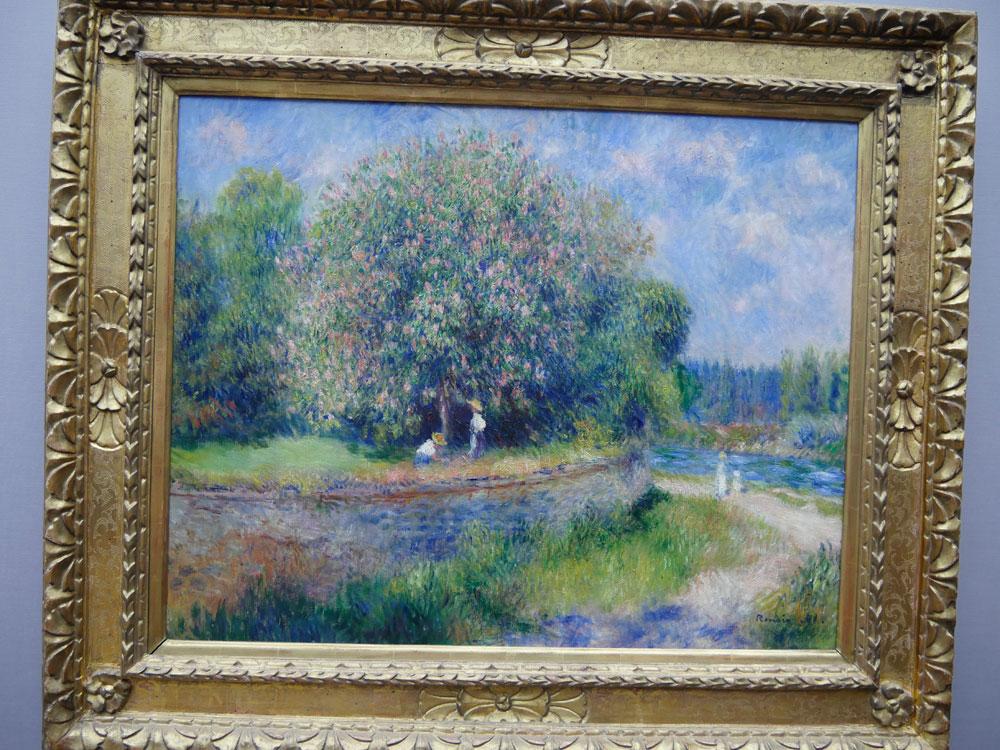
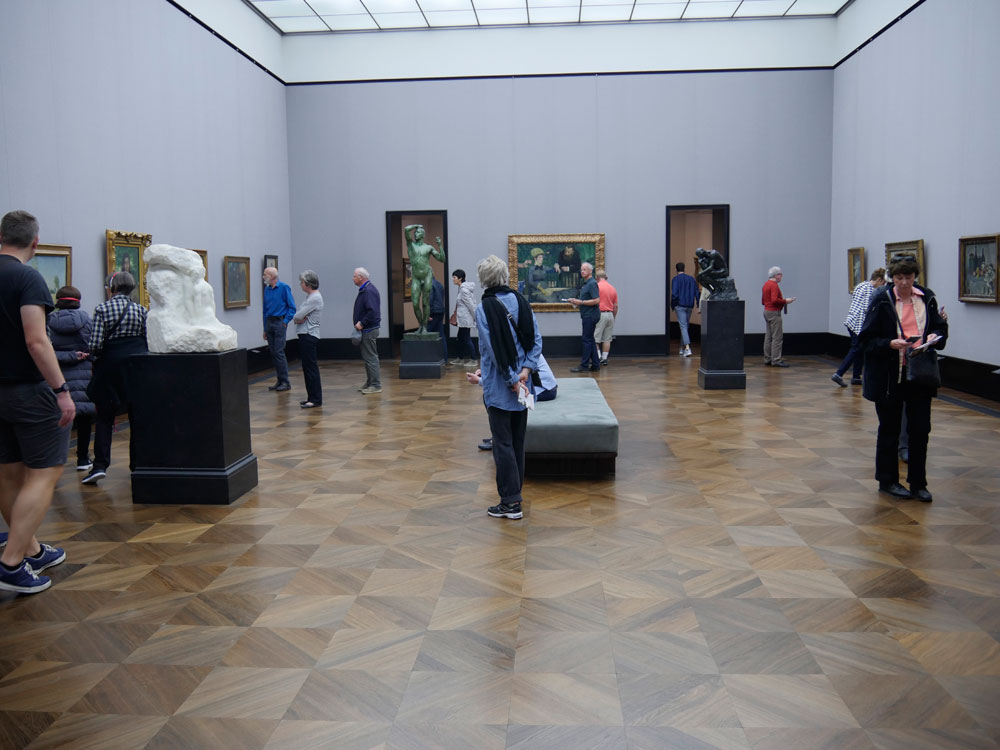
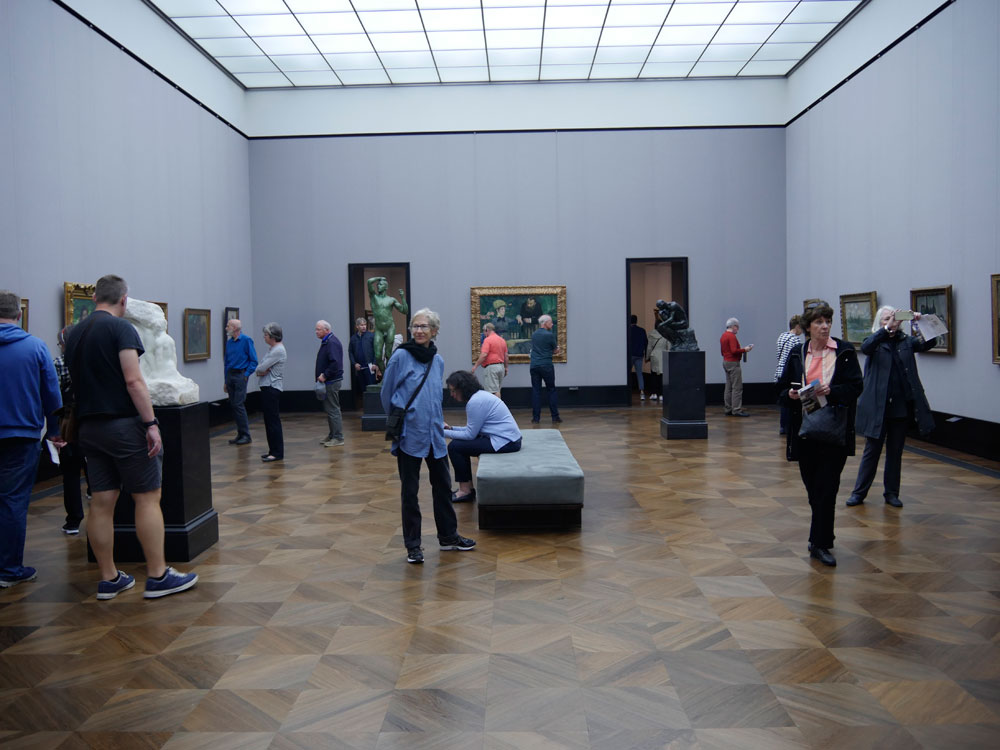
The middle floor combines sculpture with a broad survey of European painting. The centrepiece of the sculpture hall is Johann Gottfried Schadow's celebrated Prinzessinnengruppe, the double portrait in marble of Princesses Luise and Friederike of Prussia. The rear transverse hall and apse are dedicated to Adolph Menzel, whose paintings — including the Flute Concert, the Balcony Room, and the Iron Rolling Mill — reveal the artist as a tireless observer who depicted themes from Prussian history while also addressing his everyday milieu with astonishing subtlety. The collection contains rich holdings of Impressionist painting, with masterpieces by Manet, Monet, Renoir, Degas, and Cézanne, as well as sculpture by Auguste Rodin, much of it acquired at an early date. The paintings of Max Liebermann herald the arrival of Impressionism in Germany.
Today, the Alte Nationalgalerie preserves around 3,500 paintings and sculptures of the entire nineteenth century, including key works of Classicism, Romanticism, and the dawn of Modernity.
Temporary Exhibitions and Disruption in 2025–2026
The year spanning late 2025 and early 2026 has involved significant disruption to the second exhibition floor. Two exhibitions ran concurrently: a retrospective on Lovis Corinth, the Nationalgalerie, and the "Degenerate Art" campaign, running from July 2025 to January 2026; and the Scharf Collection exhibition featuring works by Goya, Monet, Cézanne, Bonnard, and Katharina Grosse, which ran from October 2025 to February 2026.
Due to the dismantling of the Scharf Collection exhibition, the second exhibition floor is currently closed. From 7 March 2026, parts of the floor — including the Impressionist and German-Roman galleries — will be accessible again. From mid-April 2026, the second exhibition floor will close again for the installation of the Cassirer exhibition, which opens to the public from 22 May to 27 September 2026. The second exhibition floor is expected to be fully open again from 27 October 2026.
Marking 150 Years: The 2026 Programme
The anniversary year's programme is oriented less toward institutional commemoration than toward re-examining the collection and its histories. In its anniversary year, the Alte Nationalgalerie offers selective encounters between works from the twentieth and twenty-first centuries and nineteenth-century art on all three floors, inviting visitors to engage in associative viewing. The premise of this intervention, About Times, draws on the gallery's original purpose: when it opened in 1876, the Nationalgalerie was a space for contemporary art. All six buildings of the National Gallery are united by a common collection, from the Alte Nationalgalerie to the Neue Nationalgalerie to the Nationalgalerie der Gegenwart – Hamburger Bahnhof.
The centrepiece of the anniversary year is Cassirer and the Breakthrough of Impressionism, opening 22 May and running until 27 September 2026. The exhibition honours Paul Cassirer (1871–1926), whose Berlin gallery's exceptionally dense and continuous exhibition programme played a decisive role in spreading French Impressionism in Germany. Through his efforts, artists such as Degas, Cézanne, Manet, Monet, Renoir, and Van Gogh gained wider recognition in the German-speaking world, and numerous key works entered major German collections and museums through his mediation, including the holdings of the Nationalgalerie. Cassirer's commitment extended to German Impressionism and the Berlin Secession, represented by Max Liebermann, Lovis Corinth, and Max Slevogt, as well as to younger avant-garde figures including Ernst Barlach, Ernst Ludwig Kirchner, and Paula Modersohn-Becker.
The exhibition presents more than 100 outstanding works of Impressionism and Classical Modernism and is curated by Josephine Klinger, with Franziska Lietzmann as co-curator and project manager. A richly illustrated publication will accompany the exhibition. It is made possible by the FREUNDE der Nationalgalerie, with support from the Kuratorium Preußischer Kulturbesitz.
Practical Context for Professionals
The Alte Nationalgalerie forms one of the five pillars of the National Gallery, alongside the Neue Nationalgalerie, the Museum Berggruen, the Hamburger Bahnhof – Museum für Gegenwart, and the Friedrichswerdersche Kirche. The museum opens Tuesday to Sunday from 10:00 to 18:00 and is located at Bodestraße 1–3, 10178 Berlin. Admission adjustments were introduced in autumn 2025; visitors under 18 are admitted without charge to the permanent collection.
The partial closure of the second exhibition floor through spring 2026 is a practical factor for institutional groups planning visits before May. For researchers and curators, the collection is accessible online via the Staatliche Museen zu Berlin research database, and the museum maintains a dedicated library and point of scholarly contact. Conservation and restoration work is documented and publicly presented — a recent two-year project on Anton Graff's 1772 portrait of Henriette von Carlowitz, now the subject of a focused single-room display, provides a recent example.
As a UNESCO World Heritage Site embedded in a complex that continues to undergo long-term renovation — the nearby Pergamon Museum remains closed until 2027 — the Alte Nationalgalerie in its anniversary year is both a stable point of reference for the history of German collecting and an institution actively reconsidering the meanings and contexts of what it holds.
smb.museum/en/museums-institutions/alte-nationalgalerie