

A Defining Moment for the UK Art Market
When Sotheby's London presents the Lewis Collection this June, it will be the most valuable single-owner collection ever offered for sale in the United Kingdom. The estimate of between £150 million and £200 million places it well ahead of the previous benchmark, the Pauline Karpidas collection, which achieved £101 million with fees at the same auction house in September 2025. It reveals the current dynamics of figurative art, the trajectory of the London market, and the long arc of one of the more consequential private collections assembled in recent decades.
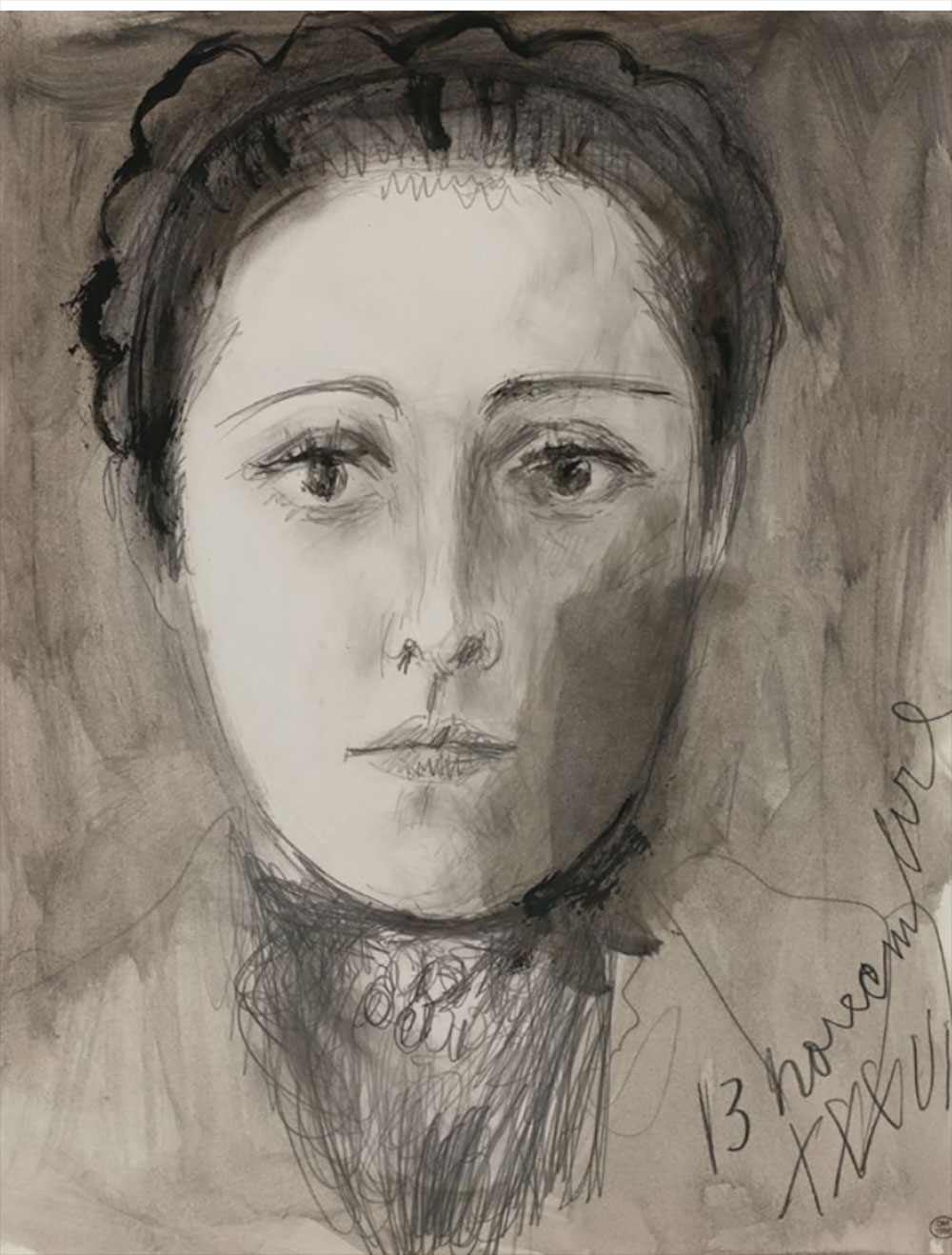
Pablo Picasso, Portrait de Dora Maar
The collector at the centre of this story is Joe Lewis, now 89, who was born and raised in London's East End before building a fortune through currency trading and eventually withdrawing to the Bahamas, where he has lived for many years. His art collecting gathered momentum from the early 1990s through approximately 2015, shaped by a sustained engagement with figuration and, initially, by a strong affinity with the painters closest to home. Oliver Barker, chairman of Sotheby's Europe, has described the School of London — Francis Bacon, Lucian Freud, and Leon Kossoff — as inseparable from the collection's core identity, an attachment that Lewis himself has connected to his East End origins and to the directness with which those artists addressed the human condition. That foundation broadened considerably over time to encompass Vienna, Paris, and the broader history of modern figurative art, drawing in works by Gustav Klimt, Egon Schiele, Amedeo Modigliani, Gustave Caillebotte, Chaim Soutine, and Pablo Picasso alongside the London painters who came first.
The decision to sell in London is significant in the context of recent market history. Since Brexit, and particularly following Christie's decision not to hold modern and contemporary auctions in London during June 2024, the narrative around the UK summer sale season has been one of contraction and diminished ambition relative to New York, Paris, and Hong Kong. The Lewis family's choice to present their collection here, without seeking a financial guarantee from the auction house — an unusual and notably confident position — represents a considered statement of faith in the London market's continued capacity to attract international competition at the highest level.
The sale follows a more modest opening chapter. In March 2026, four School of London works from the Lewis Collection were offered at Sotheby's London, realising £35.8 million with fees. The group included a 1972 Bacon self-portrait, painted in the aftermath of his lover George Dyer's death, which achieved £16.03 million; two Lucian Freud portraits; and a Leon Kossoff work that set a new auction record for the artist. That evening's broader sale was sold in its entirety, with all 53 lots finding buyers. The family has described the March sale as a deliberate market test, and the June presentation as the fuller expression of what the collection contains.
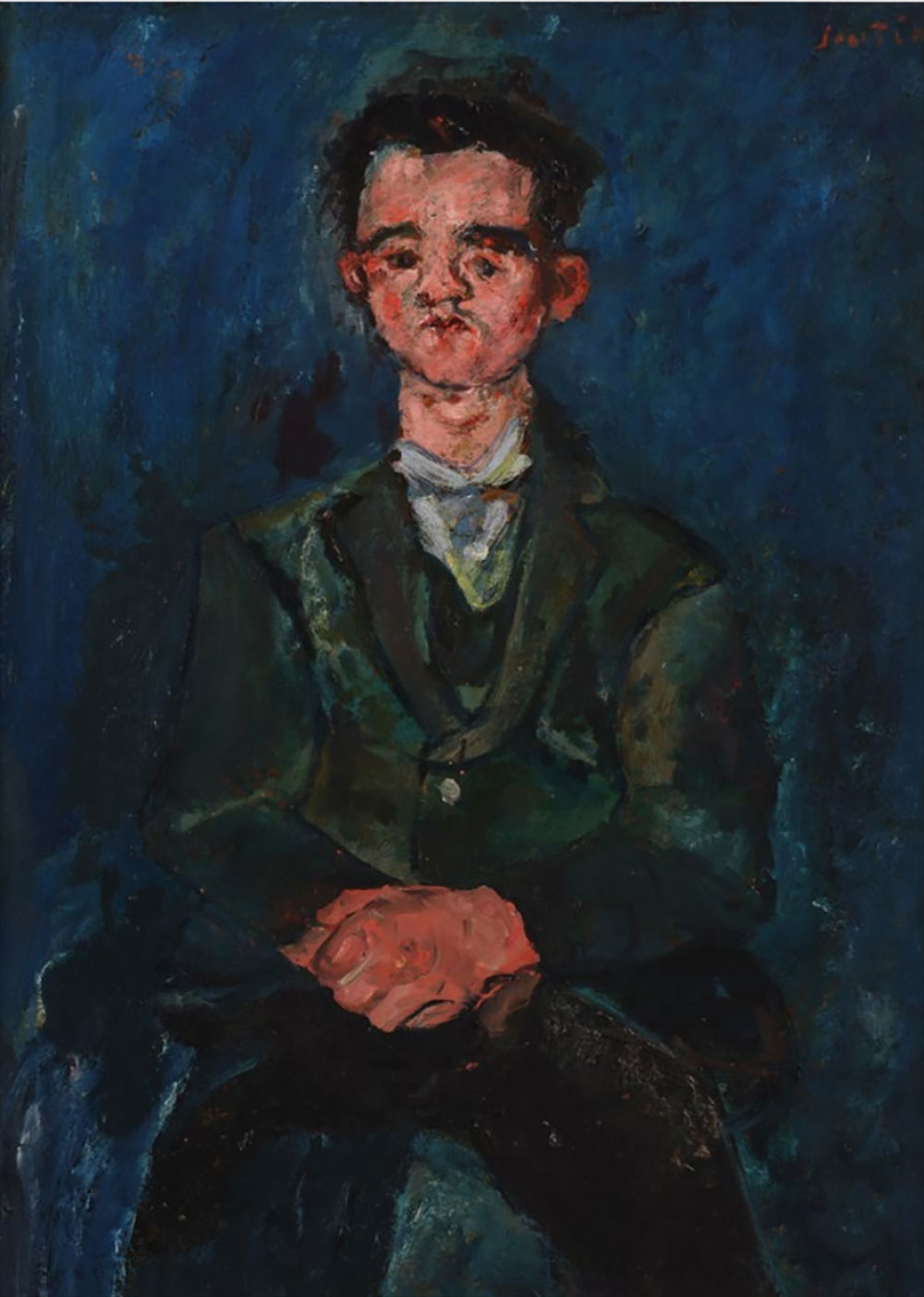
CHAÏM SOUTINE Portrait de garçon en bleu
The June sale discloses a group of works whose art historical range is considerable. At the top of the estimate range sits Klimt's Bildnis Gertrud Loew (Gertha Felsőványi), a 1902 society portrait carrying a pre-sale estimate of £20 million to £30 million. The work has a restitution history: it was the subject of a dispute between the Klimt Foundation and the descendants of Gertha Felsőványi, who argued it had changed hands illegally during the Second World War. Lewis acquired it at Sotheby's London in 2015 for £24.8 million, double its low estimate at the time. The work reportedly hung aboard his yacht, Aviva. The market context for Klimt portraits is provided by the November 2025 sale at Sotheby's New York of the artist's Portrait of Elizabeth Lederer from the Leonard Lauder collection, which achieved $236.4 million — a result that situates the Lewis Klimt's estimate as measured rather than aggressive. Only five comparable Klimt portraits have come to auction in the past two decades.
Modigliani's Homme à la pipe (Le notaire de Nice), painted in 1918 during the final period of the artist's short life, carries an estimate of £12 million to £18 million. The work was made in Nice, where Modigliani had been sent to recuperate from illness and began painting the locals he encountered there; it has not been publicly exhibited in approximately 45 years and has never previously appeared at auction. Egon Schiele's Danaë, painted in 1909 when the artist was nineteen, is estimated at the same range. The work was withdrawn from a Sotheby's New York sale in May 2017, where it had been estimated at $30 million to $40 million, and its reappearance at the lower estimate will be watched carefully as a measure of how the market currently reads early Schiele. Gustave Caillebotte's Portrait de Paul Hugot, depicting the artist's close friend and patron, was exhibited at the Musée d'Orsay's 2024 retrospective but had not been publicly shown in almost fifty years before that, and last changed hands three decades ago. Bacon's Two Studies for Self-Portrait from 1977 is estimated at £8 million to £12 million; Lucian Freud's Woman in a Grey Sweater (1987–88), which has toured international museums on loan but never previously appeared at auction, carries an estimate of £3 million to £4 million; and a 1936 Picasso drawing of Dora Maar — once owned by Maar herself — is offered at £600,000 to £800,000.
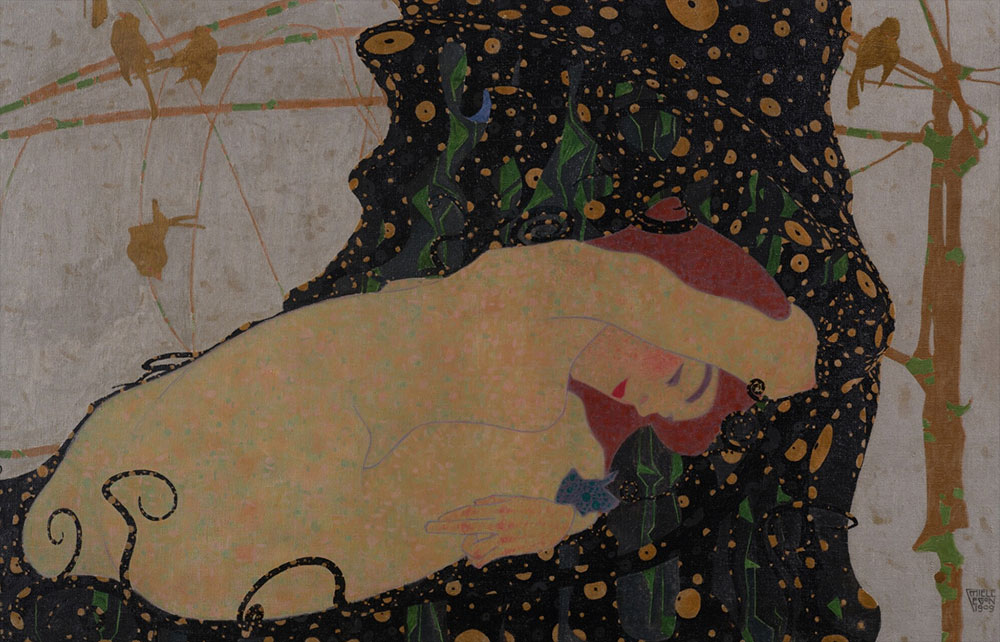
Egon Schiele Danaë
The collection's coherence lies in its commitment to the human figure across a long span of modern art history. Lewis and his daughter Vivienne, who has managed the family's ongoing collecting activity and serves as senior managing director of the Tavistock Group, have built around figuration a collection that moves between atelier concerns that are at once geographically and generationally distinct. The Viennese Secessionist atelier of Klimt and the young Schiele, the post-Impressionist tradition of Caillebotte and Soutine, the French modernism of Modigliani, and the post-war London atelier represented by Bacon, Freud, and Kossoff are united by their sustained attention to the represented body — rendered with varying degrees of psychological intensity, but always as the primary subject rather than a vehicle for other concerns.
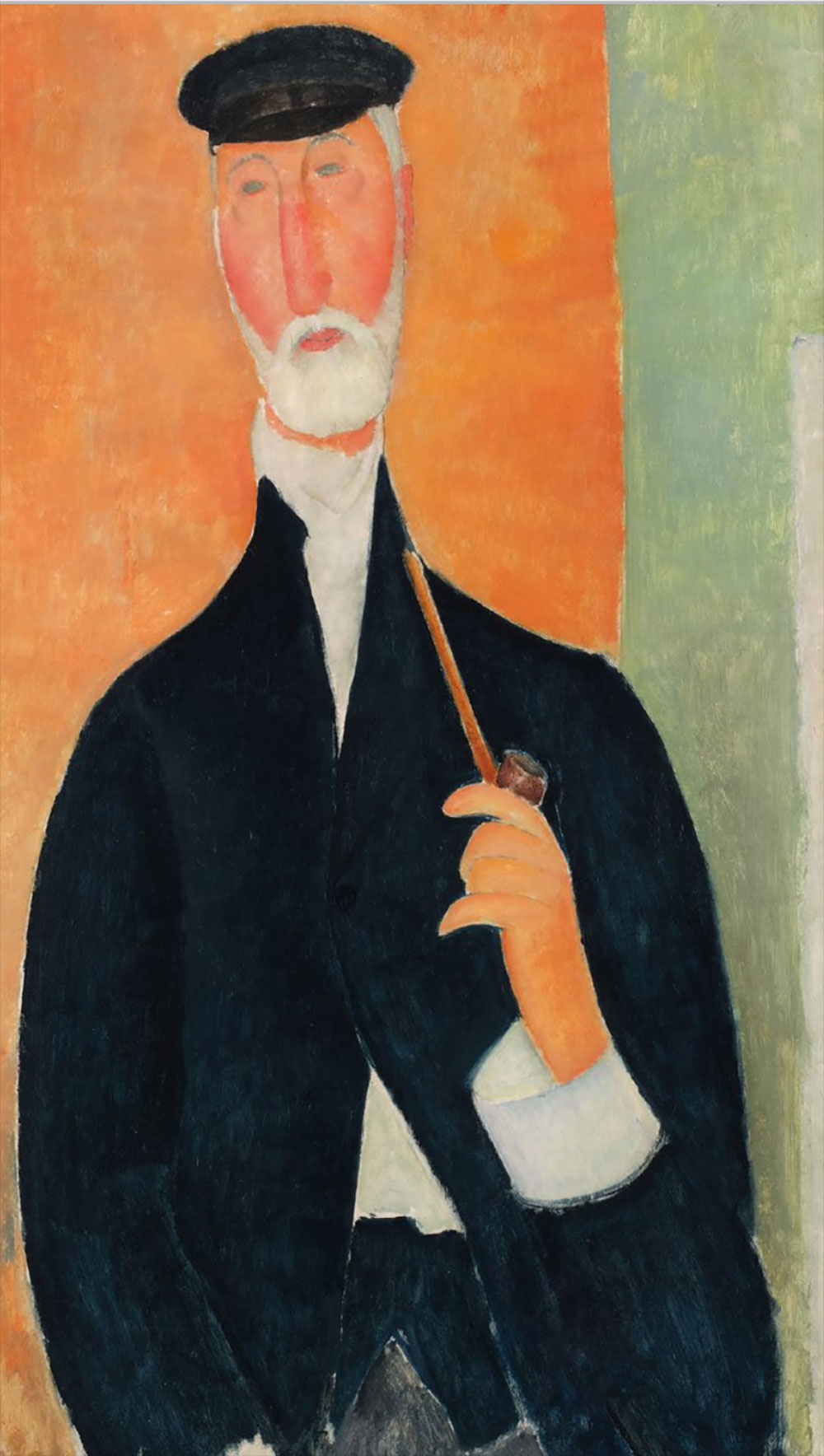
Amedeo Modigliani Homme à la pipe (Le Notaire de Nice)
Two aspects the sale's implications of are worth particular reflection. The first concerns the loan history of these works. Many pieces in the Lewis Collection have been made available to museums internationally over the years, appearing in major exhibitions and building scholarly records that will now carry forward into their auction and post-auction lives. The Modigliani, the Caillebotte — shown at the Orsay retrospective — and the Freud portrait are examples of works whose museum presence has shaped their cultural standing independently of the market. This institutional generosity, common among collectors of Lewis's generation, is becoming less typical, and the eventual dispersal of collection of this quality through auction raises the familiar question of what happens to such objects after they enter new private hands.
The second concerns the market commentary the sale will generate. Art market analyst Magnus Resch of Yale has noted that single-owner collections create conditions of concentrated excitement and strong price achievement that can obscure a thinner underlying market beyond the very top. This observation speaks to a structural reality: the conditions that produce a £150–200 million evening in London are not representative of the broader trading environment, and the attention such events receive from general media should be read alongside the more granular picture of secondary market activity across other price points.
The Lewis Collection's June sale at Sotheby's London is scheduled for 24 June 2026. A preview of selected works was on view at Sotheby's New York from 2 May. Additional lots are expected to be announced in the weeks before the London auction.
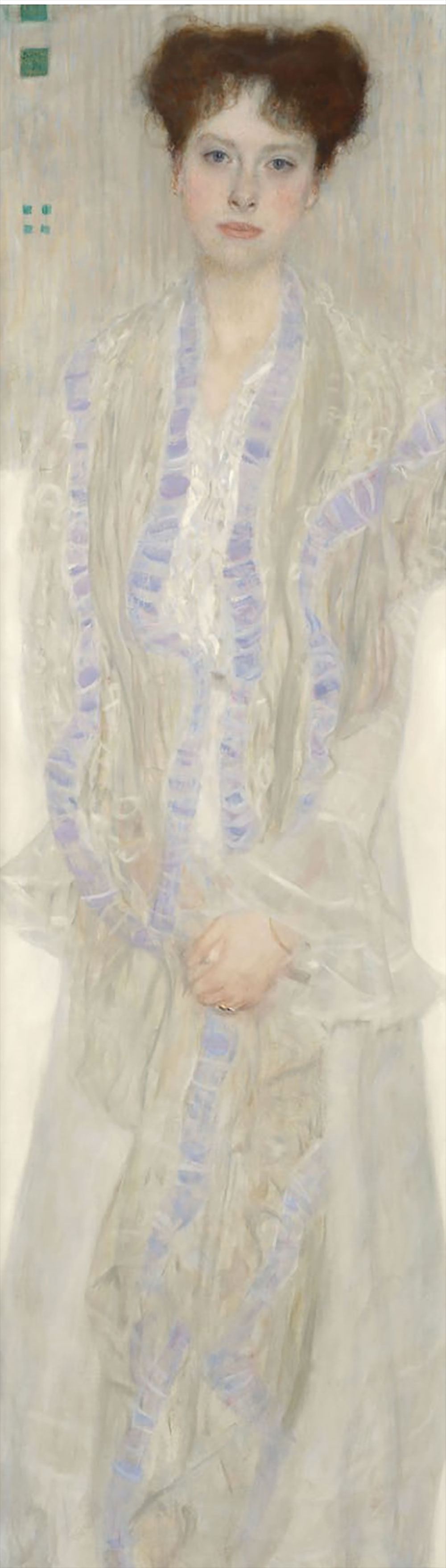
Gustav Klimt Portrait of Gertrud Loew (Gertha Felsőványi)